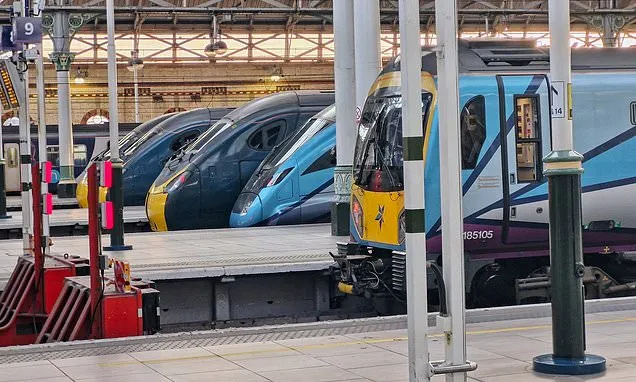
The Department for Transport has announced new delay repay rules changes which could see millions of passengers benefit from a streamlined process.
At the moment, rail customers can book a ticket with around 14 different companies but the process of claiming back compensation for delayed journeys is not simple.
The complicated system involves travellers having to fill out long forms and provide evidence of their ticket purchases on the website for the train line they travelled with.
It has resulted in passengers losing out on more than £80million a year, with many finding it too difficult to navigate, and thus giving up.
But now, the government has revealed the current compensation claim processes will be merged into one easy-to-use service under Great British Railways (GBR), called '1-click' Delay Repay.
Rather than filling in forms, passengers will receive an email prompt about a delayed journey. One click completes the claim.
Customers who have used third-party retailers, like Trainline, will also be able to utilise the system.
Transport Secretary, Heidi Alexander, said: 'Using the railway will be simpler and more reliable under Great British Railways. When services are delayed, passengers should be able to easily claim the compensation they're owed.'
She explained how the changes would allow compensation to be claimed 'more quickly' and money would be invested into 'freezing fares and delivering train and station upgrades, rather than losing out to fare dodgers and fraud'.
Virgin Trains Ticketing welcomed the change.
Director Mark Plowright commented: 'The UK's rigid rail retail rules are finally being flexed to improve passenger experience.'
The train ticket company found in 2024 that 73 per cent of its customers 'wanted this service to be available from independent retailers'.
Mark added: 'Ensuring it's as straightforward as possible to claim compensation, wherever you have bought your train ticket, is a great step forward.'
'It's also a welcome green signal from the government that it recognises the value that a competitive and innovative rail retailers market brings to railways.'
Trainline found in YouGov research it commissioned that 29 per cent of passengers say they failed to claim compensation they were entitled to for delayed journeys last year.
This results in an estimated £80million unclaimed compensation.
The train ticketing site launched a 'Fair Play on Delay Repay' campaign last November in a bid to tackle the complicated claims process it says 'prevents independent ticket retailers from offering '1-click' Delay Repay'.
On the news, Jody Ford, CEO of Trainline, said: 'Making compensation easier when you need it is a win for passengers.'
'Wherever you buy your ticket, the focus must be on getting more people to choose rail.'
'These future changes to Delay Repay have real potential to support that ambition and will be welcomed by millions.'
Ben Plowden, CEO of Campaign for Better Transport, added: 'Independent retailers such as Trainline have often led the way on innovation, so successful rail reform has to be collaborative, learning the best lessons from across the industry.'
'Enabling access to delay repay through all retailers is a good example of the sort of cross-sector collaboration which will be key to GBR's potential success.'
The government has also announced a crack-down on dare dodging and ticket fraud - which results in the loss of at least £350million of taxpayers money each year - in response to recommendations by the Office of Rail and Road's review looking into revenue protection practices.
A new scheme is being trialled, with the rollout expected to be introduced later this year.
It will involve checking if rail cards are being used correctly and is expected to save around £20million a year.
From April 1, a new rule will be introduced that means unused tickets will only be eligible for a refund up to 11.59pm on the day they become valid for travel.
This has been launched with hopes to cut back on fraudulent cases where passengers might request their money back despite using the ticket.
It's hoped the change will save a whopping £40million annually.