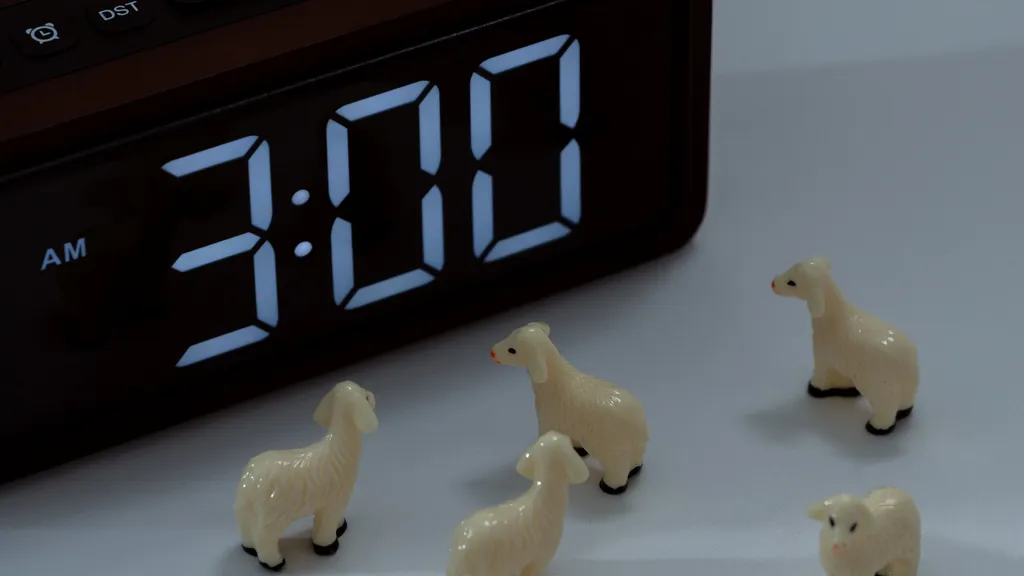
Q. I've been dealing with a lot of anxiety lately and am having a hard time sleeping. What can I do to get some rest?
According to recent polling from the American Psychiatric Association, Americans are feeling anxious -- about current events, job security, finances, the future.
You don't have to be in the center of a storm (proverbial or literal) to be affected by it, said Roxane Cohen Silver, a professor of psychology, public health and medicine at the University of California, Irvine. Distressing news, coming at us constantly through our phones, TVs and radios, can be associated with anxious thoughts, she said.
And those thoughts can interfere with sleep, said Dr. Aditi Nerurkar, a faculty member at Harvard Medical School who specializes in stress and burnout. "The human brain was not designed for this constant fire hose" of news.
We spoke with four experts on stress and sleep about how to tamp down the worry that's keeping you up.
A Perpetual Cycle of Stress, Scrolling and Sleeplessness
Dr. Silver has spent the last 25 years studying how news of traumatic events, such as the Sept. 11 attacks and the Boston Marathon bombing, can affect people who didn't experience them in person.
Her research has found that the more people were exposed to graphic stories and images of those events through televisions, newspapers, online news sources or social media, the more they reported post-traumatic stress symptoms like intrusive thoughts, feeling on high alert and trouble sleeping.
In some cases, repeatedly reading about or watching footage of tragic events was associated with more stress than seeing them firsthand, Dr. Silver said. Getting upset by what you see in the media and seeking it out creates a cycle, she said, "more media, more distress, more distress, more media."
When this happens at night, your stress response can overpower your drive to sleep, said Norah Simpson, a clinical professor of psychiatry and behavioral sciences at Stanford Medicine. That's helpful from an evolutionary perspective -- if you were, say, dozing in a cave when a predator attacked -- but not when you're fretting about the state of the world and need to be up for a 9 a.m. meeting.
Your amygdala, a region of the brain that responds to threats and regulates emotions like fear and anxiety, "doesn't know the difference between something happening 5,000 miles away, or in another city or in your backyard," Dr. Nerurkar said. Seeing something scary on social media can cause you to actively scan the environment (that is, your phone) for threats, prompting you to engage even more. Giving in to that "primal urge to scroll" while in bed, she said, can put you in a heightened state of alertness when you should be winding down.
Those precious moments before you go to sleep might be the only quiet parts of your day, said Aric Prather, a professor of psychiatry and behavioral sciences at the University of California, San Francisco. If you use that time to engage with stressful content, your mind will become filled with anxious thoughts.
How to Quiet the Noise
Many of Dr. Prather's patients benefit from setting a curfew for engaging with any media that might make it hard to sleep -- such as no news or scrolling social media within an hour or two of bedtime. Some people find it helps to put time limits on apps like Instagram, Threads and X through their phone's settings. Dr. Nerurkar puts her phone on grayscale at night; the lack of color makes it less engaging and therefore easier to put down.
Dr. Prather recommended creating a calming, news-free evening routine that helps you wind down for sleep. That might include meditating, reading or watching something funny or mindless -- and not bringing your phone into bed, which can condition your brain to associate your bed with feeling anxious.
Breathing exercises can help, too, Dr. Simpson said. One example is the 4-4-8 technique, where you inhale for four seconds, hold for four seconds and then exhale for eight seconds. Cognitive shuffling, in which you focus your mind on words that have nothing to do with one another, can also help clear your mind, making it easier to fall asleep, Dr. Simpson said.
If you're going to be on your phone, she suggested sticking with innocuous content like puppy videos or cooking blogs. Dr. Prather's patients have had success listening to podcasts that are intentionally dull and designed to lull people to sleep. Some give verbal tours of castles or laundromats, or read books that people find boring.
Actively engaging with your worries during the day may help with sleep by reducing anxiety and giving your brain a chance to quiet down at night, Dr. Prather said. Dr. Simpson suggested scheduling 10 or 15 minutes in the morning or afternoon to really think about what's making you anxious.
Then, when distressing thoughts crop up at night and you're about to spiral, you can tell yourself,"I spent some time working on that earlier today, and I'm going to pick it up again tomorrow."