At Phoenix Children's, Dr. Cherisse Mecham, medical director of emergency departments, said there are "massive" fluctuations in patient volumes between seasons.
"Just given based on the time of the year or even day to day throughout the week, [we are] almost doubling our patient volume from summer to winter, and then even in the winter time, on the day of the week, you can have swings of over 60 patients a day," she told Newsweek's Health Care Editor Alexis Kayser. "So from a technology perspective, that's been really hard to make sure that we have adequate staffing and the right resources available to handle that on a day-to-day basis."
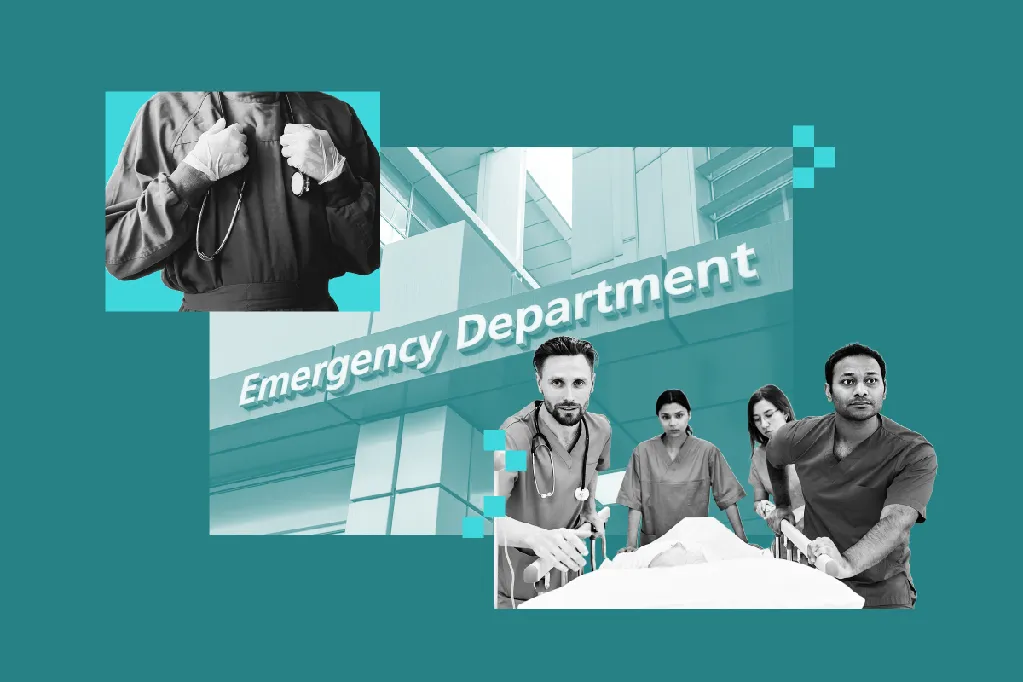
Emergency departments (ED) are under strain in hospitals across the country. Between labor shortages, burnout and growing capacity constraints, health systems are turning to new and emerging technology to ease those burdens and improve patient experience and outcomes.
During Newsweek's "Leveraging Technology to Solve the ED Capacity Crisis" webinar on March 17, Kayser spoke to Mecham, as well as Dr. Bruce Lo, chief of the department of emergency medicine at Sentara Health's Norfolk General and Leigh Hospitals, and Navvis CEO Tim Elliot about the state of the problem and how they are using technology to solve it.
Elliot noted that the challenges of an emergency department happen across three domains: Before the ED visit, during the visit and after, both inside and out of the hospital. Too many hospitals, he said, focus on the patient experience in the emergency department itself.
"In our experience, the domain before the ED and the domain outside of the ED is where more work could be done," he said.
Overcrowding in an emergency department sends a ripple effect of backups across a hospital. Many health systems, therefore, are relying on new and emerging technologies to help ease the system-wide problems.
Dr. Lo noted that emergency department physicians spend over half of their time during a shift doing non-clinical activities. And that number is up to 75 percent for nurses.
"As an individual, how much more can you do or take on before you completely burn out, or you just can't handle it anymore and you start having issues of quality and errors?" he said. "When it comes to individual capacity, it's not a single item, but it's really dozens, if not hundreds, of different items that we have to remember and it becomes a death by a thousand paper cuts."
Using technology, he said, can alleviate some of this cognitive burden. Lo said Sentara has automated a complex chest-pain diagnostic protocol with a "complex algorithm" to automate the entire process that is then integrated into the greater electronic medical record system.
AI ambient listening and documentation devices are one of the solutions that can help physicians at the end of a 10- or 11-hour shift ensure their notes are accurate, which contributes to reimbursements and patient treatment.
Mecham said technology has helped staff recognize when they are experiencing patient volume surges. Those changes cause unexpected system-wide delays, and technology can help staff stay on top of the situation and align on next steps and expectations.
"I find that a lot of our staff don't recognize it until it's almost too late," she said. "We're several hours in, and there's no changing it at that point. And so having the technology capabilities to help improve that and help answer what our bottlenecks are, as well as helping keep families informed."
These issues are not confined to the emergency department -- they trickle into the rest of the hospital, often exacerbating existing failures and pain points across the system.
Lo noted that 60 to 70 percent of inpatient beds are occupied by people who can no longer take care of themselves at home and that behavioral health volume has "skyrocketed."
Options like telehealth, he said, can help physicians determine if patients need admission and whether someone brought into the emergency room can continue treatment at home instead of waiting for a bed. These decisions can align with a better use of analytics throughout the hospital to determine capacity and turnover ability from nurses, technicians, and nonmedical staff.
Mecham added that after the COVID-19 pandemic, there was an uptick in pediatric behavioral health patients and the hospital struggled to get them the help they needed.
"We don't have as many inpatient centers that are focused on children, especially children that have other complex medical needs that need to be managed," she said.
As a result, the hospital partnered with outpatient pediatricians and psychiatry teams to stabilize patients in the emergency department to get them transferred or discharged home more quickly and used virtual mental health assessments for patients at home.
Improper implementation may cause more problems than it fixes and can put patient health at risk. Successful adoption, therefore, requires frontline buy-in, careful piloting and clear safeguards to protect staff and patients.
According to Lo, the key to adopting the right technologies in the right way is "understanding where your bottlenecks are in terms of flow that creates your capacity constraint." Those can exist beyond the number of beds to include constraints in imaging, radiology and labs.
When integrating new technology, Mecham advises adequate testing, getting buy-in from the people who are actually going to use it and making sure that the new software integrates with the rest of the hospital's systems.
"Invest in more of your command center type technology so that you can really figure out what the specific problems that your ED is facing because it's probably different than all of your neighbors," she said. "And unless you know exactly what your problem areas are and where your bottlenecks are, you won't be able to actually get the technology that you need to fix it."
Elliot adds that technology like AI is not a "silver bullet" for solving all of a hospital's problems. It should be a tool that is used as needed to keep patients front and center -- not a crutch to make up for something that's not working.
"It won't solve for an imperfect operating model," he said. "We need to start by focusing on what patient flow is going to look like and what gaps we have and where technology can play a role but not let the technology dictate how we're going to care for the patients but make sure the technology is enabling the way we want to care for patients."