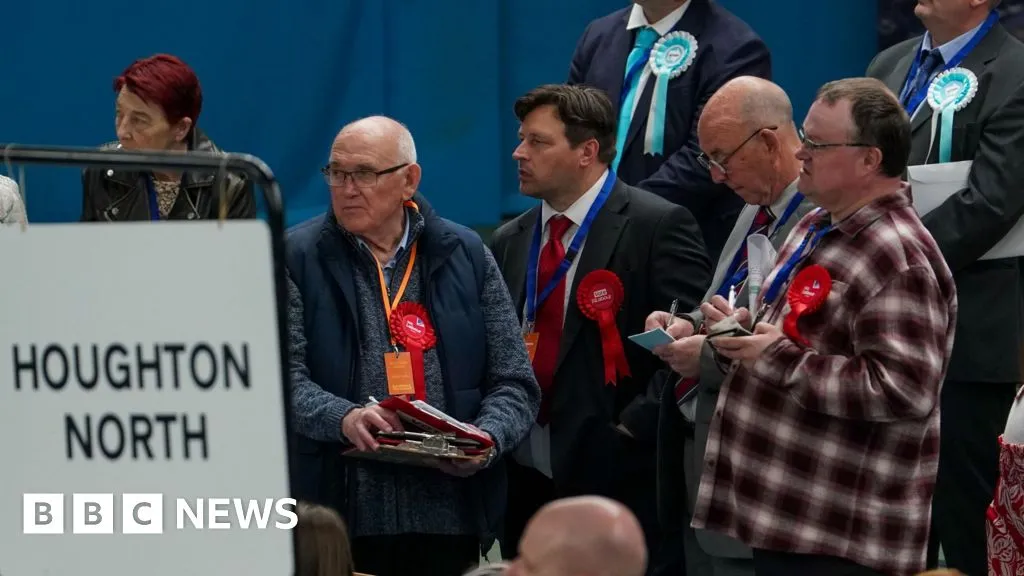
Labour feared the worst going into local elections in the north-east of England, but I am not sure even the most pessimistic activist predicted how bad it could be.
In the councils where all the seats were being contested, Labour suffered horrendous losses.
Its nemesis was, as it was last year in County Durham, Reform UK, which won control of three councils Labour had run for more than 50 years: Sunderland, South Tyneside and Gateshead.
Reform's tactic of styling this election as a referendum on Keir Starmer paid off in spades. And the region's Labour MPs know something needs to shift; otherwise, the party's downward spiral in local government could be matched in Westminster at the next election.
Labour was down to five councillors in Sunderland, two in Newcastle and just one in South Tyneside. In councils it had once dominated, it cannot even claim to be the official opposition.
It did manage to keep 12 seats in Gateshead but even there the party is still behind the Liberal Democrats' 13.
Reform even came close to being the largest party in Newcastle, with the Liberal Democrats just pipping it in a council where no single party is in a position to run the authority on its own.
The other winner in the region was the Green Party, which made big gains at Labour's expense in Newcastle and broke into the council chambers in North Tyneside and Gateshead.
The Greens did though slip slightly backwards in South Tyneside and failed to win any seats in Sunderland.
The Liberal Democrats will be relatively happy with what they managed to keep.
The other big loser though was the Conservative Party. It was weak already, but lost all its councillors in Sunderland, and its only representative in Newcastle. The Conservatives did though at least retain the two council seats they were defending in North Tyneside.
Independents also struggled as Reform mopped up in wards where they had previously done well.
Labour is convinced Reform's focus on Starmer drowned out any chance of positive local messages filtering through, and Reform is clear it resonated.
But there was also a sense on the doorstep that more needed to be done on the cost of living to convince people the government is on their side.
The new Reform councillors I spoke to also recognised the responsibility they now faced to deliver for communities that had placed their trust in them, particularly as those elected have little or no experience of running councils.
For Labour, though, something needs to change to arrest its collapse.
Only a third of seats were up in North Tyneside, meaning the party could not lose control, but it still lost ground and Reform will be looking to inflict more damage next year.
And had the whole council been up for election in Hartlepool, Labour would probably have been annihilated. Another council Reform will look to seize in 2027.
Some of the North East's Labour MPs, then, want a change in Number 10; others say Starmer can stay but must refocus on improving people's lives more quickly.