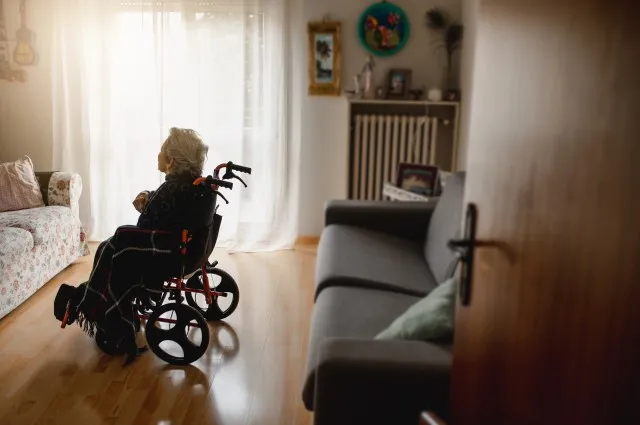
For years, families assumed that if a loved one lived in a nursing home, someone qualified was always watching. Not just anyone, either -- a registered nurse. Someone trained to recognize a change in condition, to intervene when minutes matter, to prevent a crisis before it starts.
That assumption is about to disappear.
Beginning Feb. 2, 2026, the federal requirement that nursing homes maintain a registered nurse on-site around the clock will no longer exist. It was a straightforward, common-sense rule created under the Biden administration. A 24/7 nurse presence meant residents were less likely to be left in medical limbo while an overworked or undertrained staff member tried to decide whether something was "urgent." It meant quicker intervention for strokes, sepsis, respiratory failure and the countless complications that define elder care. It meant accountability in facilities where staffing has been a chronic problem for decades.
As of Dec. 2, 2025, that requirement has been repealed by President Trump and the secretary of Health and Human Services, Robert F. Kennedy Jr. They argue that deregulation will "free" the industry. What it will actually free is more time with no medical professional present. The people who will pay that price are the residents who cannot care for themselves.
Let's be clear about what this change really means inside a facility. Many nursing homes already operate with dangerously low staffing levels. Certified nursing assistants often manage far more residents than they safely can. Licensed practical nurses juggle medication rounds and assessments with little support. RNs are the only ones with the training to identify subtle but serious declines. When no RN is on-site, those signs are missed. Missed signs lead to missed diagnoses. Missed diagnoses lead to preventable deaths.
We do not have to speculate. Decades of peer-reviewed research have shown what happens when RN staffing decreases. Higher rates of infections. More falls. More pressure ulcers. More emergency transfers. Higher mortality. These aren't political talking points -- these are real people. They are our parents and our grandparents and they are suffering real injuries. I can't emphasize this enough.
The federal government once recognized that minimum staffing standards create safer environments. That acknowledgment appears to have vanished. And the timing could not be worse. Our population is aging. Nursing homes are caring for residents who are sicker and more medically complex than ever. Families are already struggling to trust facilities that have long histories of understaffing and underreporting.
This repeal takes us backwards at the exact moment we needed a stronger system.
Some will frame this as an administrative tweak. It is not. This is a structural weakening of elder protections. It creates more opportunities for the very failures I see in my cases: untreated infections that turn septic, residents left unattended for hours, catastrophic falls because no qualified professional was available to intervene, families blindsided after being assured their parent was "stable."
And let's be honest. If policymakers had spent an hour inside many of these facilities during an evening shift, they would not have pulled this rule. They would have strengthened it.
Elder care is not an industry that magically self-corrects. It responds to incentives. When the incentive becomes "operate with fewer nurses," quality drops. When standards become optional, the worst actors take advantage of the flexibility, while the best facilities shoulder the burden of doing the right thing.
Florida families already know what happens when you weaken oversight. They live with the consequences in real time. When the system fails, they come to lawyers like me. They come after their parent was hospitalized. After the call that something "changed suddenly." After the tragedy that seemed to come out of nowhere but was entirely predictable.
We can debate tax policy. We can debate spending priorities. But protecting the elderly should not be a debate at all. Removing a rule that simply required one registered nurse to be physically present at all times communicates something unmistakable. It says that safety is optional. That oversight is inconvenient. That cost savings matter more than lives.
Our seniors deserve far, far better. Their families deserve transparency. And nursing homes need standards that reflect the reality of modern elder care, not the wishful thinking of lobbyists.
This decision must be reversed. States must step in where the federal government steps out. Regulators must refuse to pretend that an RN present "most of the time" is the same as an RN present when someone stops breathing. And families should feel empowered to demand staffing information when choosing a facility.
In my work, I meet people at the worst moments of their lives. I have seen what happens when a loved one's decline goes unnoticed for an hour. I have seen what happens when someone who should have received immediate medical attention instead waited until morning because the RN was not on duty.
We cannot build a safer system by pretending these moments are unavoidable. They are not. They are the direct result of policy choices.
This repeal is a dangerous one. And it should make every family pay closer attention. Even if the federal government no longer is.