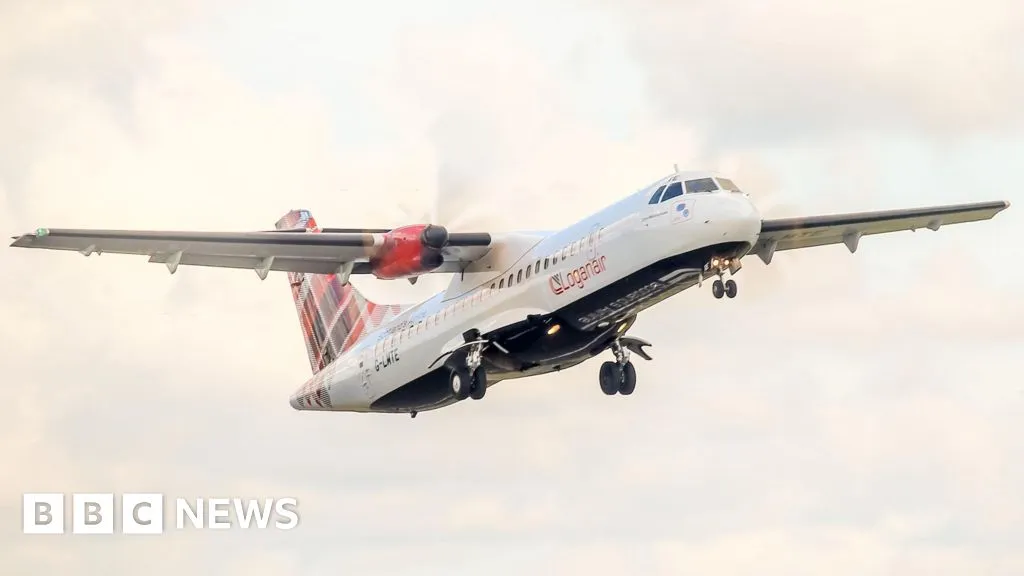
A spike in oil prices due to the US-Israel war with Iran has brought the potential of electric aircraft "sharply into focus", says Loganair's chief executive.
The Glasgow-based airline is working with US electric aerospace company Beta Technologies on a project trialling a battery-powered plane.
Luke Farajallah said the ambition was to eventually have electric aircraft carrying passengers and freight.
He said, meantime, the airline would seek to protect customers from rising costs due to the war.
Loganair flies on routes across the UK, including services for the Western Isles, Orkney and Shetland, and to parts of northern Europe.
Farajallah told BBC Radio Orkney: "The [electric aircraft] trial we are undertaking is one of the most exciting phases of my career to date, and it has come at a very interesting time in global history terms.
"The oil price spiking as it has done over the last few weeks has really brought sharply into focus the need for us to find alternative methods of energy to propel our next generation of aircraft."
He said the trial with Beta involved an operational aircraft that had been in production for some years.
Farajallah said he could envision electric aircraft one day operating on "short hop" flights in Orkney.
The airline boss said rising fuel prices were a concern.
But he added that Loganair had already acquired half the fuel it would need for the coming year through a "locked in contract" which came with a certain price.
He said an extra 20 to 25% of fuel was recently added to its stocks.
Farajallah said Loganair was doing everything it could to avoid passing the "burden" of rising costs on to its customers.
"We might need some small adjustments, but right now we would like to make sure that we don't increase proportionately air fares with the way fuel prices are going," he added.
Last year, it was suggested a vehicle that can cross water like a boat or a plane was a possible transport solution for parts of Scotland.
US company Regent, which is developing the Seaglider technology, and Highlands and Islands Transport Partnership (Hitrans) were at the time in the early stages of a collaboration on the project.
Rhode Island-based Regent's all-electric Viceroy Seaglider is designed to travel on water on its hull, or skim across surface on a hydrofoil and even fly at low level.
Hitrans has been looking at other transport innovations as a way of connecting island and rural communities.
In 2024, it said six large electric aircraft could potentially be used to fly passengers and freight on Scottish regional air routes.
Bedford-based Hybrid Air Vehicles (HAV) has been looking at how its Airlander 10 transport could operate from sites in Orkney, Shetland, Western Isles and the Highlands.