Israel is trading military strikes with Iran a day after supreme leader Ayatollah Ali Khamenei was killed in joint strikes with the United States.
Oil markets are likely to be choppy in the coming days amid military strikes between the U.S., Israel, and Iran, but may settle relatively soon after that.
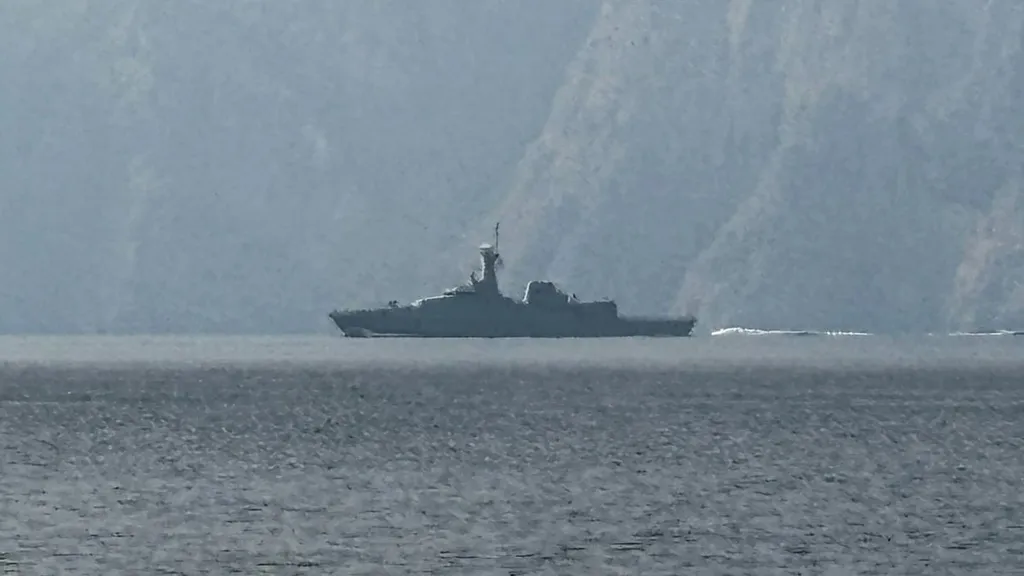
Analysts expect crude oil, which ended trading on Friday at about $67 a barrel, to open the week at $90 or higher as traders process the news that Iranian forces had restricted traffic through the crucial Strait of Hormuz.
But after the initial shock, the realities are likely to be more nuanced, analysts say. Here's what you should know.
What is the impact of closing the Strait of Hormuz?
About 20% of the global daily oil supply passes through the Strait of Hormuz every day. Saudi Arabia, Iraq and the United Arab Emirates send most of their oil exports through there.
But just because Iran claims to have blocked off traffic through the passage, that doesn't necessarily mean complete closure, said petroleum analyst Patrick De Haan.
"Here's the geopolitical reality: A sustained closure of Hormuz would almost certainly provoke coordinated regional and U.S. involvement to secure maritime passage," De Haan wrote in an analysis early March 1. "Too many global economies depend on that corridor for it to remain blocked for long."
Markets are pricing in higher transaction costs and additional volatility, he said, but not expecting full closure.
If access through the strait is limited for an extended period, prices could go "materially above $100/barrel," said analysts at TD Securities in a March 1 note.
On the other hand, if access through the strait is guaranteed and hostilities cease, the added costs to account for extra risk could evaporate in a matter of weeks, the TD team wrote.
"If it becomes clearer this week that the tensions with Iran are going to be short-lived, then oil prices come back to the 60s," said Rob Thummel, portfolio manager at $9 billion investment manager Tortoise Capital, in emailed remarks to USA TODAY.
The U.S. energy industry has made America the largest producer of crude oil in the world, Thummel pointed out. That means that "the spike in oil and gasoline prices during a major geopolitical event like this is significantly less."
What about oil from Venezuela?
Although the United States effectively controls the oil being produced in Venezuela, that won't do anything to offset the more than 3 million barrels a day that Iran produces, De Haan said.
"Even in the most optimistic scenarios with political stabilization and investment, it would take years, not weeks, for Venezuelan production to approach levels anywhere near Iran's export scale," he said.
Pain at the pump?
As USA TODAY reported Feb. 28, the national average for U.S. gas prices is likely to push above $3 a gallon on Monday for the first time this year. Over the next couple of weeks, prices will likely hit at least $3.10 to $3.15 a gallon.
There's also a normal seasonal increase in gas prices around this time of year.
Expect gas prices to rise in roughly the same proportion as the oil price over the coming weeks, Thummel said. So if crude jumps 10%, gas prices will as well.