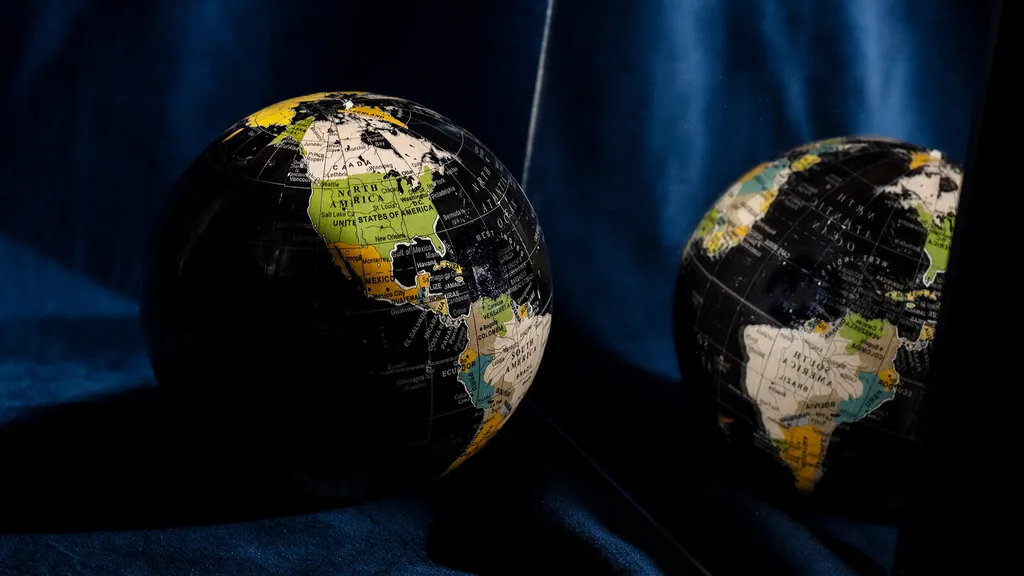
We had a good run -- some eight decades or so -- but it is clear by now that the United States has ceased to be the leader of the free world. A successor for that post has not been named, and it appears unlikely that the European Union, or NATO, or whatever constitutes "the West" these days will promote from within. The job might even be eliminated, one more reduction in force courtesy of President Trump.
Rather than leading the free world, the United States is striding across the globe seemingly free of restraint, forethought or strategy, exerting its power because it can. In a matter of months, the Trump administration has captured Venezuela's president and tossed him into jail in Brooklyn and has pummeled Iran's theocratic leadership in a war that is ricocheting across the Middle East and upending the global economy; now the president says he will have "the honor of taking Cuba" next. Trump in his second term is like Michael Corleone in "The Godfather," settling all the family business.
Nearly two decades ago, Fareed Zakaria, the international affairs columnist, published a best-selling book called "The Post-American World," which predicted the United States' relative decline versus other economically ascendant countries, what he called the "rise of the rest." (Senator Barack Obama was seen carrying the book around during his first presidential campaign, affirming the volume's elite sway.) The United States would remain militarily and economically pre-eminent, Zakaria argued, but it could take on a new political role, a sort of chairman of the board for the planet, relying on "consultation, cooperation and even compromise."
Under Trump, the idea of U.S. leadership has indeed been remade -- but from authority to domination, from persuasion to bullying, from nurturing alliances to wrecking them. (Consultation, cooperation and compromise have yet to join the MAGA coalition.) "We don't need anybody," a peeved Trump said last week when European leaders initially declined to help reopen the Strait of Hormuz. "We're the strongest nation in the world. We have the strongest military by far in the world. We don't need them."
Launching a war with only one ally and then expecting everyone else to fall in line is a perfect example of the tensions inherent in America's new approach. The United States wants the benefits of hegemony, but without accepting the responsibilities -- ensuring collective security, promoting economic openness, nurturing vital alliances -- that come with it. Trump doesn't care to be a superpower; he just likes to wield superpowers. He wants to operate in the world constrained only by "my own morality" and "my own mind," as he told The Times recently.
What does that mean for America's role and purpose in a world that has been too long defined by what it is not (the post-Cold War era)? It means that what we once called Pax Americana, that U.S.-led system of alliances and institutions that promoted American interests and values and helped avoid major conflicts in the decades after World War II, is gone, and irretrievably so. In place of the Pax Americana we are seeing a sort of Lax Americana, a world in which a careless and uninhibited and incurious U.S. superpower struts across the chess board, threatening old friends and enabling old rivals, seeking short-term gains, heedless of the dangers it is creating for itself and for the world.