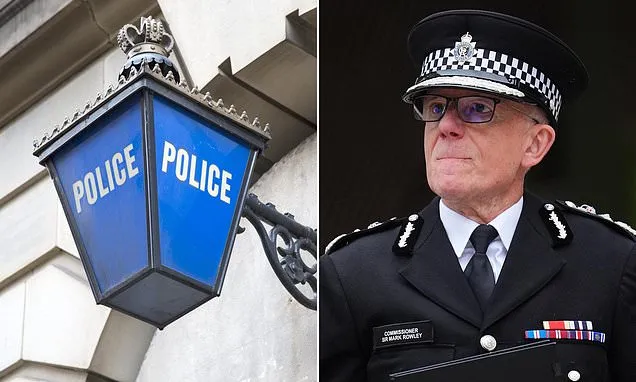
By SIR MARK ROWLEY, COMMISSIONER OF THE METROPOLITAN POLICE and GAVIN STEPHENS, CHAIR OF THE NATIONAL POLICE CHIEFS' COUNCIL
Our current policing model was built for the 1960s and has been stretched beyond what it can support.
Crime has changed. Technology has changed. Communities have changed.
Our ability to tackle the crime threats to communities, whether local or global, is undermined by this outdated system.
Redesign is overdue. That is why I welcome the Home Secretary's willingness to be bold.
Police chiefs know this and are united in calling for reform. Not for the sake of neat organisational charts, but because the current structure quietly drains capacity from the frontline and prevents the public from receiving the visible, effective service they rightly expect.
We cannot make the case for the resources we need unless we undertake the reform that is overdue.
We run 43 forces, overlaid with regional collaborations and a thicket of national units and bodies creating inefficiency.
We need around 10-15 fully capable forces, large enough to sustain vital specialist functions like murder investigations, firearms operations and serious and organised crime work.
Rationalising support services and specialist functions would eliminate duplication, release capacity equivalent to thousands of officers and staff, and provide a platform for exploiting modern technology.
Right now, the system struggles to keep up with threats and harm that evolve quickly. Public disorder, cybercrime and hostile state activity are rising.
Chronic harms, such as violence against women and girls, child abuse, and fraud, are increasingly driven by online activity and sophisticated digital tools.
Fragmented structures cannot match this pace. Under serious strain there is a real risk of systemic failure.
The work to tackle smartphone theft in the capital shows what can be achieved when organised crime teams, response units and neighbourhood officers are aligned - the golden thread of policing.
Working together, we dismantled a suspected international smuggling gang and recovered thousands of stolen devices.
That network is believed to have trafficked up to 40,000 stolen phones - around 40 per cent of all devices taken in London - from the UK to China over just 12 months.
Reform must strengthen our ability to confront national threats. Organised crime groups exploit borders, technology and financial systems. The drugs trade is international.
Cybercriminals and fraudsters are responsible for over half of all reported offences. Terrorism and state‑linked threats continue to evolve. These threats affect us all locally, but they can't be tackled locally.
We need a strong national and international response.
Our Counter Terrorism Police and National Crime Agency are world leading, but as the challenges they face evolve, so must they.
We need a more integrated national structure - aligned closely with international and intelligence partners, secure technology platforms and expert investigative units.
Tackling those threats nationally reduces the pressure on local forces and supports them when needed.
We should build a strong national centre, supported by fewer, fully capable regional forces running consistent specialist functions.
Local policing should be rooted in the current empowered Basic Command Units, each relentlessly focused on the needs of its own communities, with the ability to draw on regional or national assets instantly.
That is what genuine local policing looks like: neighbourhood teams with fast access to specialist support. Officers backed, not burdened, by the system.
Reform must also modernise the tools and workforce for today's crimes. Technology has been sacrificed for headcount for far too long. Officers spend hours on tasks that should take minutes.
Modern digital tools, real-time data, better mapping and improved systems would give local teams more time in their communities.
A workforce that blends cyber specialists, forensic experts, neighbourhood officers, and analysts will help local prevent more harm and respond faster.
We don't need to wait for legislation; policing can start now. We can reduce duplication, standardise best practice, pool specialist units and co‑invest in technology that lifts the burden from the frontline.
Reform is not a distant vision - we can act today.
The wider criminal justice system reform must also keep pace and the expertise of Sir Brian Leveson has helpfully provided a route forward for Government.
Delays and bureaucracy are undermining victims confidence and faith, and wasting countless officer hours.
When a London court is listing cases of coercive and controlling behaviour for 2030 and repeatedly bailing a betting shop-robbing recidivist who endlessly reoffends despite his tag with a 2029 trial date, it is not safe and it is not justice.
The system must be quicker, less bureaucratic and empower police to charge more offences directly to protect communities.
The aims are simple: resilient local policing making people feel safer; a national force that is better able to meet the full range of complex threats; reduced waste; a service empowered by the best of modern technology; a workforce supported for today's challenges.
Sixty years on from the last major changes we must act swiftly or slowly fail.