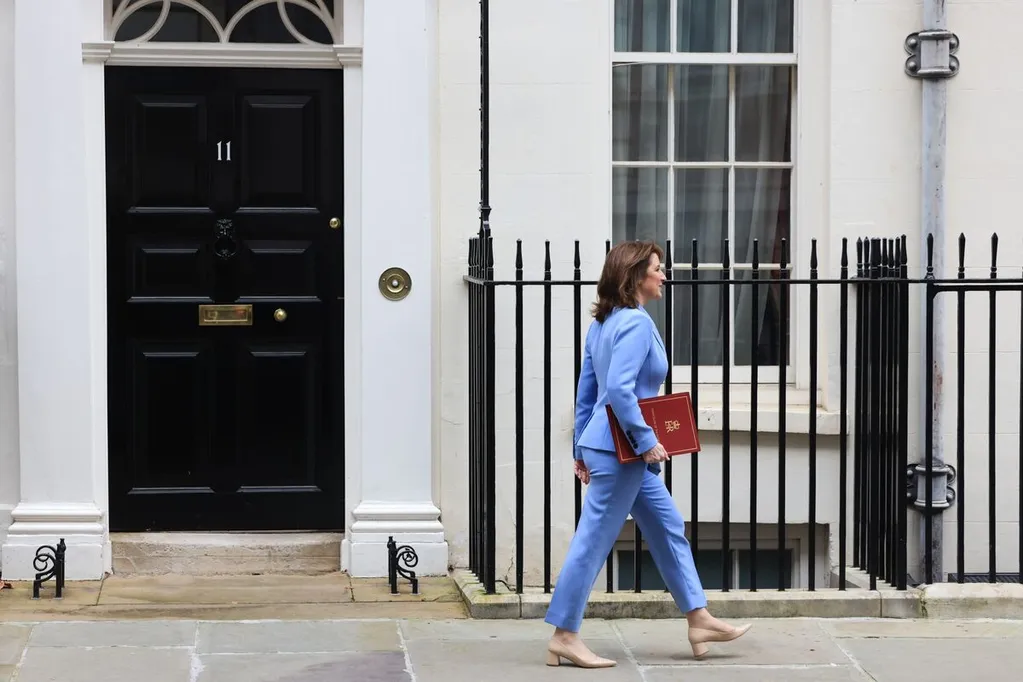
The surge in UK gilt yields on the back of the Iran war could cost Chancellor of the Exchequer Rachel Reeves more than a 10th of her fiscal buffer by increasing the cost of servicing government debt, according to Bloomberg economists.
Financial market moves since Feb. 27, the day before the US and Israel attacked Iran, have erased about £3 billion ($4 billion) of Reeves' cushion against the rule requiring her to cover day-to-day spending with taxation, according to Bloomberg Economics calculations based on Friday prices. In the forecast it delivered at the start of March, the UK fiscal watchdog estimated the Chancellor's fiscal headroom at £23.6 billion.
The UK has been hit harder than Group of Seven peers by the global bond selloff. Government borrowing costs hit their highest since 2008 on Friday, rising above levels experienced during 2022 turmoil under Prime Minister Liz Truss. The benchmark 10-year yield rose 69 basis points since Feb. 27, compared with a 36-basis point average increase across the rest of the G-7.
Most of that spike was driven by expectations that the UK will suffer an acute prices shock and that the Bank of England will respond aggressively to it, after its nine-member committee said on Thursday it stood ready to act.
"The clear risk is that the central bank concludes the most credible policy response is to raise rates preemptively to anchor inflation expectations," Bloomberg economists Matt Bunny and Dan Hanson wrote in their note.
The squeeze arrives at a time when UK inflation is still hotter than the Bank of England's target, unlike in the euro area. Sticky price pressures, combined with the end of a cap on household fuel bills that's scheduled to lift in July, also heighten the risk that a surge in energy prices could lift inflation expectations and set off a wage-price spiral, the economists said.
BE calculations of the fiscal impact do not factor in any further potential government support for households. Yet concerns about the UK's vulnerable fiscal position have stoked the surge in yields since the start of the Iran war, according to their analysis.
Labour is facing growing pressure to reduce energy bills, with the left-wing Green Party -- which has recently surpassed the government in some polls -- calling for billions of pounds in aid if bills soar. A YouGov poll conducted for Sky News found that eight in 10 Britons want action to lower energy bills for all households.
As things stand, the spike in energy prices could cost UK households £13 billion over the next year - roughly 15% of what they faced in 2022 following Russia's invasion of Ukraine, according to BE calculations.
If Reeves were to follow a similar approach and cover 60% of householders' bills, spending could rise by £8 billion this year, they said, while cautioning that untargeted support was not likely.