Drivers in the capital will need to watch their speed even closer from now on with Transport for London announcing the rollout of new hi-tech cameras that will be used to enforce the city as Mayor Sadiq Khan continues his war on motorists.
TfL will trial a new type of radar-based speed camera across ten sites in London, before deploying them more widely across the city, it said on Tuesday.
The new cameras will be installed over the next few weeks.
They will be located at sites identified as speeding hotspots in Haringey, Tower Hamlets, Havering, Croydon, Hammersmith and Fulham, Brent, Hackney, Ealing and Sutton. All sites are located on 20mph or 30mph roads.
And drivers will have less warning of their whereabouts because they do not need white lines marked on the road to measure if motorists are exceeding the limit or not.
Those who do get snared by the technology also won't know about it until they receive a penalty charge notice in the post. This is because the devices do not flash like traditional speed cameras but still take high-definition images of the vehicle and person at the wheel.
TfL and Met Police will trial a new type of radar-based speed camera in the capital as it cracks down on motorists exceeding 20mph and 30mph limits in the capital.
Current 'spot' speed cameras used across London have sensors embedded in the road surface to detect the speed of all passing vehicles.
Drivers are alerted to where they are at the roadside by a group of white lines painted onto the tarmac that are used to measure speed when the camera takes still images of motors.
But the new installations are far more advanced and require much less road furniture.
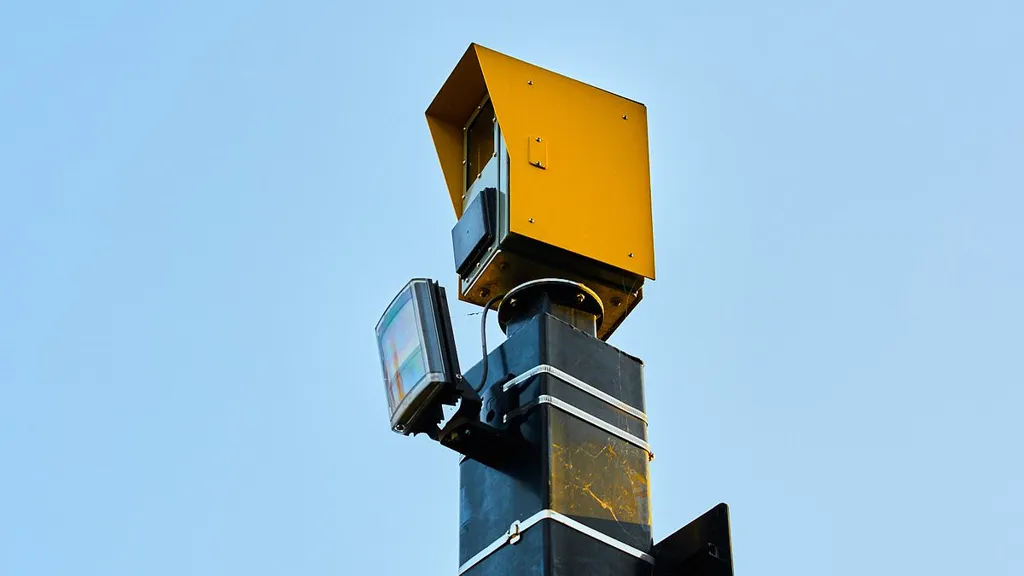
The RedSpeed Sentio Shield camera combines 4D radar and a 4K colour camera that requires no visible flash or white light when activated - and no in-ground sensors or road markings.
The devices can be retrofitted to existing street furniture but will typically be installed on tall polls, meaning they will be out of the eyesight of motorists in close proximity.
They are identifiable by their rectangular yellow box shape with a black panel. Each one also has a separate monitor below.
RedSpeed says they can also be used as red light detectors to catch motorists jumping red lights. However, TfL confirmed to Daily Mail and This is Money that they will be solely used for speed enforcement.
One of their biggest advantages is that because they do not rely on a flash for images, they can detect motorists using illegal 'ghost plates' - number plates that are covered in reflective products specifically designed to escape enforcement.
TfL says they provide 'increased reliability and a more effective method of detection' while also producing better quality colour images day and night, which will help Met Police to identify who is at the wheel of the vehicle to ensure the correct individuals receive endorsements.
Each camera too can provide coverage of up to five lanes of bi-directional traffic flow, whereas existing spot speed cameras can only monitor up to three lanes of traffic, requiring sensors in each of the lanes.
TfL says road signage will be remain in place to notify drivers that a camera is up ahead.
The rollout of the new cameras build on last week's 'Vision Zero Plan' announcement, in which Mayor Khan proposes to reduce collisions in London in the next five years - and completely eradicate deaths on the capital's roads by 2041 - with a raft of new measures.
These include a potential new Paris-style levy on SUVs, more 20mph zones, reducing the maximum limit in London to 40mph, and using AI cameras to catch drivers committing offences, such as texting at the wheel or failing to wear a seatbelt.
TfL said it and the Mayor remain committed to expanding and upgrading London's safety camera network and investing in new technology that is 'effective and adaptable to future enforcement needs'.
At least 20 locations have already been identified for the installation of the new cameras based on speeding risk and or persistent community concerns about motorists persistently breaking the limit, it said.
Siwan Hayward, TfL's director of security, policing and enforcement, said: 'This trial allows us to test new radar‑based camera technology to ensure it meets London's future enforcement needs.
'Upgrading our camera network is vital to maintaining strong, consistent enforcement, and together with the Met we are using every tool available to deter speeding, reduce road danger and save lives.'
Detective Chief Superintendent Donna Smith, of the Met's Roads and Transport Policing Command, added that the Met will 'use every tool available, including new radar‑based camera technology, to deter dangerous driving and support Vision Zero's ambition of eliminating deaths on London's roads'.