You're reading The Brink newsletter.
You're reading The Brink newsletter.
You're reading The Brink newsletter.
Get exclusive coverage of corporate distress, bankruptcies and turnaround stories, delivered twice a week.
Get exclusive coverage of corporate distress, bankruptcies and turnaround stories, delivered twice a week.
Get exclusive coverage of corporate distress, bankruptcies and turnaround stories, delivered twice a week.
Bloomberg may send me offers and promotions.
By submitting my information, I agree to the Privacy Policy and Terms of Service.
Welcome to The Brink. I'm Luca Casiraghi, reporting from Milan, where I followed Saks and its rapid collapse into bankruptcy. We also have news on Tricolor, Liquid Telecom and Ssense.
Swift Downfall
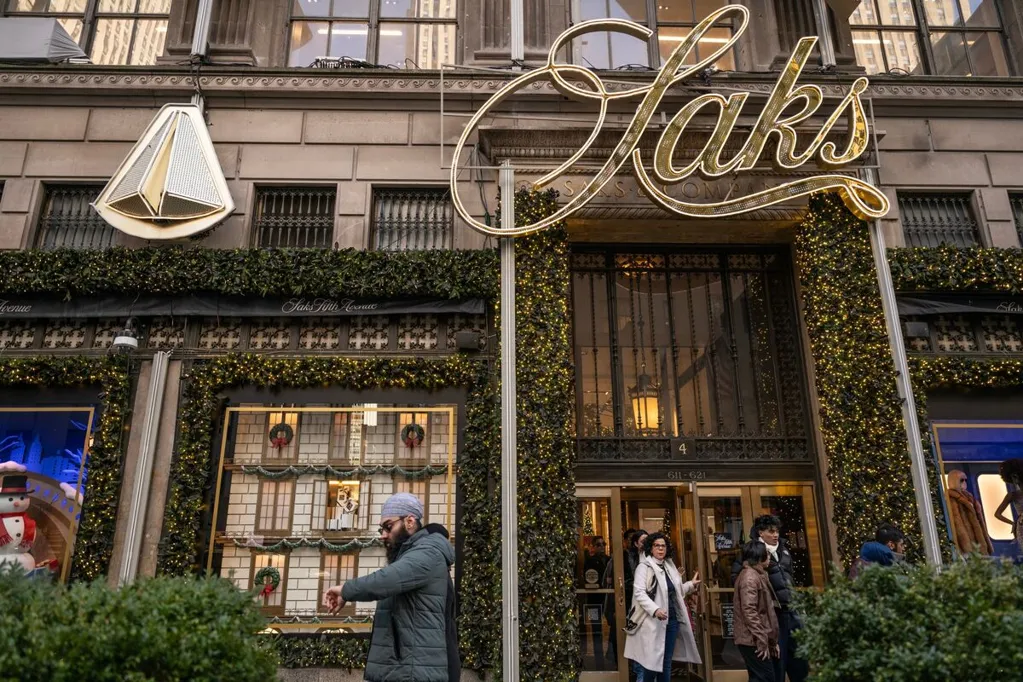
In a stunning fall from grace, Saks Global filed for bankruptcy this week, just a year after borrowing $2.2 billion to acquire rival Neiman Marcus in what was supposed to create a luxury retail powerhouse.
Instead, the company spiraled into financial distress at unprecedented speed and is set to hand billions of dollars of losses to its creditors. Bondholders who snapped up debt at 40 cents on the dollar just a few months ago now face recoveries of less than a penny, while luxury brands including Chanel, Kering and LVMH are owed $225 million in bankruptcy.
Saks has secured fresh financing including from a group of senior secured bondholders betting on a second act for the retailer. The deal was challenged by Amazon, which invested $475 million in preferred equity as part of last year's deal.
The company's rapid descent began almost immediately after the merger closed. Cash drained at an alarming rate as planned synergies failed to materialize and financial targets were consistently missed. Vendors, growing increasingly nervous about Saks' ability to pay, began pulling back on shipments or canceling orders entirely.
As the situation deteriorated, Saks fell behind on payments to luxury suppliers, creating a vicious cycle. With less merchandise arriving, stores looked increasingly bare, turning off the high-end shoppers the retailer desperately needed. The delayed payments to vendors "damaged trust," the company said in bankruptcy documents.
By the time Saks filed for Chapter 11 on Wednesday, its financial condition had become dire. The company burned through more cash than it generated last year, and its once-valuable bonds had become nearly worthless in secondary markets.
Hedge funds including Pentwater and Bracebridge now potentially face major losses. Bonds with roughly $486 million of face value held by Pentwater are quoted at pennies on the dollar, as are about $257 million held by Bracebridge.
The hundreds of millions in additional financing that investors provided over the summer, which sits higher in the repayment hierarchy, isn't faring much better; trading around 10 cents on the dollar according to broker quotes.
Despite its setbacks, Saks has arranged for approximately $1.75 billion in financing after filing bankruptcy.
For helping to arrange the financing, Pentwater and Bracebridge are set to collect fees and realize better returns on the outstanding bonds than where they're currently trading.
Amazon vigorously opposed the arrangement, arguing it would saddle the retailer with billions in new obligations and harm unsecured creditors. The e-commerce giant claimed Saks breached their agreement to sell products on Amazon's platform -- a deal that included launching "Saks on Amazon" and guaranteed at least $900 million in payments to Amazon over eight years. After a 7.5-hour court battle, Saks won access to an initial $400 million in cash but must return to court in the coming weeks to seek final approval of the entire financing package.
High Alert
- Distress among European infrastructure, utilities and power companies is set to rise as financing for the sector dries up and businesses face mounting burdens, according to the law firm Weil Gotshal & Manges.
- Goldman Sachs is leading a takeover of a historic Los Angeles studio lot after the owner, Hackman Capital Partners, defaulted on a $1.1 billion mortgage.
- Ken Griffin's Citadel and other Spirit Aviation bondholders will likely dictate whether the budget airline survives bankruptcy or shuts down, a labor union representing its pilots said Tuesday.
- Chinese officials have sought talks with Venezuelan and US officials to get assurances over its loans to the South American country.
Notes From the Brink
Investors in bonds from Tricolor Holdings, a used car dealer and subprime lender that collapsed last year amid allegations of fraud, sued Bloomberg Terminal Wilmington Trust, the trustee for the securities, alleging the firm failed in key supervision duties, Scott Carpenter reports.
The bondholders filed the suit in New York state court Tuesday. The filing came the same day that Tricolor founder Daniel Chu and former Chief Operating Officer David Goodgame pleaded not guilty to charges that they conspired to defraud lenders and investors.
The discovery last year of the alleged widespread fraud inside Tricolor's book of subprime auto loans instantly sparked questions about how it had gone undetected. In asset-backed securities like the ones Tricolor sold, investors largely rely on outside parties to perform key oversight and accounting roles in connection with underlying collateral.
Wilmington Trust should have caught the fraud by verifying that Tricolor had properly delivered loan documents needed to protect noteholders, according to the lawsuit. That failure led to more than $675 million in loans that either did not exist or involved double-pledged collateral, the lawsuit claims.
The suit lists a number of investment firms as plaintiffs, including credit investors One William Street, Clear Haven and Ellington Management Group.
The Latest on... Ssense
A group of lenders to Canadian luxury fashion retailer Ssense are trying to block a deal that would allow its founders to buy the company out of bankruptcy, Paula Sambo reports.
In court filings this week, the group, led by Bank of Montreal, said it seeks to stop a founder-led buyout of the company's parent, Atallah Group, and instead wants a judge to authorize an orderly liquidation of the retailer's assets.
The lender group, which also includes Royal Bank of Canada, JPMorgan, National Bank of Canada and Bank of Nova Scotia, is owed about C$113 million ($81 million) and would recover tens of millions of dollars more if the company's assets were liquidated, it said in court documents. Details of the founders' offer for the Montreal-based company aren't public.
The founders' bid was approved by the court-appointed monitor, EY, after a monthslong sale process under the Companies' Creditors Arrangement Act. In filings, the monitor said the deal would preserve more than 760 jobs, mostly in Quebec; keep Ssense operating as a going concern; and ensure customer returns are honored -- an estimated C$19.5 million liability.
By the Numbers
African fiber company Liquid Telecommunications is moving closer to refinancing talks as a $620 million bond maturity looms in September, Edward Clark and Giulia Morpurgo report.
The company has started a process to identify holders of the bond and has hired transaction advisory firm DF King to help it run the process. This type of exercise typically comes ahead of refinancing talks with major lenders.
Liquid Telecom has been trying to reduce its leverage in the run up to refinancing the bond. Part of this strategy has consisted of raising equity, which has included investments from Nvidia as well as from a group of investors including Google.