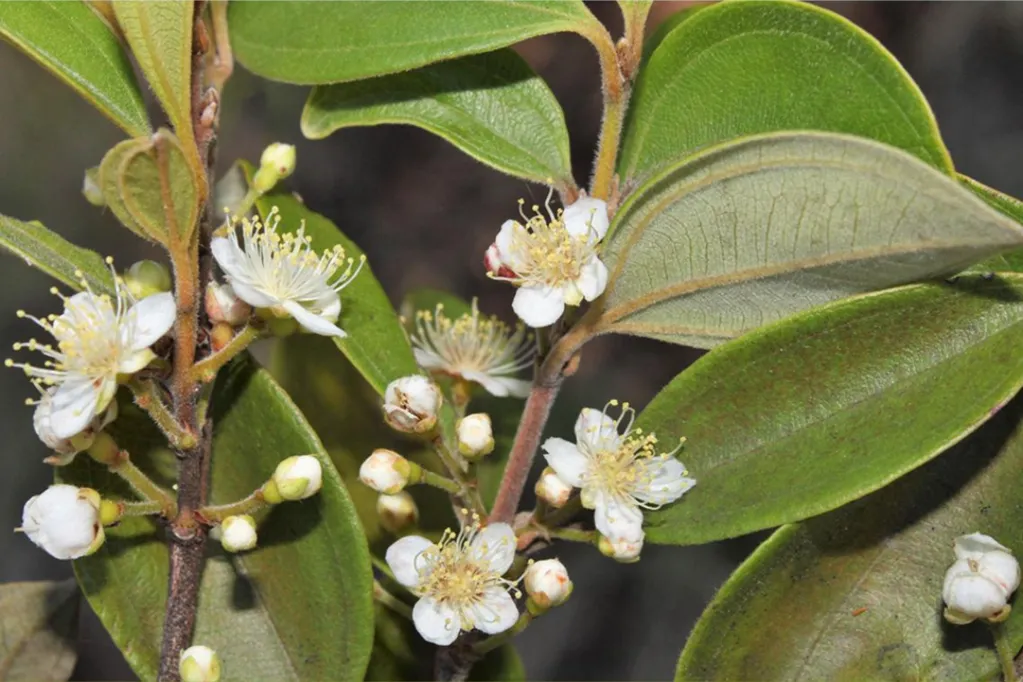
Scientists are urgently trying to save a recently identified rainforest tree species that is threatened by a devastating fungal disease that has rendered it unable to grow, reproduce or sustain a healthy population in the wild.
The species, Rhodamnia zombi, native of Queensland, Australia, is a small to medium-sized tree with large dark green leaves, shaggy bark and hairy white flowers growing in rainforests in the Burnett region.
It has been nicknamed the "zombie tree" because of its "living dead" situation caused by the fugal disease myrtle rust.
"This species did not have a name when it was first assessed in 2020," said paper author and botanist professor Rod Fensham of the University of Queensland in a statement.
He continued: "Since then 10 per cent of the trees have died and none of those remaining are producing flowers or fruit because of myrtle rust."
In their study, Fensham and colleagues explain that myrtle rust is a bright yellow pathogen that repeatedly attacks the tree's young shoots, killing them off before the tree gets the chance to grow or reproduce. The disease was first detected in Australia back in 2010.
"Without any intervention, the 17 species on this Category X list will be extinct within a generation," Fensham said referring to the zombie tree and other species facing the same threat. "None of them appear to have any resistance to myrtle rust or any wild population which is not yet infected."
However, as critical as the situation is, there is still a chance of recovery, according to Fensham. The botanist points out that the wider Rhodamnia genome provides some hope for the zombie tree, with related species displaying myrtle rust resistance.
"A survival strategy starts with finding clean cuttings in the wild before myrtle rust attacks them and propagating them to grow at safe sites. So far seedlings are being grown by specialists in Lismore and Townsville which look promising, but they need to be constantly vigilant," he said.
Scientists are hopeful that once these propagated trees begin producing seeds, natural resistance to myrtle rust will become apparent in the next generation of Rhodamnia zombi. The ultimate goal is to reintroduce these trees back into the rainforest so the species can once again take its place in the ecosystem.
"It's a long shot and ambitious but the species needs time and space without being constantly walloped by myrtle rust to hopefully express some resistance," Professor Fensham said.
However, he warned: "Left to its own devices, the trees in the wild really will be the living dead."