THEIR execution too often lets down their ambition, but Scotland will come to Dublin on Saturday with an unwavering desire to play a loose and unpredictable game.
The gap between Scottish confidence and delivery has fuelled a thousand punchlines for years now, but Gregor Townsend, whatever else he might be accused of, is innocent on all charges when it comes to plotting against the game.
Others try and reduce it to deathless structures, squeezing as much risk out of it as they can.
Not so the Scots, and if the mismatch between what they want and what they deliver is one of Townsend's legacies, when they click, they are devastating.
Laying waste to France as they did yesterday shows not only their attacking brio but also what they can do against a team who are inaccurate or complacent.
Ireland's defence must be on guard, but it's the Irish commitment to attack that will decide their fate in what could prove the championship showdown.
It didn't take Scotland filleting the French to emphasise the primacy of attack; the torpid evidence of Friday night in the Aviva Stadium showed how Ireland fare when they stray away from a daring attacking plan.
That, after all, was the basis of the win in Twickenham in round three, a display that was fuelled by daring and which played to this team's strengths.
It's been argued that the Irish plan against Wales was simply to grind them into the Dublin dust: run not around them but through them.
If so it, failed but it seems much more likely that after failing to build on Jacob Stockdale's early score, the Irish performance tightened up, with the focus narrowed to trundling up the middle and hoping to bludgeon over the line.
It suited Wales fine to play the game on the most rudimentary terms, but it's no coincidence that it saw Ireland revert back to the uncertainty that haunted them against France and Italy.
If they are to get back on the front foot against the Scots, as they must, then they will be lead there by their half-backs.
Neither was inspiring two days ago. In the case of Jamison Gibson-Park, one flat outing can be excused given how well he has played this season.
The focus on him winning his fiftieth cap didn't seem to fall easily on a man who doesn't exactly seek out attention. Andy Farrell will be confident that his scrum-half can produce what is necessary next weekend.
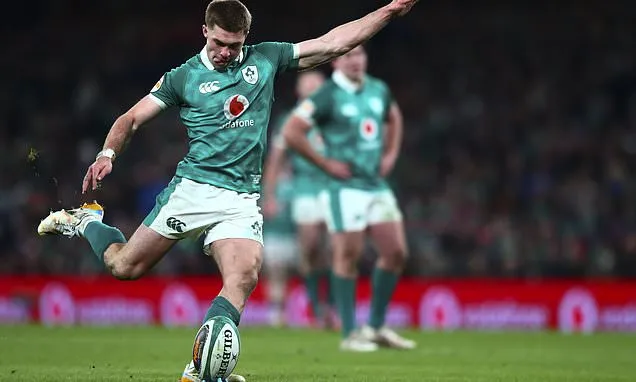
The head coach can be much less certain about Jack Crowley, however. He showed excellent awareness in scoring his try against the Welsh, but that was as good as it got for him.
His performance in open play was passable, but hardly authoritative. At his best for Munster, he relishes controlling a game, moving around his pack or looking to pick the telling pass for one of the outside backs.
There was scant evidence of that in this performance, but that wasn't the most concerning issue. His place-kicking was simply poor, as he missed two conversions that have to be landed at this level.
Sam Prendergast didn't deserve to keep his place after his travails against Italy, and it was his inefficiency from the kicking tee that was the definitive charge against him.
Crowley was good in London but it was a performance for all time by Gibson-Park that drove Ireland that day. He was like a picture-book French No9, the little general who takes on the creative burden and prompts and pulls his team into the most advantageous positions.
Crowley played his part, but what Gibson-Park produced that day was blinding proof that Ireland's inspiration since the retirement of Johnny Sexton now wears No9, not No10.
The Munster out-half should keep his place for the Scottish game, but the debate about who wears the jersey from Ireland looks as unsettled as ever.
This isn't good news for the coach or the team. The most successful sides have settled performers in the pivotal positions, and one need only consider the miscalculation made by Leo Cullen in rotating his out-halves the season after Sexton's retirement.
It deprived the team of consistent leadership in the game's pivotal position, and they paid a price for that by the time they got to the European Cup final.
But players can only make the jersey their own through high-quality performances, and Irish supporters must wait for one of the wannabe No10s to put together a compelling run of form.
Until then, Gibson-Park remains the team's priceless asset.