The surfer paddled out just after sunrise. The water was calm, the horizon quiet. It was the kind of morning that feels almost staged for a perfect session. With a deep breath it, their hands sliced through the mirror-like ocean surface, swimming out to where the waves are.
Moments like this are part of the reason why people return to the ocean again and again. But it would be prudent of us as a species to remember that the sea is never empty, even when perfectly still where air and water meet. It never has been. And sometimes, very rarely, humans cross paths with sharks in ways that make headlines.
Each year, the International Shark Attack File at the Florida Museum of Natural History tracks those encounters carefully. "The International Shark Attack Files provide baseline data about shark attacks on people that are rigorously and scientifically investigated, evaluated and summarized on an annual basis. While a significant fraction of incidents likely go unreported, the temporal trends, and local and global patterns of incidents are used to evaluate the biology of the animals, their behavior and the risk they pose to humans," said Dr. Gavin Naylor, director of the Florida Program for Shark Research at the Florida Museum of Natural History, in a press release. Their newly released 2025 report investigated 105 alleged shark-human interactions worldwide. Of those, 65 were confirmed as unprovoked bites and 29 were classified as provoked. Under their definitions, an "unprovoked bite" happens when a person is in the shark's natural habitat without initiating interaction while a "provoked bite" includes cases where someone attempts to touch, feed or handle a shark, or is interacting with fishing gear connected to one.
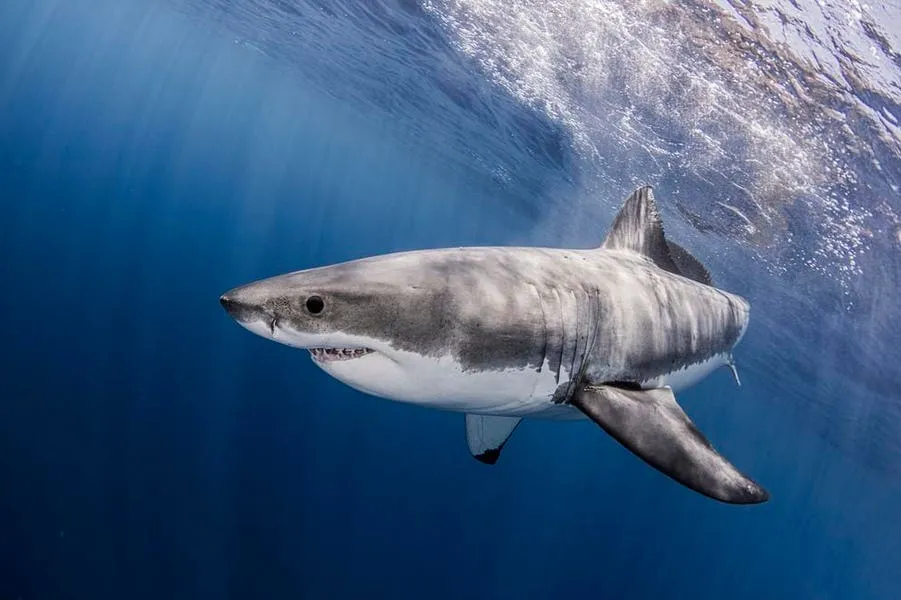
Despite what dramatic headlines sometimes suggest, the number of incidents has not escalated exponentionally, with the global total of 65 unprovoked bites sitting very close to the recent five-year annual average of 61. However, fatalities did increase slightly in 2025, with 12 shark-related deaths recorded worldwide and nine of them classified as unprovoked. While any loss of life is tragic, it is important to remember that annual fatality numbers fluctuate naturally. Some years are higher, others lower; these changes often reflect shifting ocean conditions as much as anything else. And white sharks are a good example of this ongoing complexity, since several of these bites involved white sharks, including three fatal bites on surfers in Australia. Researchers have observed growing numbers of individuals at certain aggregation sites near beaches popular with surfers, particularly in Australia. This doesn't necessarily mean white shark populations are exploding everywhere! But it could suggest that successful conservation in some regions, combined with certain environmental conditions, might concentrate sharks and humans in the same spaces at the same time. Something to keep in mind before heading out to the beach, especially because what we are doing plays a major role in shaping risk patterns. In 2025, swimmers and waders accounted for 46 percent of incidents. Surfers and other board sport participants made up 32 percent, followed by snorkelers and freedivers which accounted for 15 percent. These activities place people at the surface or nearshore zones where sharks also hunt, and this overlap creates opportunity for encounters.
Geography also continues to shape where shark bites occur, with the United States recording the highest number of unprovoked bites again in 2025 (25 confirmed cases, one fatality), followed by Australia with 21 incidents (which is higher than its recent five-year average of 13). Australia recorded 5 unprovoked shark bite fatalities in 2025. "If these bites occurred anywhere other than Australia, they would probably have resulted in even more fatalities. Their beach safety is second to none. Within minutes of a bite, they've got helicopters airborne ready to respond," Naylor said. Following those double-digit countries, you have the Bahamas which reported five unprovoked bites and New Zealand with three. Several countries including Mozambique, South Africa and Vanuatu each reporting one fatal incident. Many other regions recorded single non-fatal encounters. Within the United States, Florida remained the global hotspot for bites, reporting 11 incidents (below the state's recent five-year average). Volusia County alone accounted for more than half of Florida's total.
So what is the "bottom line" of this 2025 report? First, that the overall risk of being bitten by a shark remains extremely low! Second, local increases in encounters may reflect changing environmental conditions or shifting human behavior rather than sudden changes in shark aggression. And third, conservation success can and most likely will reshape how humans and sharks interact along shared coastlines. It is also worth remembering that not every suspected shark bite turns out to be one, as some reported injuries were later linked to other fishes, sharp objects in the water or cases where evidence was inconclusive.
The lessons (which are more like patterns, really) from this past year and years prior to that raise larger questions about the future. If the research into co-existence is anything to go by, the real challenge will be learning how to live alongside recovering wildlife rather than expecting oceans to remain empty for our convenience. It is likely that encounter rates with sharks will increase, not because sharks are becoming more dangerous but because there are simply more opportunities for overlap between two species sharing the same space. In protected places where we are helping predator populations recover, we may also see more sightings near beaches, especially in regions where protection overlaps with popular recreation zones. Balancing ocean safety with effective conservation measures means our local, state, and country-wide governments should invest in monitoring programs, public education and nonlethal risk-reduction tools while recognizing that sharks play critical roles in maintaining healthy marine food webs. "Out of the 1200 species, 30% of them are categorized as endangered," said Naylor. "That's a lot especially because these animals have managed to persist for about 330 million years. They've been through the Permian Extinction and Cretaceous Extinction. Clearly they're resilient yet here we are."
The International Shark Attack File has suggestions for further decreasing your chances of shark bites, such as swimming with other people nearby (or having a swim buddy), avoiding swimming at dawn and dusk and staying away from where people are fishing.
The question is not whether we can remove sharks from coastal waters because we cannot and should not. The question instead should be if we are willing to adapt our expectations of what it means to share the ocean responsibly. We will never be able to completely eliminate encounters. Instead we should strive to understand them better so that co-existence becomes safer for everyone involved.