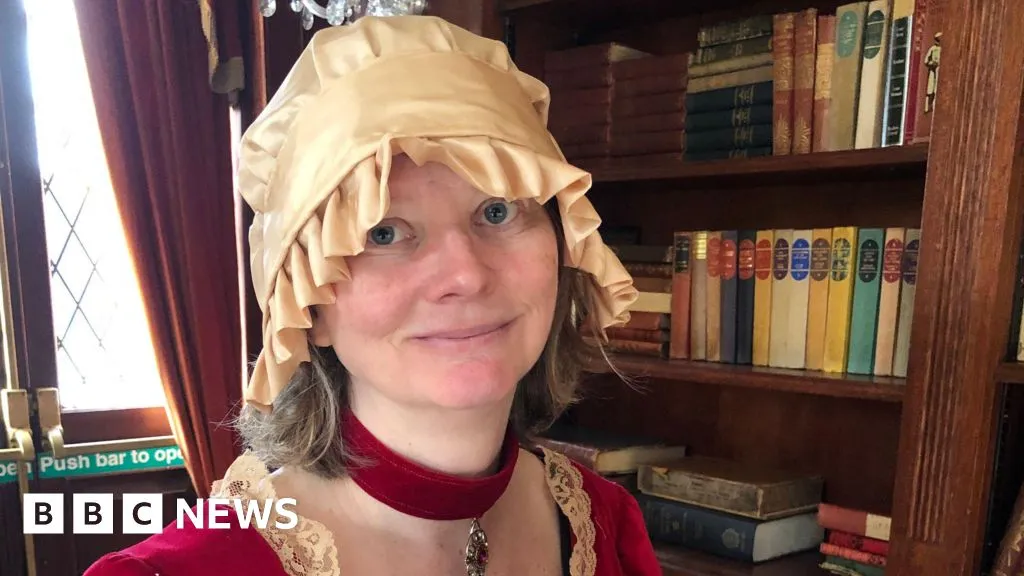
An author is relaunching a ladies club that once revived William Shakespeare's reputation 300 years ago.
A quartet of upper class women formed the Shakespeare Ladies Club in 1736, which was 120 years after his death, as a way to revive his plays on London's stages after his reputation had fallen into disrepute.
At the time many of his plays were heavily adapted, but the women worked to restore the plays as they were written.
Suffolk author Mai Black is reviving the group to offer a place for women to come together, read the playwright's works and celebrate the original women.
In the 18th Century, Shakespeare's reputation was vastly different with many stages not showing his work or changing the scripts.
"At that time Shakespeare was seemed as a bit thick, a bit old-fashioned, a bit flawed and a lot of intellectual men of the time said he was good, but a bit rubbish," Black explained.
"I think he would have been forgotten, or certainly the plays as we know them, without these women."
Notable names in the group included Elizabeth Boyd who was one of the earliest women to earn a living from her writing as well as Susanna Ashley-Cooper, Countess of Shaftesbury.
The women petitioned theatres to perform more Shakespeare and pressured them to ensure the plays were as close as possible to his original works.
According to Black, the club was largely forgotten for about 250 years before they were rediscovered in the 1950s by academics and their work uncovered.
"It's only in the last 10 years really that actually the names have been known and people have really started to investigate who these women are and what they achieved," she added.
Black is launching her group on Sunday at The Orwell Hotel in Felixstowe as part of WAMfest that celebrates women in arts and music.
The new Shakespeare Ladies Club will offer in-person tea parties, an online reading group and more, with events being a mixture of women only and open to all genders.
Mai added that Shakespeare could be for anyone to enjoy and that his work had helped her during tough points in her life.
"At the moment especially with the AI revolution I think people are wanting to connect with things they trust, that weren't written by a computer, and I think you can't do better than Shakespeare," she added.
"He's so popular worldwide, everyone knows his name, if they don't know his plays.
"I think there's a lot people can draw from that and there's a trust that it's not AI, it's real, it's been loved through the 400 years."