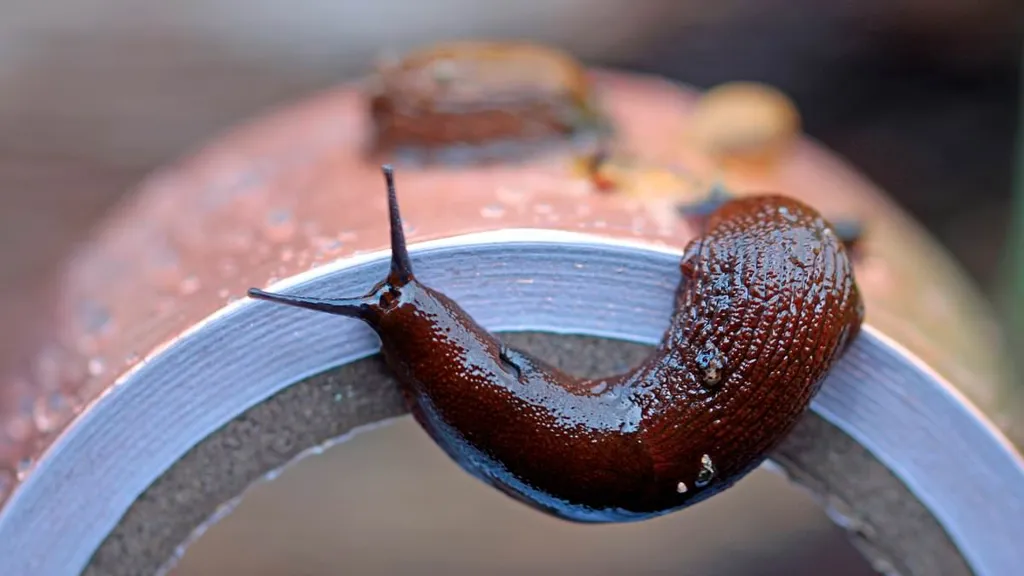
After more than 50 days of consecutive rain, the UK was finally treated to some sunshine this week, with temperatures hitting a balmy 19°C.
But it seems the wet weather has still left its mark, creating the perfect conditions for a garden pest.
Christopher Terrell Nield, a chemist at Nottingham Trent University, has warned that gardens could soon be overrun with slugs.
Gardeners may remember a similar 'Slugageddon' in 2024, when huge numbers of slimy creatures devastated plants.
Now, Dr Terrell Nield says that 2026 is shaping up for a repeat, thanks to the wet conditions over the last few weeks.
'The picture for 2026 is complicated. Although flooding can kill overwintering eggs and adults, a mild wet winter will have reduced slug mortality,' he explained in an article for The Conversation.
'It may also affect slug predators. Beetles used for slug control in conservation agriculture can survive short term inundation but their larvae in saturated soil probably won't.
'Flooding also creates lots of ready food for slugs from plants that have died in the water, a potential slug fest as it dries in spring.'
Across the entire UK, February was 23 per cent wetter than average, although the pictured varied regionally.
With no shell to protect them, slugs rely on moist conditions - meaning they mostly reproduce in the spring and autumn.
Last year was not a good year for slugs, as conditions varied from cold to extreme heat, with very little rainfall.
However, three months into 2026, it looks like it's shaping up to have the perfect conditions for a repeat Slugageddon.
'Overall the conditions point towards increased slug populations but probably not as bad as 2024,' Dr Terrell Nield said.
Before you panic that your garden is going to get decimated, there are several things you can do to deter slugs.
1. Beer traps
Experts from horticultural charity Garden Organic say that slugs' love of lager makes the drink the tastiest way to trap them.
Slugs are 64 times more likely to be caught in a trap containing lager than water, an experiment by the charity found.
To make a slug beer trap (pictured), dig a hole in the garden, fill it with a container full of beer (preferably lager) and wait for the slugs to slip in. Don't forget to empty the trap regularly.
Using beer as a slug trap
For years, gardeners have been using homemade beer traps as a way to kill garden slugs.
Slugs are attracted to yeasty odours found in beer - not the alcohol.
Slugs love naturally fermenting yeasts that are found in overripe fruit. This is also why slugs feed on decaying plant material generally.
To build a beer trap, fill a cup with beer - preferably lager - and dig a hole in the garden that the cup can fit into.
Slugs will fall into the cup and eventually drown in the beer.
So if you have to kill them, at least it means the slimy gastropods get a happy death.
Bitter is 53 times more effective than water and the gastropods will go for any beer brand, researchers found. But they will reject other alcohol including red and white wines, Cava and cider.
Garden Organic's findings came from 166 citizen scientists sinking glasses containing the different drinks below the soil surface with only the brim sticking out, for its 'slug pub' research project.
'Slugs love lager,' said Emma O'Neill, the charity's head gardener.
'Many gardeners know that slugs are confirmed lager louts and their love of this tipple can certainly distract them from your plants. The smell of lager and bitter really seems to attract them.'
2. Copper tape
Copper tape is also considered to be a natural slug repellent.
'The mucus they secrete from their body (their slime) reacts with the metal, producing a tiny electric shock,' Rentokil explained.
Simply place copper tape around the rim of your plant pots to act as a deterrent for slugs.
Why are slug pellets banned?
Government was advised by the UK Expert Committee on Pesticides and the Health and Safety Executive that metaldehyde slug pellets pose an unacceptable risk to wilflife.
Metaldehyde is a contact poison that works to protect garden plants by damaging slug mucus cells and causing them to release excessive amounts of slime to the point they eventually dehydrate and die.
This dangerous chemical enters the food chain via slugs but can cause secondary poisoning of hedgehogs and birds.
So although the animals don't consume the pellets directly, toxicity can build up as they consume slugs containing the substance.
3. Crushed eggshells
While it might seem unusual, crushed eggshells can make an effective barrier to slugs when sprinkled on the ground around plants.
'The idea is that the barrier either dries out the slime that the slugs move on or that it irritates them so they will not cross it,' RSPB explained.
'Their effectiveness must inevitably be weather dependent, but they may be worth trying, especially under cloches. Make a smooth seedbed type surface before applying a good layer of the material, a few inches wide.'
The same effect can be achieved with coffee grounds.
4. Alternative feeding
Offering an alternative food supply to slugs can deter them from going for your more prized plants.
RSPB advises laying lettuce or cabbage leaves out between the plants.
'The slugs tend to collect under these leaves to feed and shelter, so examine them regularly and remove any that you find,' it said.
'Another idea is to sow a sacrificial crop of something that slugs love, such as brassica or lettuce. Hoe this off while small and leave the hoeings in situ around the transplants.'
5. Nematode worms
Microscopic worms, called nematodes, occur naturally in soil and seek out and kill slugs by reproducing in them.
Nematodes are now being cultivated and are available as biological control agents under the trademark Nemaslug.
'The nematodes are mixed into water and applied with a watering can to the area requiring protection,' RSPB said.
'They remain active for up to six weeks.
'The nematodes are slug specific and do not control snails.'
6. Protective cloches
It might sound obvious, but placing a DIY cloche over your plants can make sure they're not targeted by slugs.
'Disposable plastic drinks bottles, with the bottoms cut off and the screw tops removed, make excellent individual protective cloches for young transplants,' RSPB said.
'Check for the first few days after transplanting that a slug hasn't been trapped inside the bottle.'
7. Grapefruit traps
Empty grapefruit rinds can serve as excellent traps for slugs, which are big fans of citrus.
Rentokil advises: 'Place a couple of empty grapefruit rinds upside down on the ground, making sure there is enough clearance for a slug to enter.
'The grapefruit rind provides slugs with food, and a damp environment to hide. Leave overnight and dispose of any slugs caught in the morning.'
8. Avoid susceptible plants
While it might seem defeatist, if slugs can't get enough of a certain plant, you might have to give up on it.
'Gardeners too often want to grow things that aren't suited to their site. In the case of plants that are very susceptible to slugs, this isn't really worth the effort,' RSPB said.
'If, for example, the slugs get more out of your hostas each year than you do, the answer is to give up on the hostas and try something else.
'Alternatively, these plants can be grown in rough wooden tubs or terracotta pots, out of the reach of slugs.'
9. Plant slug repelling plants
Several plants are believed to be natural repellents for slugs.
'When wondering how to get rid of slugs, a gentle method is to use plants which deter them and act as a natural pesticide,' The English Garden said.
'This way, you can keep slugs at bay without chemicals.'
'Astrantia gives off a scent that repels slugs. Other plants which deter slugs include wormwood, rue, fennel, anise and rosemary.'
10. Sprinkle seaweed around your plants
Whether it's fresh or powdered, seaweed is a great home remedy for slugs - and has the added bonus of being good for your soil.
'Seaweed is a slug deterrent due to its salt content,' Hedgehog Street explained.
'Use plenty of dried seaweed around the base of your plants, being careful for it not to touch the plant stems.'
'The sharp texture will also make it difficult for slugs to move over.'