As the debate about our AI future continues to rage, I find myself wondering if we're all going to become like the main character in my favorite 19th century novel, North and South. The heroine is a young woman during the Industrial Revolution who has to adjust to a whole new way of thinking and living and a host of new societal norms. Sound familiar?
Every day we read about the potentially huge effects AI will have on the labor market, the economy and society. Although many people speak about the future with certainty, we don't really know what's to come. People thought the invention of the cotton gin would finally help end slavery. In fact, it massively increased it. On the other hand, weavers on the eve of the Industrial Revolution were right that their livelihood would be decimated by the introduction of "the new machinery."
It's too soon to say with any confidence what effect AI will have on the labor market (or the economy or society). Many people claim it's already leading to job losses, but the best evidence we have suggests that hasn't started yet. That doesn't mean we should ignore it or look away -- but it does suggest we might be better served examining lessons from the past than merely speculating about the future. As Winston Churchill once said, "The longer you can look back, the farther you can look forward."
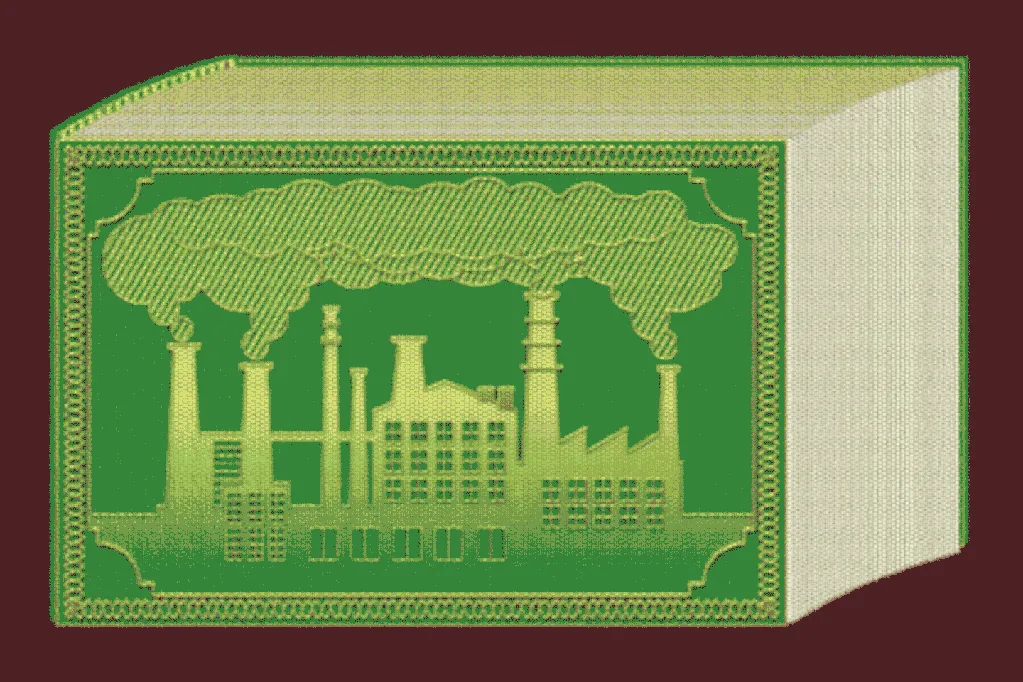
If you want to feel what living through a massive technological shock and its aftermath looked like, it's time to take a step back from the large language models and read some of the great novels of the Industrial Revolution.
The White-Collar Weavers
Today's conversation about the labor markets and AI often proceeds as if we've never seen this sort of shift before. In particular, people focus on the effect the AI boom may have on higher-wage workers, rather than the lower- or middle-wage jobs that were most affected by the earlier disruptions of computers and automation. However, that dynamic isn't new. Technological change has altered "high-quality" jobs before.
During the Industrial Revolution, the invention of steam power, the power loom and other machines made manufacturing more efficient -- particularly the manufacture of textiles. These machines absolutely upended the economy and labor markets. In the long run, the transformation was good for workers and economic growth, but it was incredibly painful. (I'm grateful the Industrial Revolution happened: I now get to have a career pontificating about economics. I'm also grateful I didn't have to live through it.)
At the time, weavers enjoyed a relatively high standard of living. They were certainly not in the 1%, but they were in some ways the white-collar workers of their day, enjoying flexible work hours and relatively high pay and social status. In fact, the Luddites became a political force partly because their high status allowed them to organize and fight back. They ultimately lost, but they had the social capital to mount a resistance.
How big was the shock? We didn't have a Bureau of Labor Statistics in the 19th century, but real wages for handloom weavers seem to have fallen by half between 1806 and 1820, and it took decades for the workforce to experience broad benefits from all that machine-induced productivity. In 1806 handloom weavers earned about double what factory workers were paid; by 1820 they earned more than 25% less.
What It Feels Like to Live Through Technological Change
Without today's preponderance of hard economic data, it's hard to adequately quantify the impact of the Industrial Revolution on labor. Fortunately, we can turn to literature. Novels illuminate what people were living through at the time. I have three to point you toward (and a runner-up).
First, Shirley by Charlotte Bronte. Shirley is about a factory owner in the early 1800s who wants to install "the new machinery." It even begins with a Luddite raid on a delivery of machinery! The mill owner Robert Moore and two young local women, Caroline Helstone and the titular Shirley, are trying to navigate what a changing economic landscape means for them as individuals and members of society. The book talks about both the economic pressure on Moore to compete and how different members of his workforce respond to the shock differently.
It also emphasizes the role the larger economic situation (e.g., the commercial repercussions of the Napoleonic wars) played in the adoption of machinery -- an important aspect of this history that's often overlooked. Technological change doesn't happen in a vacuum; one thing that made the Industrial Revolution particularly painful was that export restrictions put pressure on the textile industry, increasing the incentive to invest in machinery.
Second on my list is the aforementioned North and South, by Elizabeth Gaskell. This novel takes place a little later, in the 1850s; it features an established factory owner interacting with workers in a "new factory" with machinery. The book explores how capital owners and laborers figured out how to work together in the new equilibrium. But it also emphasizes how the changing economy changed the social structure. Its heroine, Margaret Hale, the daughter of a minister forced to move north, struggles to adapt to the changing economic world even though she isn’t affected economically. Her family’s finances are not altered by the decision to modernize a factory, but modernization profoundly shifts the world around her, changing what is expected of her.
Margaret’s role in society was very clear in the southern agricultural economy, but in a northern town dominated by manufacturing and a society that revolves around who is empowered or disempowered by that technology, she doesn’t know how to respond. What is her relationship with newly empowered workers, such as the union leader Nicholas Higgins and his daughter, who become her friends? What should she make of the factory owner John Thornton, whose understanding of economic and social niceties totally differs from hers and who strikes her as uncaring and uninterested in the welfare of others? (Those of you who’ve read Pride and Prejudice can probably guess where that one is going.) As a “neutral party,” Margaret gets stuck in the middle of the ongoing labor unrest that emerges as capital owners and workers try to negotiate a new equilibrium. And she has to decide what responsibilities citizens have for one another in the new world — and what should be carried over from the old.
Third, A Christmas Carol, by Charles Dickens. Yes, this book is about the Christmas spirit, looking after our fellow man and how we should respond to poverty in our midst, not the Industrial Revolution. It is, famously, about Ebeneezer Scrooge, a miser who hoards funds and doesn't care about the suffering around him but is then visited by three ghosts on Christmas Eve who show him the error of his ways. But it also contains the scene in English literature that to me best describes what the policy response was to the Industrial Revolution and poverty at the time: "Are there no prisons? ... And the Union workhouses? Are they still in operation?" Dickens generally doesn't focus on the deeper economic conditions that led to the poverty he saw. He doesn't distinguish between people who are poor because they lost jobs and people who are poor because they never had them. He simply wrote about the economic pain they were suffering.
I would not be a literature nerd if I didn't sneak in an honorable mention. If you want to keep reading, The Way We Live Now, by Anthony Trollope, published in the 1870s, focuses on greed during the railroad boom (part of what's dubbed the Second Industrial Revolution). When a mysterious financier named Melmotte arrives in London, society rearranges itself around him and the promise of riches he brings. Some characters' honesty and moral sense carry them through the resulting storm while others are brought low by their own greed and dishonesty. It's a wonderful summation of how people and society can get carried away by even the possibility of profit -- and what that looks like during a technological boom time.
We don't have the data we need to know exactly what disruption looked like during the Industrial Revolution, and we certainly can't know with confidence what's going to happen to us over the coming years. But all of these books can help us understand what drove people to invest in technology, what it felt like for workers at the time, how society changed and how it responded (or didn't) to those who lost out.
We've lived through technological shifts before, including changes that came first for skilled, higher-status workers. Then, as now, people were panicked about their jobs, their economic well-being and the shifts in society, and unsure how they should respond. The AI transition may be faster, bigger and more disruptive than the Industrial Revolution. But if we want to have a flourishing economy and society on the other side, learning from what our predecessors went through is even more important this time around. And that's exactly what literature is there to help us do.