A plaque was recently unveiled in a museum garden marking the more than 200 year history of a continuing educational institution.
The Hull Literary and Philosophical Society was founded in 1822 as a "self-help organisation", according to its historian Margaret Imrie, who has written a book about the organisation.
It held public lectures on science, politics and other key issues of the period and was responsible for setting up a museum and art gallery, which later formed the basis of the city council's collection.
Mrs Imrie said the Lit and Phil, as it is popularly known, was "driven by a desire for self-improvement."
"That was part of the founding aim of the society," she said.
"To try and educate the people of Hull. It was very moral and really wanted to lift Hull up to what it perceived was the standard of other comparable places.
"It felt Hull was lagging behind in education."
Originally the organisation had "cramped" premises in the Exchange building in Bow Alley Lane before a spell holding events at the Assembly Rooms on the site that eventually became Hull New Theatre.
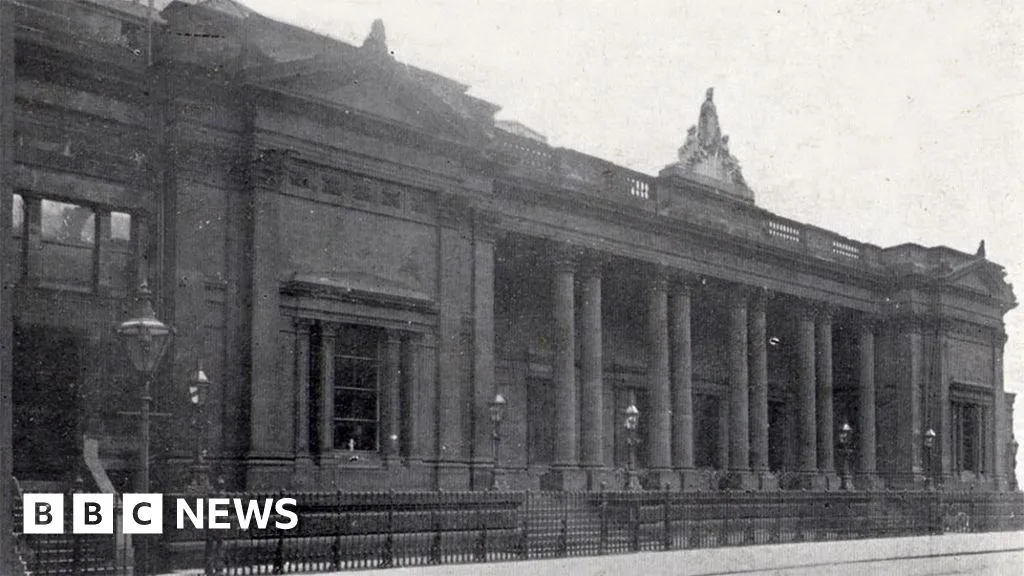
In 1854, the society moved into its own home in the Royal Institution in Albion Street.
The building allowed the Lit and Phil to expand its offering, including a library, a lecture theatre and providing classrooms for technical subjects and art and design.
It also housed the city's first art gallery and a museum filled with art and exhibits from around the globe.
Mrs Imrie said the society had a mixed response to some of its public lectures.
"They were educational and they were funded by the society, but in time they came to realise that the purely educational ones didn't bring in a very big audience," she said.
"People who were very popular were people like the actress Fanny Kemble who came and used to do sort of one-man performances of Shakespeare and she was immensely popular.
"She always got the biggest audiences of all."
Disaster struck on 24 June 1943 when a German air raid destroyed the building, leaving just the facade with its statues of Roman goddesses, which were later relocated to the garden in front of Hull's Transport Museum.
After the demise of its building the society continued hosting events at various locations including the Royal Station Hotel and currently the Guildhall.
Mrs Imrie said that despite its origins more than two centuries ago and the rise of the internet the Lit and Phil still offers something in the modern world.
"It's a great place to go and meet your friends and hear something of interest."