With conflict over Greenland averted for now, European leaders will be tempted to retreat to their comfort zone of cowardice. But the next crisis will soon be here.
Donald Trump's climbdown, after days of escalation during which he had refused to rule out a military attack to annex Greenland, was spectacular. In his Davos speech, Trump repeated his desire to own Greenland, claiming that you cannot defend what you do not own, only to then announce that he would not conquer the Arctic island by force. Hours later, he claimed that he had reached an unspecified deal on Greenland, and would therefore refrain from imposing additional tariffs on those European countries that had had the audacity to participate in a joint military exercise in Greenland at Denmark's invitation.
We know neither the details of the framework agreement reached by Trump and the Nato secretary general, Mark Rutte, nor whether it carries any weight, given the US president's fickleness. But it appears that the deal, while open to discussing Arctic security, mineral rights and possibly even the sovereignty of US bases, preserves Greenland's sovereignty within the Kingdom of Denmark. In short, this has been a remarkable U-turn.
There are several possible explanations for this reversal. Discomfort among Republicans and the American public at the prospect of attacking a Nato ally, turbulence in global markets and Rutte's sycophancy are all possibilities. Domestic pressures in the US may have played a role, but they were not yet strong enough to fully explain the sudden about-face.
Rutte's servility is certainly appreciated by Trump, but it is unlikely to have dissuaded him from his ambition to leave a mark as the first president to have expanded US territory since the late 1950s. The markets' decline offers a more plausible explanation. This is not the first time: Trump's abrupt retreat on trade after his bombastic "liberation day" last spring coincided with a market freefall and China's refusal to back down, ready to retaliate tit for tat in the trade war.
Yet the markets do not care whether Greenland belongs to Denmark or the US, nor do they lose sleep over violations of international law. When Trump attacked Venezuela without even seeking a UN security council resolution, the market response was muted. Nor were markets rattled when, shortly after, the US threatened another war on Iran.
The markets reacted negatively this time, as they did in spring 2025, because Europe signalled it would not be a pushover once again.
Everyone knows that Europe does not hold the same cards as China in its dealings with the US, and that the US can hurt Europe more than the other way around. But Europe does have some leverage. Even the hint of using it, therefore reopening the prospect of a trade war, sent shivers through markets, pushing Trump to step back from the brink.
The lesson for Europeans is clear. For a year, they tried to mollify, seduce and appease Trump. They offered him gilt-framed birth certificates; broke protocol to send royal invitations; played golf with him; sent sycophantic text messages. They accepted a terrible trade deal; agreed to raise defence spending to 5% of GDP knowing many countries would never meet that target. They did so to buy time hoping to induce Trump to side with them on Ukraine; remain committed to European security.
But Trump has humiliated Ukrainians; mocked Europeans; stubbornly refusing to exert any pressure on Vladimir Putin. Yes, the US still sells weapons to Europeans who then channel them to Ukraine. More recently it has opened the door to providing security guarantees to Kyiv in a postwar scenario. But US military support for Ukraine has dwindled; any security guarantees are hypothetical given that a ceasefire is not in sight.
Moreover, what is the value of any agreement signed with Trump if he can tear it up at any moment as he has already demonstrated with trade? Europeans tacitly condoned Trump's illegal war on Iran; were ambiguous about his equally illegal attack on Venezuela. In return they received the threat of Greenland's annexation. The US president could not have been more candid in Davos when he stated that no one defends what they don't own. If anyone still had any doubt about his commitment to Nato there went article 5 on collective defence thrown out the window.
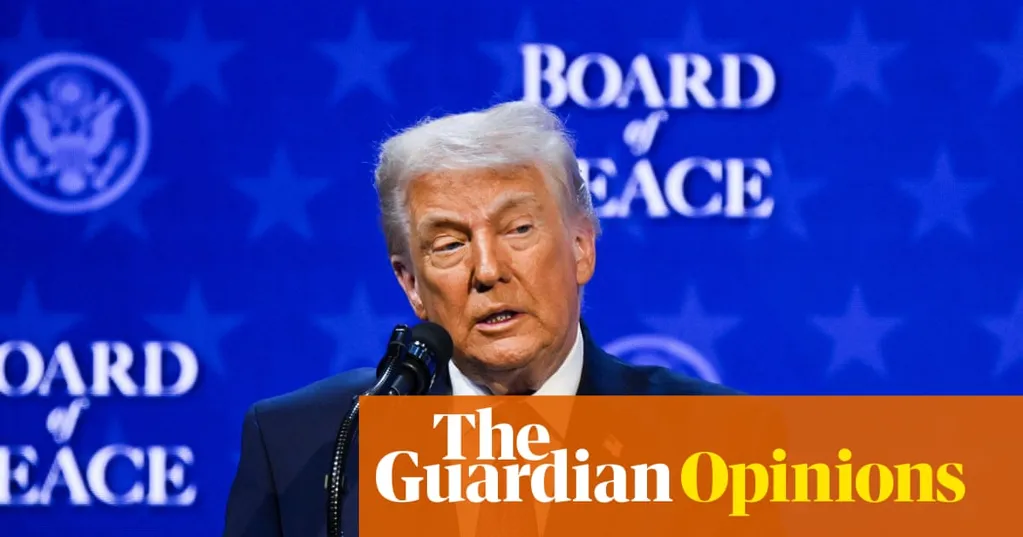
Europe's year of genuflection has been a spectacular failure. But something is changing. Europeans have stood firm on Greenland. European leaders individually and collectively spoke out in solidarity with Denmark and in support of its sovereignty. A group of European countries sent troops to Greenland for a joint military exercise. Most EU countries with the exception of Hungary and Bulgaria have shunned Trump's "board of peace".
The European parliament suspended ratification of the EU-US trade deal on tariffs and EU institutions began debating possible retaliatory measures should the US proceed with economic coercion. These include counter-tariffs worth just under €100bn and the use of the EU's most powerful trade weapon—the anti-coercion instrument—to limit access to the European single market or impose other measures aimed at curbing the ability of US firms to invest in Europe.
All this remains hypothetical given the US climbdown. We cannot know for certain whether the EU has the stamina to follow through if US economic coercion were actually ramped up. And it is highly likely that if the EU did retaliate it would do so incrementally seeking consensus and always offering an off-ramp. In other words the EU would continue to act in a quintessentially European way.
But the lesson Europeans should draw from this latest episode of the Trump show is that the firmness they have tentatively displayed works far better than the subordination they attempted over the past year. The temperature has been lowered so the risk is that European leaders will revert to their comfort zone of cowardice and inaction. But the calm will not last long and when the next transatlantic crisis erupts they should remember that Trump like any strongman understands strength and strength alone.