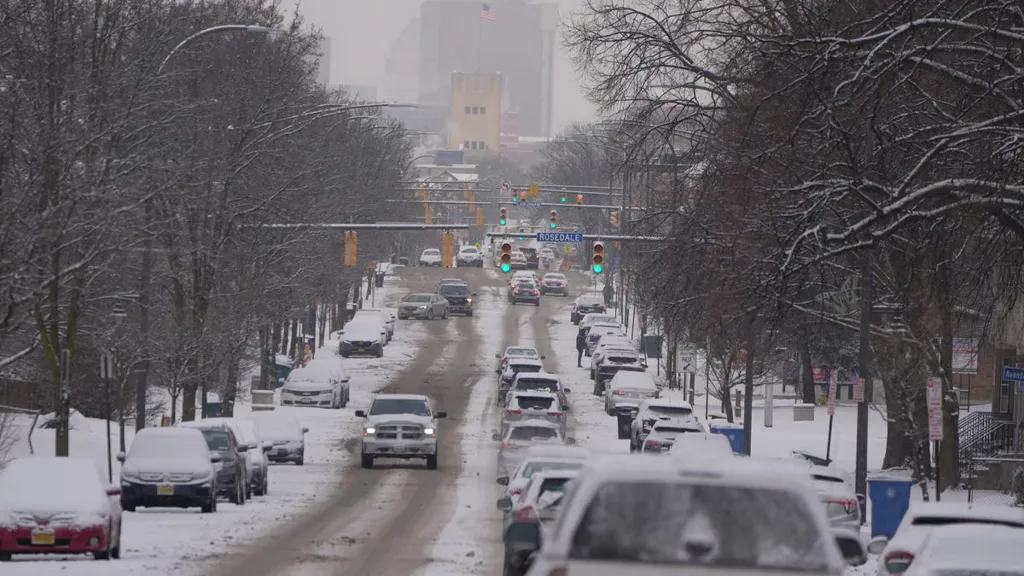
Arctic air grips the U.S. with dangerous cold as a winter storm threatens ice and snow from Texas to the Northeast.
A major winter storm is forecast to spread heavy snow, sleet and dangerous ice to tens of millions of Americans across two dozen states starting on Friday and continuing into the weekend.
"This is expected to be an unusually large and severe winter storm," the National Weather Service said. "Dangerously cold air remains in the forecast for more than half of the U.S. population through the weekend and into early next week."
The storm will start in Texas and Oklahoma with conditions worsening by Friday evening, according to forecasters. The system is then expected to spread from New Mexico to Virginia on Saturday before pushing into the Northeast on Sunday.
The weather service noted that the combination of significant snow, ice accumulations and frigid weather could cause power outages and icy roads to "linger longer than usual after a typical winter storm." The system is forecast to bring cold temperatures not seen since 2021, according to AccuWeather.
More than 160 million people are at risk of impacts from the storm, the weather service said. Disruptive snowfall is expected from the Southern Rocky Mountains to the Northeast and areas in the South to the southern Mid-Atlantic will be hit with heavy ice.
Storm to bring heavy snow and 'catastrophic' ice
The far-reaching winter storm will last from Friday through Monday, according to the weather service. Heavy snow, sleet and freezing rain will be widespread from the Southern Rocky Mountains to New England.
Snowfall totals above 12 inches are likely across the Ohio Valley, Mid-Atlantic and Northeast, and will cause travel disruptions, the weather service said.
Forecasters also warned of "catastrophic" ice accumulation with freezing rain and sleet impacting parts of the Southern Plains, Lower Mississippi Valley, Tennessee Valley, the Southeast and southern Virginia. The weather service said significant to local ice accumulations could cause long-duration power outages, extensive tree damage, and extremely dangerous or impassable travel conditions.
"Extremely cold air will follow, prolonging dangerous travel and infrastructure impacts into next week," the weather service warned. "In wake of the storm, communities from the Southern Plains to the Northeast will contend with bitterly cold temperatures and dangerously cold wind chills."
Over a dozen states issue disaster or emergency declarations
At least 14 states have issued disaster or emergency declarations ahead of the major storm, including Texas, Georgia, South Carolina, North Carolina, Virginia, West Virginia, Maryland, Louisiana, Arkansas, Tennessee, Alabama, Mississippi, Oklahoma and Missouri.
Alabama issued a state of emergency for 19 northern counties in anticipation of the "wintery and icy forecast for the state," according to a news release. Maryland has declared a "state of preparedness" with the storm expected to bring accumulating snow and potential ice to the state.
"The storm will likely affect roads and transportation centers and could cause significant snow accumulation in some parts of the state," a news release said. "Marylanders are cautioned to avoid travel if possible, to follow local forecasts, and to stay prepared for winter storm hazards."
West Virginia Gov. Patrick Morrisey also declared a "state of preparedness," noting that the weather service has issued a winter storm watch for most of the state from Saturday morning through Monday morning.
Which states will be hit hardest?
While snow is expected all the way from the Southwest to the Northeast, and everywhere in between, AccuWeather meteorologist Bob Larson told USA TODAY there is potential for portions of Pennsylvania, Maryland, West Virginia and Virginia to receive up to 24 inches of snow or more.
"This will be a large and potentially historic storm, with major impacts over a very large area (more than 2 dozen states)," Larson said in an email, noting that "the greatest risk of a major ice storm will extend from Texas to the Carolinas."
Local officials in these areas have urged residents to avoid traveling and prepare for possible power outages. The weather service has advised the public to stay home and off the roads during this time due to the hazardous weather conditions.
Widespread air travel disruptions expected
Airlines have rolled out sweeping travel waivers as the storm threatened to disrupt air travel across a wide swath of the country. Airlines urged travelers to monitor flight status closely and use mobile apps and airline websites for the fastest rebooking options as the storm advances.
"This will likely result in thousands of flight cancellations on Saturday, Sunday and Monday," said Dan DePodwin, vice president of forecasting operations at AccuWeather. Travel booking app Hopper estimates that upwards of 15,000 flights could be delayed due to the storm.
Delta Air Lines canceled flights at select airports in five states on Thursday afternoon, as carriers said the mix of ice, snow and strong winds could slow airport operations, ripple into delays and cancellations, and complicate rebooking during one of the busier winter travel periods.