You're reading the Balance of Power newsletter.
You're reading the Balance of Power newsletter.
You're reading the Balance of Power newsletter.
Subscribe now for the latest political news, analysis, charts, and dispatches from around the globe.
Subscribe now for the latest political news, analysis, charts, and dispatches from around the globe.
Subscribe now for the latest political news, analysis, charts, and dispatches from around the globe.
Bloomberg may send me offers and promotions.
By submitting my information, I agree to the Privacy Policy and Terms of Service.
Welcome to Balance of Power, bringing you the latest in global politics. If you haven't yet, sign up here.
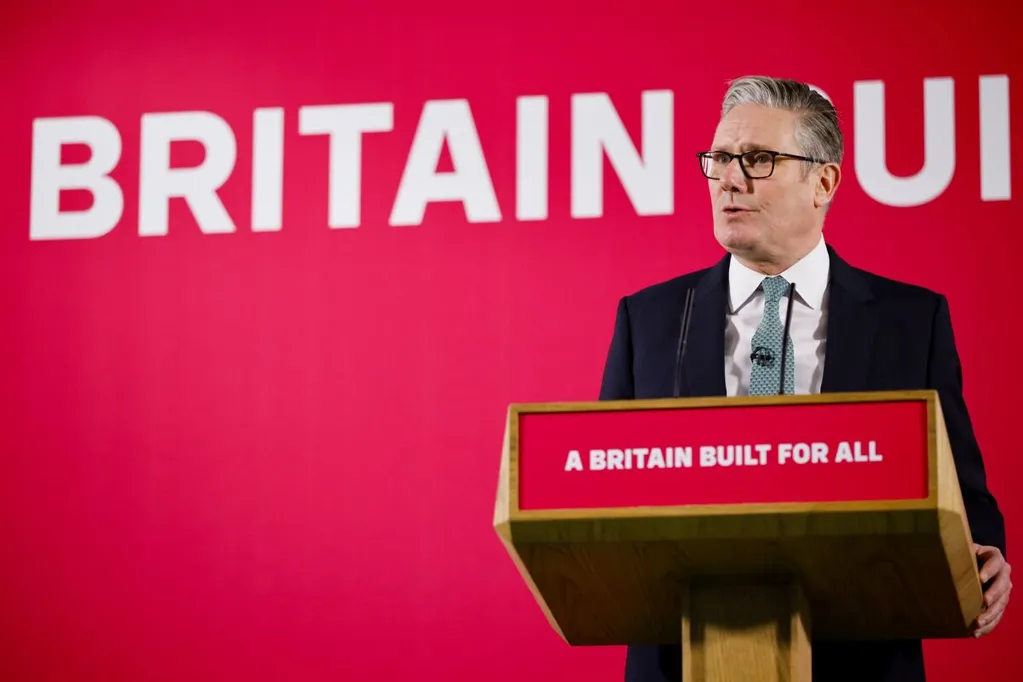
Prime Minister Keir Starmer's plans for mandatory digital IDs were always going to run into opposition, not least from the populist Reform UK party led by Nigel Farage.
To continental eyes, Farage's attacks on the IDs as "a means of controlling the population, telling us what we can and can't do," are a typically contrarian British view on a routine facet of life in much of the rest of Europe.
But that's to miss the politics at play.
Starmer may have had many reasons to shelve the compulsory element of digital IDs, but it's hard to escape the reality that he needs to avoid anything that risks driving more voters to Reform before May's local elections.
With Reform leading polls nationally, Farage is predicted to inflict heavy defeats on Starmer's Labour -- and on the main opposition Conservatives -- in councils across England, as well as in the Welsh Senedd and the Scottish Parliament.
That would pile more pressure on the prime minister, perhaps even triggering a leadership challenge. On cue, Starmer is due in Scotland today.
Standing in the way of a clean Reform sweep is the revival of support for left-leaning nationalists in Scotland and Wales -- both traditional Labour strongholds.
In Wales, Plaid Cymru leads Reform by 37% to 23% in the latest YouGov poll, putting the nationalists on track for their first victory since the Senedd was established in 1999.
In Scotland, even after 19 years in power running affairs including education, health and justice, the Scottish National Party leads Reform by a similar margin.
Both results would represent significant achievements for Farage, but would return parties in Cardiff and in Edinburgh that favor independence from London.
Former Prime Minister David Cameron declared the independence question settled after calling and winning a Scottish referendum in 2015.
A decade on, the breakup of Britain looks to be back on the agenda.
Global Must Reads
US President Donald Trump indicated that he might hold off on attacking Iran for now after saying he was reassured by sources "on the other side" that security forces would stop killing people involved in widespread protests. The comments marked a shift in tone a day after he urged Iranians to continue demonstrations, posting on social media that "help is on the way." Read our explainer on how the slow-burning economic crisis in the Islamic Republic reached a tipping point.
Germany will take the lead among European nations sending additional military personnel to Greenland after Denmark said its meeting yesterday with Trump administration officials intent on seizing control of the strategically important Arctic island failed to resolve a "fundamental disagreement." The decision to dispatch reinforcements to the Danish territory as early as this week is part of a European effort to pacify the US takeover threat by showing it's taking Greenland's security seriously.
A federal officer shot a man in the leg yesterday in Minneapolis, a week after the fatal shooting of a local woman by a US Immigration and Customs Enforcement agent sparked angry protests and an intensifying clash between state officials and the federal government. Meanwhile, Joe Rogan -- a superstar podcaster who urged his millions of listeners to vote for Trump in 2024 -- linked ICE's tactics to those of Nazi Germany's secret police, asking, "Are we really going to be the Gestapo?"
Prime Minister Sanae Takaichi's bid to boost her mandate through a snap election faces greater risk as Japan's largest opposition party and a former ruling-coalition partner head toward a de-facto merger. Takaichi is expected to dissolve parliament on Jan. 23, kicking off what's likely to be a roughly two-week campaign with reports pointing to a national election on Feb. 8.
New from Bloomberg Weekend
The toppling of Venezuela's Nicolás Maduro offered the clearest sign yet of Trump's intention to check Chinese influence in the Americas and reassert US dominance, with military action if necessary. Argentina, home to one of his most loyal allies in President Javier Milei, is perhaps the only place in the region where he's leaned on the sheer financial might of the US government to help a friend—an early test of whether money rather than force can win over Latin America.
Ugandans are voting in an election that's almost certain to return the only president most of them have ever known to office and leave lingering doubts over the credibility of Yoweri Museveni's expected seventh-term victory.
The US announced the start of the second phase of Trump's 20-point peace plan in Gaza in an attempt to advance a fragile truce that has been challenged by Hamas militants refusing to disarm.
Trump said he had a "very good call" with acting Venezuelan President Delcy Rodríguez, hailing her cooperation ahead of his scheduled meeting today with the country's opposition leader, María Corina Machado.
Washington will pause issuing immigrant visas for people from 75 countries including Brazil, Nigeria and Iran, targeting specifically foreigners who they say could require public assistance while living in the US.