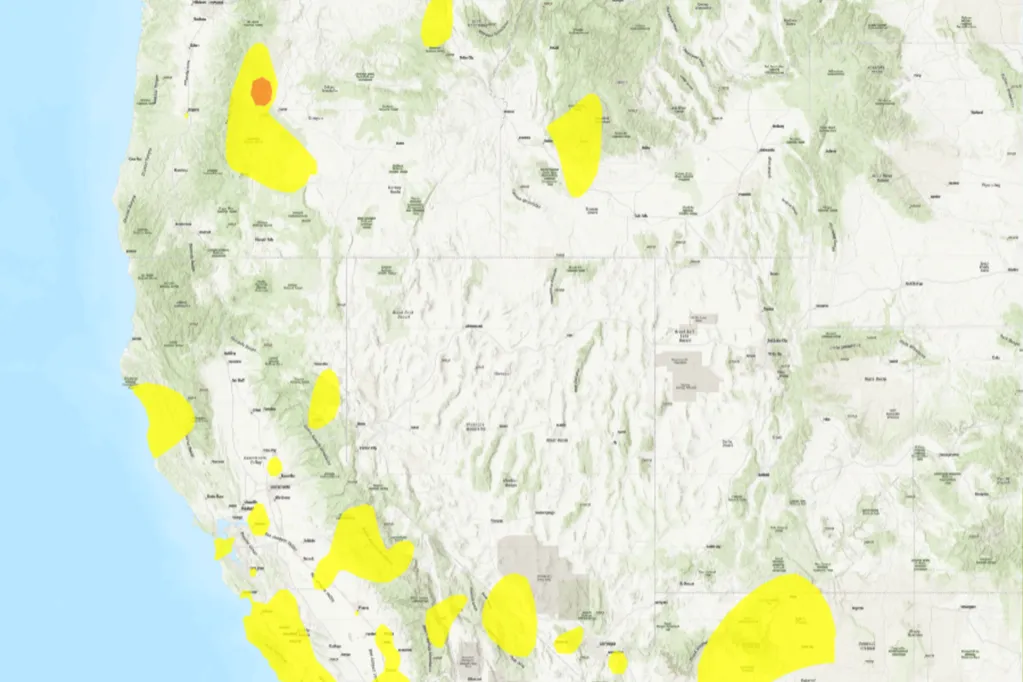
Thousands of Californians are being urged to limit outdoor activity as "unhealthy" air quality blankets multiple parts of the state, potentially driven by a slow‑moving weather pattern that is limiting air circulation and trapping pockets of fine particle pollution (PM2.5).
Data from the U.S. Environmental Protection Agency's AirNow map shows pockets of "moderate" to "unhealthy-for-sensitive-groups" air quality across inland Southern California, parts of the Central Valley, and other interior regions on Thursday, as of 3.45 a.m. ET.
The Environmental Protection Agency (EPA) hasn't established a definitive cause for the poor air quality, but high‑pressure weather systems, bringing light winds and stable air in, can allow pollution from sources like vehicles, industry, and agriculture to build up near the ground, particularly in inland valleys where surrounding mountains act as barriers that trap polluted air and prevent it from clearing.
Elevated levels of PM2.5 are also contributing to higher Air Quality Index (AQI) readings in some areas.
These tiny particles of pollution -- less than 2.5 micrometers in size, which is smaller than the width of a strand of hair -- can come from multiple sources such as traffic and power plant fumes, wildfires or prescribed burning, and dust from construction sites and dirt roads.
PM2.5 is considered by the EPA to be especially harmful for members of the public because the particles are so small that they can be easily inhaled, penetrating deep into the lungs and bloodstream, triggering symptoms ranging from coughing and eye, nose, and throat irritation to chest tightness and shortness of breath.
Health experts warn that high PM2.5 levels can have serious health effects, particularly for those in sensitive groups. Children, older adults, pregnant people, outdoor workers, and individuals with asthma, heart disease, or other lung conditions are most at risk.
Even healthy adults might experience reduced lung function during periods of unhealthy air quality, especially if they're exercising outdoors.
Public health agencies, like the EPA, recommend that people -- especially the more vulnerable populations -- in affected areas limit the length and intensity of outdoor activity until conditions improve. Residents are also advised to keep the air inside their homes as clean as possible by keeping windows and doors closed, using air purifiers and filters if available, and avoiding burning candles, incense, and indoor fires or wood-burning stoves.
Conditions are expected to fluctuate depending on weather changes, but officials caution that similar air quality episodes may continue.
Residents can track hour-by-hour conditions using the EPA's AirNow interactive map and local air district websites, which provide up-to-date advisories and health guidance based on current AQI levels.