Holidaymakers travelling to Egypt over the coming weeks may face changes to their plans after the government introduced a temporary curfew to reduce energy use.
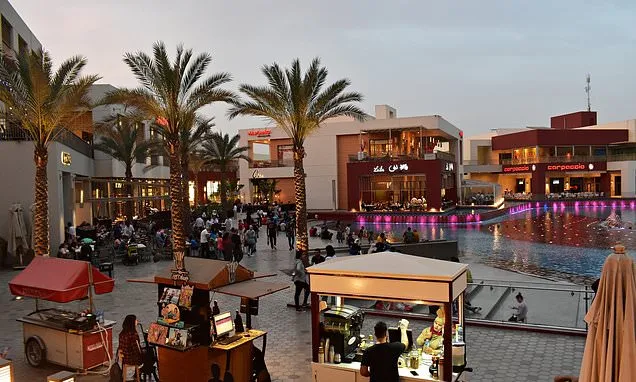
This week, Prime Minister Mostafa Madbouly announced that all shops, cafes, restaurants and shopping malls will be required to close at 9pm from 28 March, for a period of one month.
On Thursdays and Fridays, the closing time will be extended to 10pm. According to reports from locals on social media, pharmacies and supermarkets will continue to open as usual.
It is not yet clear whether hotels and resorts in popular destinations such as Hurghada, Sharm El Sheikh and Luxor will be fully affected.
However, most hotels have backup generators, so rooms, AC, water and essential services will continue as usual.
Nevertheless, tourists are being advised to plan meals, shopping and outings accordingly.
The measures come as Egypt faces rising energy costs linked to regional conflict, including the US-Israeli war in Iran, which has disrupted gas supplies and pushed up prices.
Egypt, which relies heavily on natural gas to power its electricity plants, is now facing a supply deficit.
The Egyptian government has announced all shops, cafes and restaurants across Egypt must close at 9pm for one month as the country seeks to conserve energy.
According to Madbouly, Egypt's natural gas import bill has surged astronomically in just one month, increasing from $560 million (£420 million) to $1.65 billion (£1.25 billion).
'We are facing a truly exceptional global crisis, and its repercussions will be severe for the entire world,' he warned at a press conference on Wednesday.
As well as enforcing earlier closures, Madbouly is also considering implementing remote work one or two days a week for government employees, excluding those in healthcare, factory work, and production sectors.
These measures will remain in place for one month before they undergo a review.
Roadside digital billboards will not be operating during this period, and government district offices in the New Administrative Capital will also close at 6pm.
Ongoing efforts will focus on cutting back public lighting while postponing national infrastructure projects that rely on high consumption of diesel fuel.
Madbouly said: 'All of these [measures] have one goal: to reduce the consumption bill, because the alternative would be to resort again to further price increases.'
He further cautioned that rising prices could damage Egypt's economy, as reported by the Egypt Independent.
Daily Mail has contacted the Egyptian Ministry of Tourism and Antiquities for comment.
It comes as Brits have been warned they must brace for energy rationing as the Middle East crisis continues.
Former No10 energy expert Nick Butler said the effective closure of the Strait of Hormuz by Iran meant there would be a global 'shortage' of oil within weeks.
Prof Butler, who was an adviser to Gordon Brown and worked for BP for nearly three decades, insisted ministers must be ready to protect the 'crucial sectors' of the economy.
Pump prices have already been soaring, while there is alarm that the energy price cap could rise dramatically when it changes again in July.
Asked on BBC Radio 4's Today programme if the crisis was already going to have an effect, Prof Butler said: 'We've now had more than a week of almost no tankers coming out of Hormuz, that will continue this week on everything that you've reported this morning...'
'And there will be a real shortage, a physical shortage of supply in a few weeks' time. How long that goes on we don't know but I think the government here, and other governments, must now be preparing for a significant shortfall of supply over the next two months.'