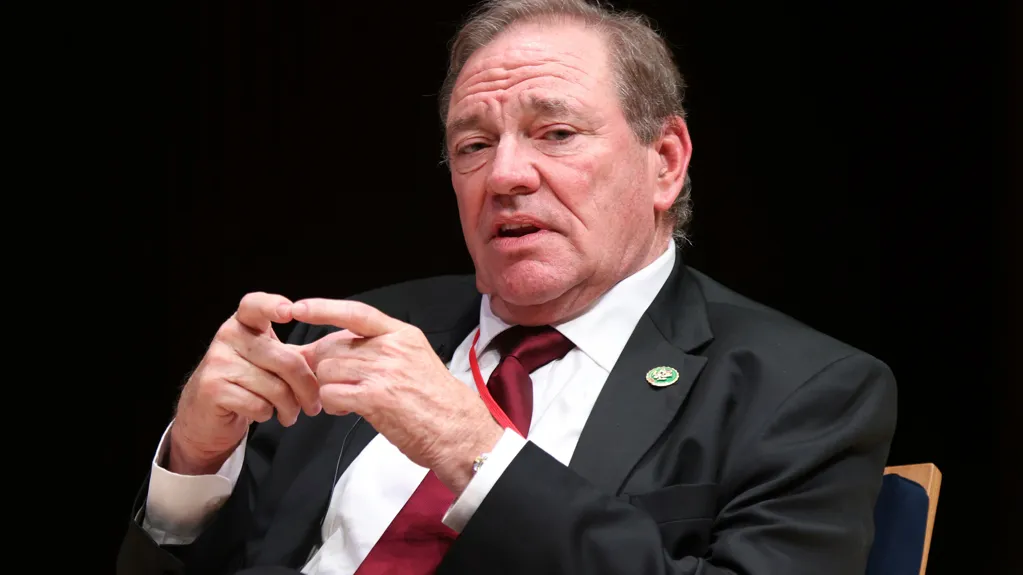
For weeks on Capitol Hill, there had been quiet murmurs about the health of an ailing veteran House Republican, Representative Neal Dunn of Florida, and whether he would be able to serve out the duration of his term because of what was rumored to be a grave diagnosis.
On Monday, at a news conference called to discuss the Kennedy Center, President Trump aired the quiet part out loud, claiming credit for having saved Mr. Dunn's life in an unusual and at times uncomfortable exchange that publicly laid out the congressman's formerly private prognosis in new detail.
The subject came up as Mr. Trump was praising Speaker Mike Johnson, who was seated to his right, for his ability to push through legislation even with a razor-thin majority in the House. That margin -- Republicans can afford no more than one defection on party-line votes when all members are voting -- was further endangered, Mr. Trump said, by one member who appeared likely to die.
"We had one man who was very ill," Mr. Trump said. "It looked like he wasn't going to make it. I don't know. I won't mention his name."
Then Mr. Trump appeared to change his mind. "Should I?" he asked Mr. Johnson, who made noises of quiet demurral just off microphone. "Do other people know his name? Huh? Do you want to mention it? He'll be proud. Go ahead, tell them -- tell them the story."
"OK. Well," Mr. Johnson said. "Thank you, Mr. President. Congressman Neil Dunn of Florida had had some real health challenges, and it was very serious, and had had a pretty grim diagnosis. And I mentioned it to the president. I said, 'Congressman Dunn is a real champion and a patriot because he's still coming to work; if others got this diagnosis, they would be apt to go home and retire -- '"
Mr. Trump interrupted to prompt Mr. Johnson: "What was the diagnosis?"
"It was, uh," Mr. Johnson faltered and nodded somberly. "I mean, I think it was a terminal diagnosis."
"He would be dead by June," Mr. Trump intoned.
"OK, that wasn't public," Mr. Johnson said in a tone of mild chagrin. "But, yeah, OK. That's -- it was grim. That's what I was going to say."
"With a heart problem, by the way," Mr. Trump continued. "This was a heart problem."
"So, long story short," Mr. Johnson said, pushing ahead, Mr. Trump had been able to connect Mr. Dunn, 73, to the Walter Reed Army Medical Center. Since then, Mr. Dunn "has a new lease on life" and "acts like he's 30 years younger."
Mr. Trump seemed pleased by the turnaround, adding later that he had been horrified to learn of Mr. Dunn’s initial diagnosis.
“Number one, it was bad because I liked him,” Mr. Trump said. “Number two, it was bad because I needed his vote.”
“I did it for him first and the vote second,” the president said, adding: “But it was a close second.”