Donald Trump's recent claims that the US should keep Venezuelan oil from seized tankers are part of a broader belief in rightwing "resource imperialism", experts say.
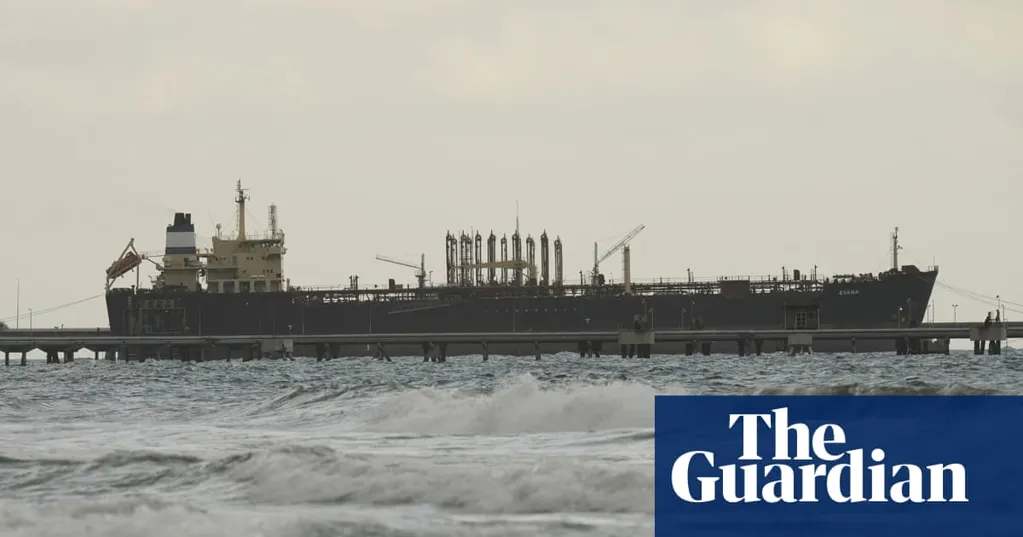
In recent weeks, the Trump administration has escalated pressure on Venezuela, invoking drug-trafficking claims. This month, the US intercepted two tankers carrying Venezuelan oil and began pursuing a third, while intensifying its campaign against the country's president, Nicolás Maduro.
Critics have compared the offensive to the Iraq war, citing a familiar mix of regime-change rhetoric, security pretexts and oil interests. This month, the Trump administration labeled fentanyl - which it says flows from Venezuela - a "weapon of mass destruction".
On Monday, Trump suggested oil seized from Venezuela could be treated as a US asset. "Maybe we will sell it, maybe we will keep it," he told reporters. "Maybe we'll use it in the strategic reserves. We're keeping the ships also."
The remarks echo earlier statements from Trump where he has repeatedly called for the US to seize oil from other countries, indicating a broader belief that US power entitles it to control or extract resources from other states.
"The administration's global energy policy is mostly about using the threat of violence or the withholding of aid to secure the inputs for the 'most of the above' energy strategy," which excludes only solar and wind, said Patrick Bigger, co-director of Transition Security Project, a research initiative focused on the climate and geopolitical concerns of militarization.
The Guardian has contacted the White House for comment.
Trump's belief in what Bigger calls "resource imperialism" emerged during his first presidential campaign. Then, he repeatedly suggested that though the US should not have waged the Iraq war, it should have taken the country's oil in compensation for the costs of the conflict.
"You win the war and you take it," he told ABC in 2015. "You're not stealing anything ... We're reimbursing ourselves."
He expanded upon the argument the following year: "If we would have taken the oil, you wouldn't have Isis, because Isis formed with the power and the wealth of that oil," he said in an NBC News forum.
He took a similar approach to resource extraction in Syria, tying US troop deployments to control over eastern oilfields.
"We've secured the oil, and, therefore, a small number of US troops will remain in the area where they have the oil, and we're going to be protecting it, and we'll be deciding what we're going to do with it in the future," he said in October 2019, later adding that Exxon Mobil could lead the effort to tap the resources.
The president has worked to obstruct other countries from selling their own resources, notably Iran. Via a combination of sweeping sanctions and threats of military force, the administration sought to cut off Iran's revenue streams, framing this as a strategy to curb the country's regional influence and nuclear ambitions.
"Any Country or person who buys ANY AMOUNT of OIL or PETROCHEMICALS from Iran will be subject to, immediately, Secondary Sanctions," the president said in a post on Truth Social this year.
Beyond targeting other countries' oil, Trump has sought to secure rare earth minerals - materials vital for the production of batteries, cellphones, electric cars and weapons systems - from other countries, even seeking to strong-arm traditional US allies to get them.
The president has long fixated on Greenland, an autonomous territory under Danish rule, saying earlier this year that the US needs the island "very badly" for "national security and international security" reasons. In an extraordinary threat that shook Denmark, Trump didn't rule out using force in order to seize Greenland and this week appointed a special envoy to the territory.
The island contains vast deposits of cobalt, nickel, copper, lithium and other minerals, and the White House has considered taking a direct stake in its largest rare-earths mining project. JD Vance warned earlier this year that China and Russia were "interested in the minerals of the Arctic territories", saying: "We need to ensure that America is leading in the Arctic because if we don't other nations will fill the gap."
Meanwhile, in April, the Trump administration struck a deal with Ukraine granting the US preferential access to the country's minerals and uranium in exchange for continued military support against Russia's ongoing invasion.
When not claiming resources directly for the US, Trump has actively agitated for increased fossil fuel use by ostensible allies. In September, Trump called on the UK to open up the North Sea for more oil drilling, criticizing the British government for making it "impossible for people to drill".
In the same month, the US president expanded upon a worldview that is dominated by fossil fuels in a discursive, often fact-free speech to the UN, where he warned countries if they "don't get away from this green scam, your country is going to fail".
He added: "You need strong borders and traditional energy sources if you are going to be great again."
The "elephant in the room" in Trump's quest to seize foreign resources is escalating tension with China, said Adam Hanieh, a development expert and author of Crude Capitalism: Oil, Corporate Power, and the Making of the World Market. US-China rivalry is "pushing the US to attempt to exert control over various energy and industrial supply chains". he said.
It's a playbook that previous administrations have also followed, Hanieh added.
"I think Trump's difference with other US administrations is mostly stylistic," he said. "Previous administrations pursued the same strategic control of energy, minerals and chokepoints but cloaked it in multilateralism and 'market stability', whereas Trump voices the extractive logic directly."
Trump's approach is "essentially resource nationalism", according to Alice Hill, an energy expert at the Council on Foreign Relations and former climate and national security adviser to Barack Obama's White House.
"He sees fossil fuel dominance as key to our national power and he doesn't care about international norms or what climate science says," Hill said.
"That's very unfortunate given the clear need for rapid decarbonization. This is a short-term gamble that will cost everyone a great deal. For current and future generations who will have to deal with climate change, he's making a catastrophic mistake."