Fox News Flash top headlines are here. Check out whats clicking on FoxNews.com.
A bipartisan group of lawmakers wants to draw a clear line on where certain robots can operate in the United States. Senators Tom Cotton (R-Ark.) and Chuck Schumer (D-N.Y.) recently introduced legislation that would ban the federal government from using robots made by foreign adversaries, a category that includes China but can also apply to other designated countries.
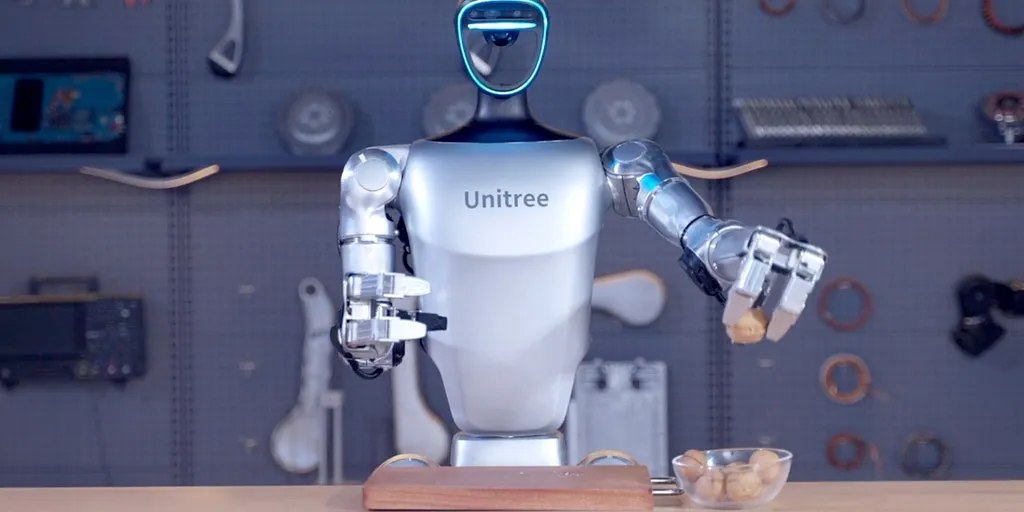
The proposal, called the American Security Robotics Act, targets unmanned ground systems. That includes humanoid robots and remote-controlled surveillance machines. The concern is not just what these robots can do. It is what they could be doing behind the scenes. Lawmakers say these systems are already being marketed to U.S. research labs, universities, law enforcement agencies and even consumers.
According to statements from the lawmakers involved, the core issue is security. Schumer warned that Chinese robotics companies could embed hidden access points inside their systems. These so-called backdoors could allow unauthorized access to sensitive data or even enable remote control. Lawmakers warn that these systems could include hidden access points or be vulnerable to remote control. Schumer said, "The Chinese Communist Party has shown that they are willing to lie and cheat to get ahead at the expense of the American people and our national security. They are running their standard playbook, this time in robotics, trying to flood the U.S. market with their technology, which presents real security risks and threats to Americans' privacy and American research and industry."
He said the Chinese government has a track record of prioritizing its own strategic goals over transparency, raising concerns about how that approach could extend into robotics.
The American Security Robotics Act focuses specifically on federal use. The bill targets countries designated as foreign adversaries, including Communist China, according to the lawmakers.
The legislation targets "unmanned ground vehicle systems," including humanoid robots and autonomous patrol technologies used by federal agencies. If passed, it would block U.S. government agencies from purchasing or operating unmanned ground vehicles built by companies tied to foreign adversaries. That includes:
It also blocks federal agencies from using these systems through contractors or funding their use through grants or agreements. Cotton said, "Robots made by Communist China threaten Americans' privacy and our national security. Our bill will ban the federal government from buying and operating these devices made in countries that wish us harm."
The operational ban would take effect one year after the law is enacted. The bill includes exceptions for national security, research, testing and certain law enforcement or intelligence activities under strict conditions.
The bill does not ban these products outright for consumers or private companies. Instead, it draws a boundary around government adoption where sensitive data and infrastructure are involved. Meanwhile, Rep. Elise Stefanik (R-N.Y.) is introducing a companion bill in the House, signaling coordinated support across both chambers of Congress.
This legislation comes at a moment when China is rapidly advancing in robotics. Recent demonstrations in Beijing showcased a new generation of highly capable robots, highlighting how quickly the technology is evolving. That momentum has raised alarms in Washington about falling behind while also importing potential risks. Stefanik said, "We must continue to promote and propel America's robotics superiority while safeguarding our privacy and national security from adversaries."
At the same time, U.S. companies are pushing forward. One example came when a humanoid robot from Figure AI recently appeared at a White House education summit alongside First Lady Melania Trump. She suggested robots like these could eventually play a role in education, hinting at how deeply this technology could integrate into everyday life.
If you are not working inside the federal government, this bill will not directly affect what you can buy or use. Still, it signals something bigger. It does raise questions about how much access foreign-made devices could have to data inside your home or workplace. First, it shows that robotics is no longer just about convenience or innovation. It is now part of national security conversations. Second, it highlights growing concern about where your data goes when you interact with connected devices. That applies whether it is a robot, a smart home device or a surveillance system. Finally, it suggests that future restrictions could expand beyond government use if risks are confirmed or public concern grows.
This is not just about robots walking through offices or classrooms. It is about trust. Lawmakers are drawing attention to a question that has followed other technologies before. Who built it, and who might still have access to it after it is deployed? As robotics becomes more common in public spaces, homes and workplaces, those questions will only get louder. The technology is moving fast. Policy is trying to catch up.
Would you feel comfortable interacting with a humanoid robot if you did not know who ultimately controlled its data?