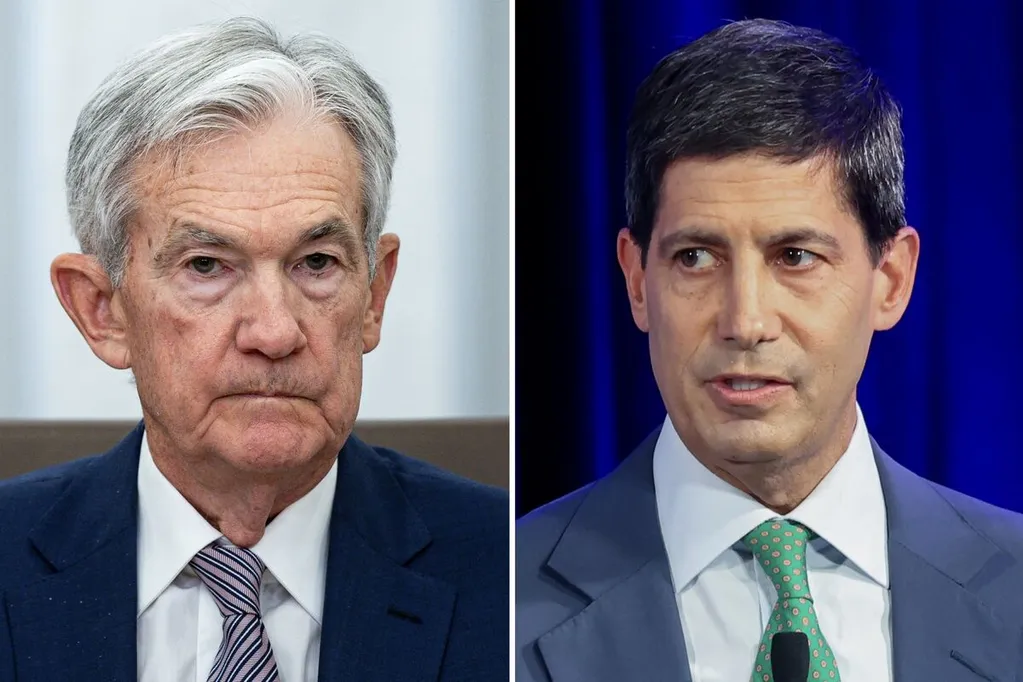
On the day of what could be Jerome Powell's final Federal Reserve meeting as chair, Trumponomics shifts focus from a largely uneventful near-term outlook for rates to a more consequential question: what comes next under Kevin Warsh, Donald Trump's pick to lead the central bank. Following the administration's decision to shelve its heavily criticized criminal probe of Powell, Warsh secured the backing of the Senate Banking Committee on a narrow 13-11 party-line vote.
Drawing on Warsh's recent confirmation hearing, Krishna Guha of Evercore ISI tells Flanders he is positioning himself as an architect of "regime change," a decisive break from the era of Ben Bernanke, Janet Yellen and Powell. Warsh has been sharply critical of the Fed's handling of inflation during the pandemic, signaling a desire to rethink how policymakers model price pressures, rely more on supply-side analysis and potentially shift toward alternative inflation gauges that downplay tariff-driven spikes.
That overhaul would extend to the Fed's tools and, most strikingly, its communication strategy. Warsh has indicated he wants to scale back the central bank's extensive forward guidance, arguing markets have been "spoon-fed" for too long. Guha, a former senior advisor at the New York Federal Reserve, warns that retreating from transparency while simultaneously changing policy frameworks risks injecting greater volatility and uncertainty into financial markets -- and may ultimately prove unsustainable.
At the same time, Warsh's rhetoric blends traditionally hawkish instincts on inflation with a more dovish forward-looking view: he appears to be laying the groundwork for eventual rate cuts -- the goal of Trump's yearlong campaign against Powell -- driven not by labor market weakness but anticipated disinflation from technological change, particularly artificial intelligence.
Questions about whether Warsh would do Trump's bidding as the president's "sock-puppet" and his refusal to contradict Trump's false claims about the 2020 election will likely color perceptions of his decisions from day one. But for now, the immediate policy outlook remains largely unchanged. With inflation still being "policed" amid the continuing consequences of Trump's trade war and now actual war, the Fed is unlikely to move rates in the coming months regardless of leadership (it did nothing on Wednesday). The bigger question is how quickly Warsh can reshape the institution once he is in place. He is after all just one vote, and any plans for "regime change" may be further slowed since Powell is remaining on the board for now.