President Donald Trump signed an executive order last week granting millions of federal workers additional days off during the Christmas period.
The order, signed December 18, said, "All executive departments and agencies of the Federal Government shall be closed and their employees excused from duty on Wednesday, December 24, 2025, and Friday, December 26, 2025, the day before and the day following Christmas Day, respectively."
But the order also included exemptions, meaning that not all federal workers -- along with many working at independent agencies -- will not receive additional time off. This includes Americans working at the U.S. Postal Service (USPS).
With Christmas Day falling on a Thursday, Trump's order means that millions of federal workers are able to take an extended five-day break from Christmas Eve until December 28.
Federal offices are typically closed on 11 annual holidays, including Christmas Day, and presidents have occasionally ordered additional closures around major holidays. Essential services such as law enforcement, national security and emergency operations are generally required to continue working.
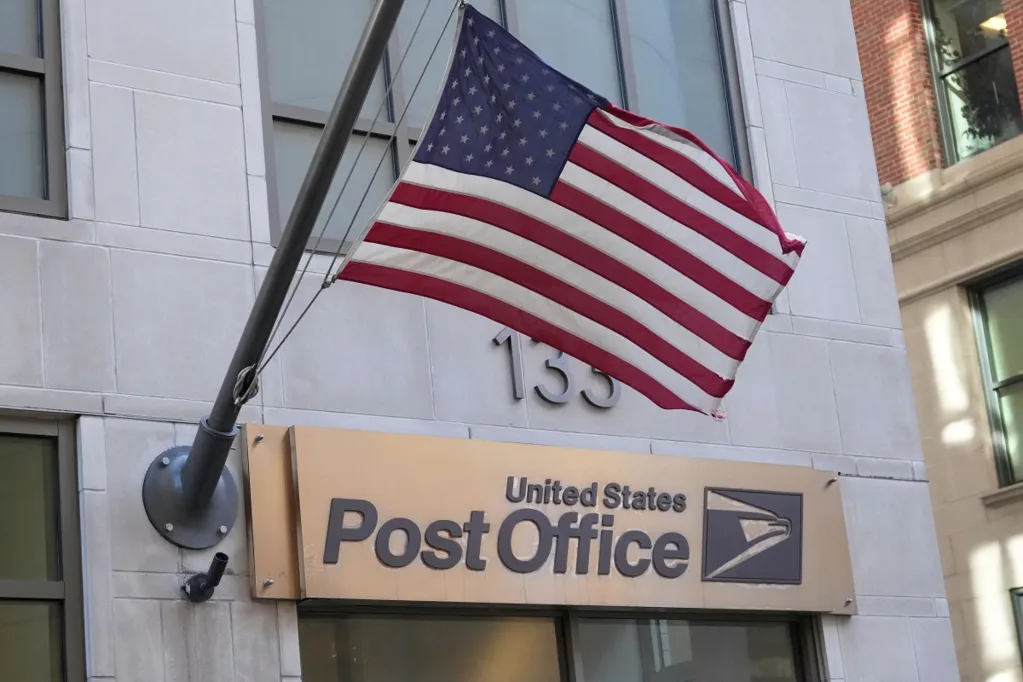
The USPS, an independent agency, is not affected by Trump's order, meaning that post offices are scheduled to be open on both Christmas Eve and December 26. Americans are advised to check with their local offices for opening hours.
The agency said regular and Priority Mail Express would be delivered on both days, and that mail would be picked up from blue boxes at the normal collection times.
However, USPS has said post offices will be closed on Christmas Day, mail will not be delivered, and mail will not be collected from blue boxes.
The Social Security Administration also announced that it would be open on December 24 and 26 from 9 a.m. to 1 p.m., but would be closed on Christmas Day.
In his order, Trump included potential exemptions to the new federal holidays: "The heads of executive departments and agencies may determine that certain offices and installations of their organizations, or parts thereof, must remain open and that certain employees must report for duty on December 24, 2025, or December 26, 2025, or both, for reasons of national security, defense, or other public need."
The USPS said on its website: "All Post Office locations will be closed Christmas Day (Thursday, Dec. 25) and New Year's Day (Thursday, Jan. 1). Regular Post Office hours and mail delivery will resume on the Friday after each holiday."
It added in a news release: "The Postal Service has been preparing for the holiday peak season -- the time between Thanksgiving and New Year's Day -- since January. Continued nationwide investment in modernization efforts has resulted in more capacity in its processing, logistics and delivery infrastructure.
"The organization is staying ahead of challenges and pulling together its people, technology, transportation, equipment and facilities into a well-integrated, streamlined mail and package network to meet customers' evolving postal needs, during the holidays and beyond."
President Donald Trump previously criticized the number of paid holidays in the U.S., writing on Truth Social in May: "We won two World Wars, but we never took credit for it -- Everyone else does! All over the World, the Allies are celebrating the Victory we had in World War II. The only Country that doesn't celebrate is the United States of America, and the Victory was only accomplished because of us. Without the United States, the War would have been won by other Countries, and what a different World it would be.
"Therefore, I am hereby declaring a National Holiday in celebration of the Victories of World War I, where the Armistice was signed on November 11, 1918, and World War II, where the Victory date was May 8, 1945. We will not be closing the Country for these two very important Holidays, November 11 and May 8, World War I and World War II, because we already have too many Holidays in America -- There are not enough days left in the year. We were Workers then, and we are Workers now!"
Trump's executive order provides only a temporary reprieve for federal workers during the 2025 holiday season.
Unless Congress passes additional legislation to make Christmas Eve or December 26 permanent federal holidays, their status will revert in 2026.