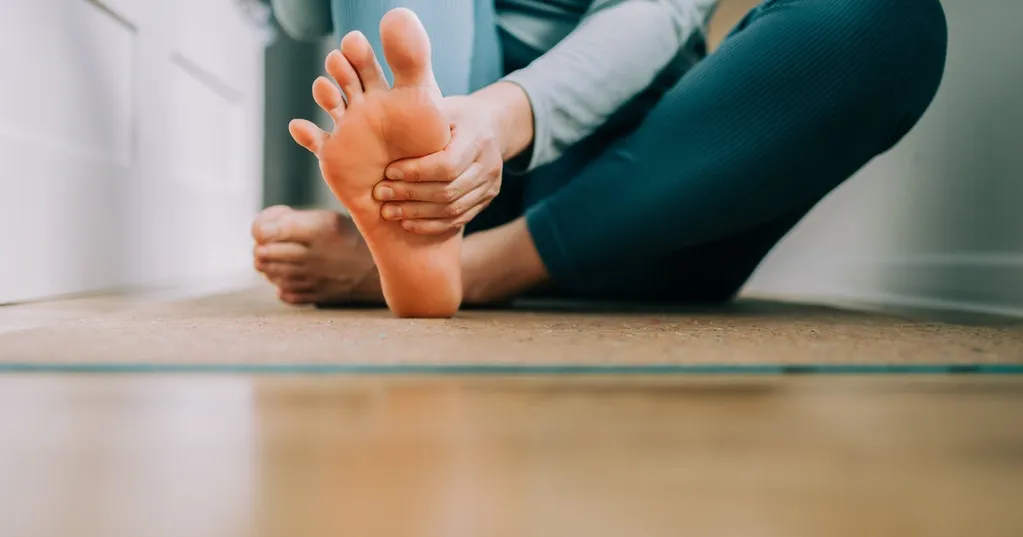
Most people don't spend too much time thinking about the arch of their foot -- how high it is, how low it is -- that is, until foot or ankle pain becomes a problem.
The foot is supposed to have an arch; it helps support your body's alignment, protects the foot from shock and helps you walk on uneven surfaces. But roughly 25% of adults have flat feet, said Dr. Jesse N. Charnoff, a spine and sports medicine physiatrist at the Hospital for Special Surgery in New York. This means the group has no arch at all, so the soles of their feet touch the ground when they stand.
"When you're born, you have flat feet," said Dr. Nicole Nicolosi, a foot and ankle surgeon at the Cleveland Clinic, adding that children tend to develop an arch between the ages of 7 and 10.
Genetics and certain conditions, such as injuries or rheumatoid arthritis, can cause flat feet in adulthood. Of the 25% of adults who have flat feet, only about 1 in 10 will have symptoms related to them that require treatment, Charnoff said.
"You can have a flat foot and live a long and happy life without any issues," Nicolosi explained.
That said, certain issues can be signs of health problems in folks with flat feet. Here's what to know:
People with flat feet may notice pain as a result of their body subconsciously shifting its weight and accounting for the lack of arch in the foot, said Dr. Amiethab Aiyer, the division chief of foot and ankle surgery in the Johns Hopkins Department of Orthopaedic Surgery in Baltimore.
"The body is trying to compensate, specifically by redistributing its weight on what we refer to as the tripod of the foot," Aiyer explained. "And when that tripod is affected, and in a flat foot situation, your weight starts shifting over kind of to the outside of your foot."
This can cause pain on the outside of the foot in front of the ankle and even along the back of the ankle, Aiyer said.
"Some people may also get plantar fasciitis, or just fatigue in the feet and discomfort," Charnoff said.
All this pain and overcompensation can cause folks with flat feet to develop arthritis-related issues, according to Nicolosi.
"Because of your flat foot, it kind of alters your mechanics -- the way you walk -- so you're more prone to arthritis, for example, in your knees and your hips," she said. So, the pain may not be limited to your foot and ankle. "Everywhere down the line, everything's connected," Nicolosi added.
"Another thing is more common in a flat foot type is tendonitis," Nicolosi said. "In general, the main arch supporter in your foot is this tendon called your posterior tibial tendon, and what it functions to do is raise your arch."
When this tendon is deficient, as it is in someone with flat feet, it's more prone to periodic inflammation, Nicolosi said. This won't necessarily lead to a big issue, but may cause tenderness or a dull pain.
If you notice you have flat feet or are told by a doctor that you do but don't have any sort of symptoms, then there is no need to make any changes to your life, according to Aiyer.
Don't go out and buy special inserts or opt into medical treatments just because you have flat feet. But if you notice that you're limping, your walk is changing or you have pain when doing regular activities, it's worth talking to your doctor.
More, if you never had flat feet but suddenly do, particularly after an injury, you should talk to a doctor, according to Charnoff: This could mean that the supporting arch structures were injured.
There are treatment options; in some instances, surgery may be recommended, but otherwise, physical therapy or orthotics may be recommended, Nicolosi said.
"Orthotics are pretty mainstay for flat feet because they have an arch support," said Nicolosi, which helps alleviate the tendon that supports your arch and helps put your foot in the correct alignment so you don't end up with arthritis or gait abnormalities.
While folks with flat feet but no bothersome symptoms don't need to make any lifestyle changes, it is always a good idea to wear supportive shoes. This is the best way to keep your feet pain-free and prevent future issues, she noted.