Kwame Anthony Appiah has been The New York Times Magazine's Ethicist columnist since 2015 and teaches philosophy at N.Y.U.
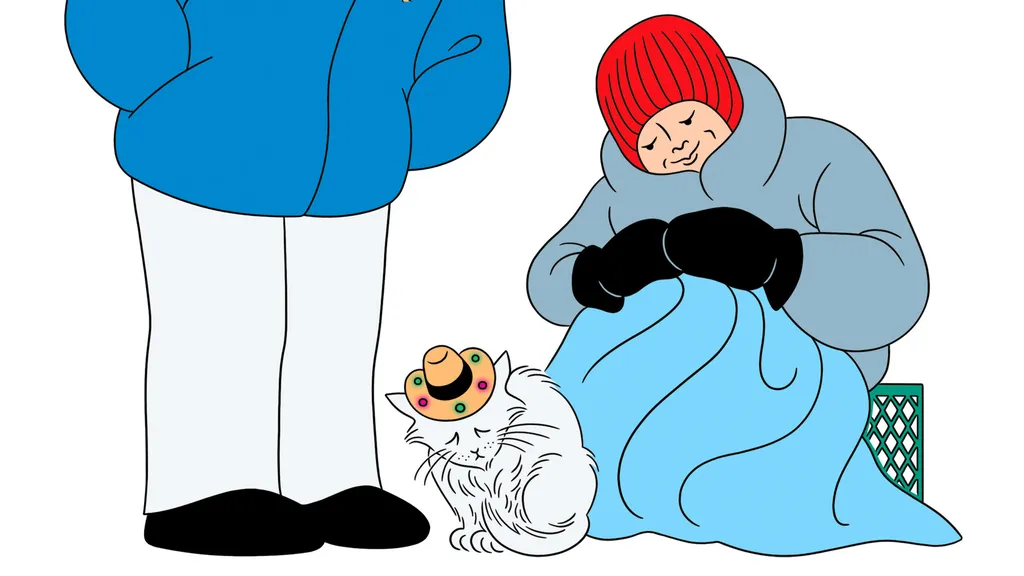
This past winter, I was walking through downtown Chicago on a frigid night when I encountered a homeless man and his pet cat. I felt sad for both, but the cat seemed especially pitiful. The man was bundled up and in good spirits, but the cat looked miserable: She was leashed to a milk crate and had only a thin blanket and wore a light-up sombrero.
I stopped to talk with the man, who was friendly, and to pet the cat, who was shut down and shivering and didn't respond to being touched. From our brief conversation, I could tell that the man loved his cat, but also that he was mentally ill and unable to provide proper care for the animal.
I gave him some money, said good night and walked on. Now, months later, I can't stop thinking about them -- especially the cat. (I realize I sound more empathetic toward the cat than to the person, but of the two of them she seemed far worse off.)
Would it have been inappropriate to offer the man money for his beloved pet, promising to find her a warm, loving home? Taking the cat might have eased her suffering, but it would have forced the man to choose between money and the animal he loves. It might also reward him for mistreating the cat, and he could find another animal and repeat the pattern. How should I have handled this? -- Name Withheld
From the Ethicist:
"Whoever offers to another a bargain of any kind, proposes to do this: Give me that which I want, and you shall have this which you want," Adam Smith wrote in "The Wealth of Nations." A successful exchange, he was saying, is to the advantage of each party. But when one side is acting out of desperation, it can fairly be deemed exploitative.
It's true that people constantly do things for money they wouldn't otherwise do; that's basically what work is. But there's a difference between a person in dire circumstances driven to sell an organ and a corporate manager who's showing up only for the paycheck. To decide whether a transaction is exploitative, we ask a bundle of questions -- about how constrained someone's options are, whether what's being given up is inherently invasive or violative of the person, whether someone has the capacity to understand what's being given up, whether the loss is irreversible and how difficult refusal would be. All of which is to say that you were right to be uncomfortable about the exchange you were contemplating.