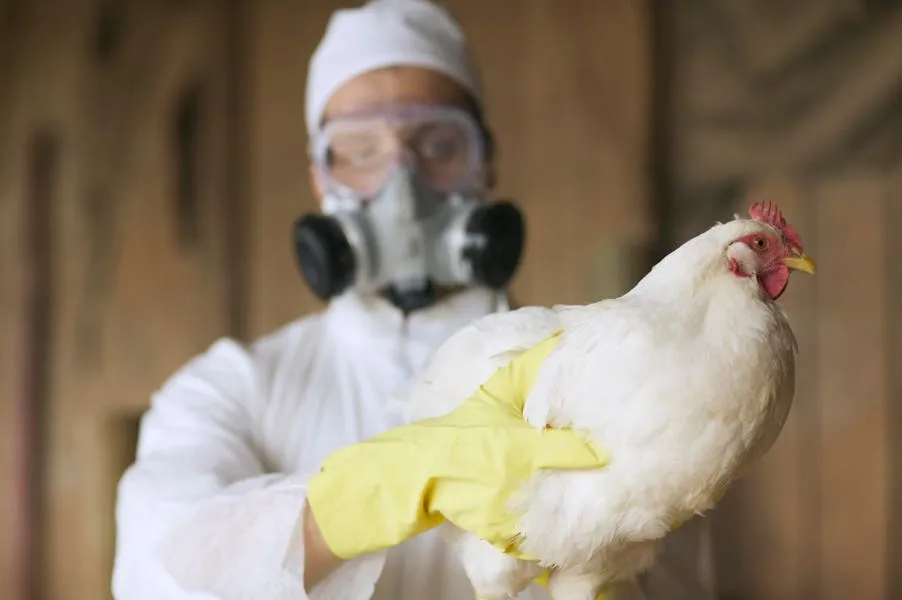
Governor Josh Shapiro of Pennsylvania convened a crisis response meeting this week to address a massive avian influenza outbreak in the state. Per state officials, nearly 7.6 million birds have contracted the virus thus far, causing major concerns for both the poultry industry as well as local communities with regard to the highly contagious virus.
The avian flu is normally hosted in birds and is primarily spread across flocks through mucous, saliva, or feces. The virus is not frequently transmitted from person to person but can transfer from birds, cows, and other animals to humans that do not use proper protective equipment or care when handling infected animals. Symptoms of the virus include fever, sore throat, cough, nausea, vomiting, and pink eye (conjunctivitis); in severe forms of the disease or in immunocompromised hosts, the virus can lead to significant respiratory complications or failure.
Among animals and poultry, farmers are often left to cull their flocks, sometimes entailing hundreds of thousands of livestock, to mitigate the spread of the virus. In Pennsylvania, the government is working with the U.S. Department of Agriculture Secretary and two dozen bird flu specialists for help on the ground; additionally, the state is requesting regulatory relief to empower more veterinarians to work with and diagnose local flocks and continue to unlock resources to advance on a potential avian flu vaccine.
On the other side of the country, reports out of California indicate a potential spread of H5N1 avian flu across a population of elephant seals, killing nearly 30 already. Though the virus and strain may be slightly different than that of Pennsylvania, experts are remaining cautious as to how this situation could evolve for the local population; a related viral strain was found to kill nearly 17,000 animals in a 2023 outbreak in Argentina. Though risk to the public may be rare or generally low, experts are still warning people to not touch or interact with dead seals or livestock.
Finally, the United Kingdom reported this week that nearly 30 swans were found dead in London's Docklands due to an outbreak of an avian flu viral strain. Scientists warned that this strain could be particularly lethal and have issued a warning to tourists and local residents to not interact with birds, feed any pond or river animals, and stay clear of any dead animal remains. Though the details of the cause and viral strain are still being determined, experts are working to rapidly find and contain the sources of transmission.
Although spread out across multiple geographies and perhaps unrelated viral strains, these incidents are definitely a cause of concern for the public. According to the NHS, here is what individuals can do to help lower their risk of exposure to bird flu:
Any individuals with exposure, signs, or symptoms of illness or concern should immediately consult with a trained medical professional.