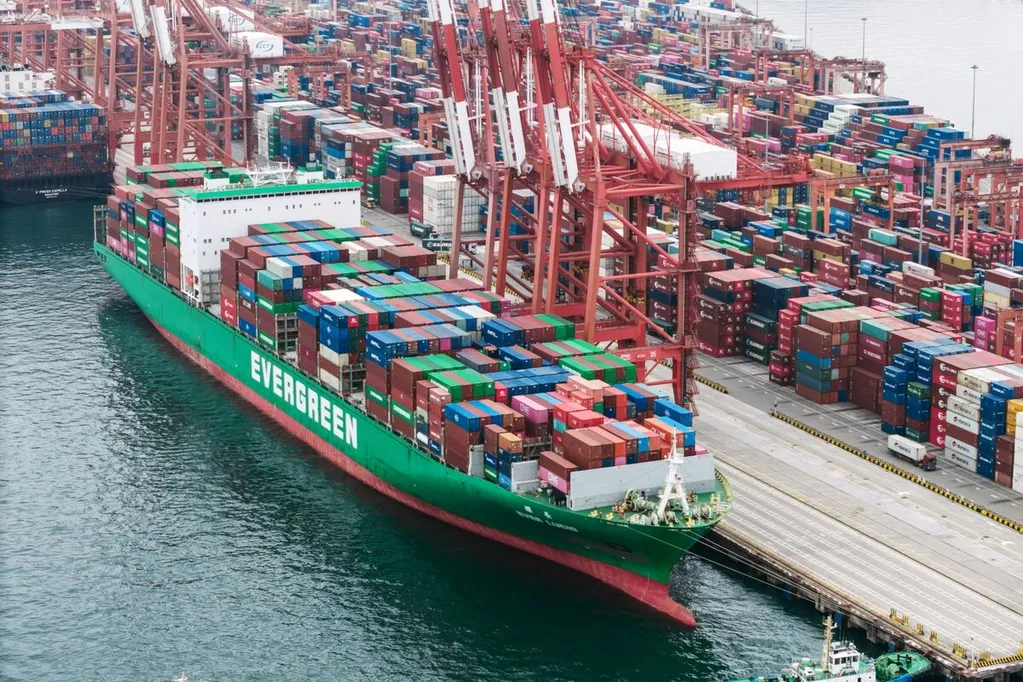
China's export growth rebounded more than expected despite disruptions to shipping caused by the war in Iran, as trade volumes swell due to an investment boom in artificial intelligence.
Exports rose 14.1% in April from a year earlier, according to a statement released by the General Administration of Customs on Saturday. That compares with the median forecast of 8.4% in a Bloomberg survey of economists and a 2.5% gain in March. Imports rose 25.3%, resulting in a trade surplus of $84.82 billion.
The improvement in outbound shipments followed a surprisingly steep slowdown in China's exports during the first month of the war, after the US and Israeli attacks on Iran and Tehran's retaliation spread upheaval throughout the Middle East and beyond. And with imports of high-tech products such as chips sharply on the rise, China in March had its smallest trade surplus in more than a year.
The imbalances in trade will be in the spotlight ahead of a planned summit in Beijing next week between US President Donald Trump and his Chinese counterpart, Xi Jinping. The US merchandise trade deficit with China widened in March for a third month, Commerce Department data showed.
Chinese factories navigated last year's tit-for-tat with the US over tariffs by shipping more products to regions including Africa and Europe, even as they met pushback from countries where they pose a threat to local producers.
China has been adding its voice to global pressure to stop the conflict, which erupted at the end of February and has forced the effective closure of the Strait of Hormuz. A sharp reduction in traffic through the vital waterway for energy risks creating a drag on imports, pushing up oil prices and threatening foreign demand for Chinese goods.
The strength of sales abroad powered China to an unprecedented trade surplus of $1.2 trillion in 2025. Shipping volumes so far in 2026 are mostly staying above last year's record-setting levels, thanks in part to strong global demand driven by investments in data centers and power equipment.
Read More About China and Trade in Asia:
Following a surprise rebound in economic growth during the first three months of the year, the evidence so far this quarter points to another strong showing for firms reliant on foreign sales.
A sub-index of new export orders in the official manufacturing purchasing managers' index expanded in April for the first time in two years. A private gauge of activity at export-oriented firms improved more than forecast last month to reach the highest since December 2020.
While the war in Iran is doing little -- for now -- to hold back overseas sales, warning signs persist, with high-frequency data tracked by Bloomberg Economics for April indicating economic activity remained weak.
Authorities will likely hold off on further stimulus if exports stay resilient and industrial growth holds up. But with cost pressures mounting and domestic spending stagnating, China could be vulnerable in case of a protracted conflict in the Middle East.
Under strain from growing prices for energy and other commodities, producer deflation in China has ended after more than three years, prompting some exporters to lift their charges to overseas customers. Overall export prices narrowed their on-year decline in March.
The war could also result in higher global demand for Chinese green products such as solar panels, at least in the short term.
Economists have meanwhile sharply upgraded their forecasts for China's import growth this year and now expect it to overtake the pace of expansion in exports for the first time since 2021.
The contribution of net exports to economic growth halved in the first quarter, as Chinese companies ramped up purchases of some foreign goods like high-end chips needed for AI.