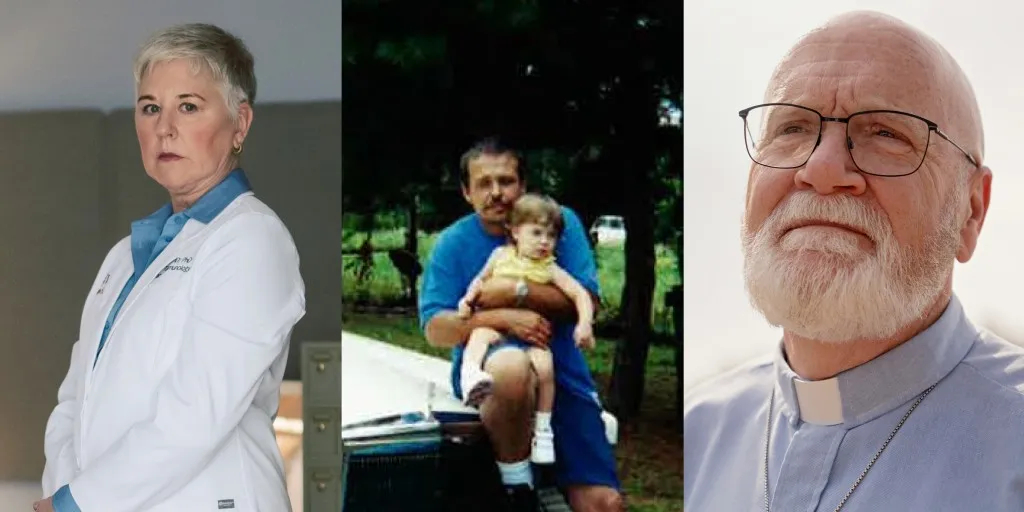
Now, he's one of Roberson's most vocal allies. He has attended legislative hearings and written clemency letters declaring his strong belief that Roberson is innocent and shouldn't become the first person in the United States to be executed based on a "shaken baby" diagnosis.
"The foundations of our case were built upon bad science," Wharton said recently after his monthly visit to Roberson on death row.
Thousands of caregivers have been arrested since the early 1980s based on the medical belief that young children hospitalized with three symptoms -- brain swelling, bleeding in the brain and bleeding at the back of the eyes -- must have been forcefully and deliberately shaken. Many doctors and pediatric associations remain steadfast in the view that those symptoms help prove that a child has suffered what is now often called "abusive head trauma."
But a growing number of medical and forensic experts say the diagnosis is too definitive, particularly in the absence of other signs of abuse. Accidental falls from changing tables can similarly jostle the brain. Clotting disorders and other illnesses can also cause brain bleeding. While some babies are undoubtedly shaken by overwhelmed caregivers, which can cause life-threatening brain damage, these scientists say it isn't enough to look only at three symptoms before they draw conclusions.
In a major victory for shaken baby syndrome skeptics, New Jersey's Supreme Court recently agreed, affirming a lower court ruling that likened the diagnosis to unreliable "junk science" and barring expert testimony about it from two upcoming trials. The 6-1 ruling, closely watched by accused caregivers and their attorneys nationwide, could shift how courts weigh shaken baby evidence.
This evolving understanding has shattered the certainty of some medical experts and law enforcement officials who previously supported the diagnosis, including some whose testimony helped put accused caregivers behind bars. NBC News has identified about two dozen professionals who have publicly changed their views. In interviews, seven of them expressed frustration at what they see as outdated science that leads to wrongful convictions. They worry families are being broken up based on dubious evidence. And some are wrestling with the role they played in incarcerating people they now believe are innocent of having shaken their babies to death.
"People are being sent to jail on the basis of junk," said Dr. Janice Ophoven, a pediatric forensic pathologist in Minnesota who once accepted the concept behind shaken baby science but is now more cautious, saying the theory lacks laboratory-based evidence. "It's like someone saying I know for sure that there was a homicide just because there's a bullet hole."
Some, like Ophoven and Wharton, say they are speaking publicly to rectify the harm of mistaken diagnoses. They're discovering, though, that reversing a shaken baby conviction is far from straightforward, even when the evidence it was based on begins to crumble.
Russell Maze, a Tennessee man serving a life sentence for murder after his 19-month-old son died in 2000, lost an appeal in October to overturn his conviction. His defeat came despite the Nashville district attorney's office, which took him to trial, an original police detective in his case and the medical examiner who conducted his son's autopsy all now saying they believe he is innocent of having shaken his son to death.
"I would like Russell to come home," said Dr. Bruce Levy, who was the medical examiner in Maze's case and recanted in a sworn affidavit last year. "I think he has paid a horrible price for mistakes that I and others have made."
Exonerations in such cases are rare. Since 1992, 41 parents or caregivers have been exonerated of murder, manslaughter or child abuse charges involving shaken baby syndrome, according to the National Registry of Exonerations, which tracks exonerations in the United States, including factors that lead to wrongful convictions. In eight of those cases, experts who originally testified for the prosecution -- including medical examiners, pathologists and pediatric ophthalmologists -- later publicly disavowed their shaken baby syndrome findings. The forensic recantations were "very important" to the exonerations, according to the registry's analysis.
"There has been a shift in scientific thinking about the issue," said Simon Cole, a registry editor who is a criminology professor at the University of California, Irvine.
NBC News has been investigating the disputed science of shaken baby syndrome for years, with consequential results. In 2021, Texas passed one of the first laws in the country to allow parents to seek second medical opinions when they are accused of abusing their children. Lawmakers were spurred by NBC News' "Do No Harm" series, which found that some children in Texas had been removed from their homes based on questionable opinions from doctors trained to spot child abuse. Three years after the law took effect, and amid other reforms including an updated definition of neglect, removals of children by Texas Child Protective Services had fallen more than 40%.
This year, NBC News' "The Last Appeal" podcast examined Roberson's case as his execution date neared. In a stunning turn in October, Texas’ highest criminal court halted his execution with just days to spare, as justices returned the case to the trial court for another review. The decision came as NBC News uncovered new evidence and reported on Wharton's belief in Roberson's innocence.
Roberson is still fighting. Texas Attorney General Ken Paxton has said Roberson murdered his daughter by "beating her so brutally that she ultimately died" and has repeatedly vowed to execute him.
"I'm still hopeful," Roberson said in an interview from the state prison's death row in September. But he's disappointed that he's still trying to convince those with power over his future that he's innocent. "I really shouldn't be here, you know?"
When Roberson took his daughter, Nikki, to the hospital in Palestine on Jan. 31, 2002, her condition was dire. She was bruised and unresponsive. Medical staff members called the police. "I love my little girl," Roberson told nurses. That afternoon, she was transported to Children's Medical Center in Dallas, where her case was referred to a pediatrician specializing in diagnosing signs of child abuse.
While doctors ran a barrage of tests and scans on Nikki, Roberson was leading Wharton around his home, showing him where, he said, his daughter fell and the washcloth used to wipe a small amount of blood from her mouth -- an injury Roberson believed occurred when she tumbled from bed.
At the time, Wharton said, he was struck by Roberson’s “odd” behavior, like his decision to fix a sandwich during the visit. He didn’t seem to show an urgent concern for Nikki.
In Dallas, a child abuse pediatrician examined Nikki, noting “shaken/impact head trauma.” Her health was deteriorating. A day after her arrival, Nikki was removed from life support. Roberson was arrested on a capital murder charge.
At trial, Wharton testified that he hadn’t seen any signs of violence in the Roberson home, but ultimately, Roberson’s story of what happened to Nikki seemed inconsistent with her injuries.
The case remained on Wharton’s mind even as he left policing in 2006 and found a new calling as a United Methodist church pastor.
In 2018, Wharton got an unexpected visit at his home from a lawyer working on Roberson’s appeal, Gretchen Sween.
At Wharton’s dining room table, Sween shared new information he hadn’t known about Nikki, including that she was chronically ill. She had been taken to doctors in the days before she died with a 104.5 degree fever and respiratory issues. She had been given a drug called Phenergan, which federal regulators would warn in 2006 shouldn’t be prescribed to children under 2 because of the risk of respiratory failure.