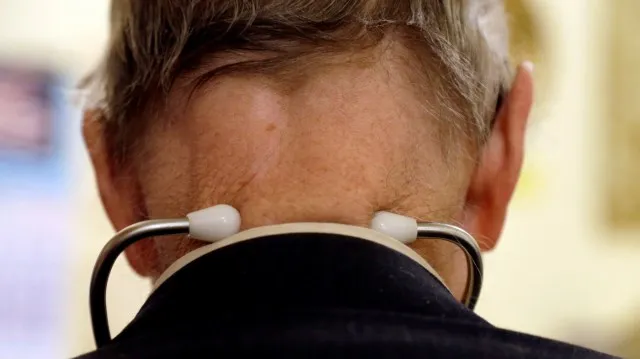
A November study out of Singapore reveals that elderly demented people living in community dwellings frequently have procedures and hospitalizations in their last year of life which don't improve quality of life, just the opposite.
On the other hand, my personal experience with my parents -- each over 100 years old -- is far different. Each has some small degree of cognitive impairment, but they still enjoy each other after 73 years of marriage, are not in pain and have a trusty live-in aide who takes great care of them. My father has survived despite four years on dialysis, thanks to doctors who have refused to throw in the towel.
Juggling these contrasting realities is very difficult for physicians, and it is becoming increasingly common as the number of elderly and those living with chronic diseases has increased dramatically over the past two decades.
End of life care is very expensive. Consider that the final month of life in a hospital costs over $30,000, and the cost of hospice care in the final month is over $17,000. On top of this we have a sick-care system, where poor health habits throughout life lead to obesity and chronic diseases like diabetes, high blood pressure and cancer, which are very costly to take care of.
A lot of these costs would diminish if people simply exercised more, ate better and lost weight. In fact, per one estimate, end of life care in the U.S. costs $430 billion -- one tenth of total health care costs of $4.3 trillion.
Though palliative care and hospice care save money at the end of life, they are also still expensive, not to mention the moral implications of potentially giving up on someone -- like my parents -- too soon.
The solutions is not physician-assisted suicide. Though 60 percent of physicians believe physician assisted suicide should be legal, only 13 percent of those surveyed say they would participate. I am one of those who never would, as it goes against my entire medical philosophy.
As of this year, physician assisted suicide is recognized in 12 states and local jurisdictions, but not on the federal level. I feel strongly that it should never be a federal law or protocol like in Canada.
In New York, Gov. Kathy Hochul has agreed to sign the Medical Aid in Dying Act, which allows "medical aid in dying" for residents expected to live six months or less. I think this is wrong, that it gives physicians power we shouldn't have over life and death.
Faith in God reminds us of our limitations. I think this explains why so few physicians, including me, are willing to participate in physician assisted suicide. Consider that medical miracles are occurring every day; great technology has paved the wave to personalized solutions that allow us to keep people alive longer and extend quality of life.
Our role is generally not to end life but to prolong it while decreasing suffering. This goal is best served by honoring the preciousness of each life and the value of the human soul. If you believe in medical miracles, it can keep you as a physician from giving up too soon.
Studies have shown that 75 percent of physicians believe in medical miracles, and over 50 percent say they have witnessed them. In medicine, miracles often take the form of a compilation of narrow misses or unexpected cures.
Don't get me wrong; doctors are faced every day with the decision of how long to prolong care that appears to be futile, and sometimes easing suffering means shortening a life.
Faith as a part of healing is, in some ways, becoming more important than the more that biotechnology advances. The art of medicine must go beyond science, acknowledging that each life is precious. While hospitals, medical centers and larger health care systems struggle with bottom line financial realities, we physicians must hold the line on what keeps us human.
Artificial Intelligence may be perceived in surveys as having more empathy than we doctors do these days, but that is more of an indictment of our growing susceptibility to a cost/benefit analysis than it is a biotechnological advance on the part of computers.
Machines can't feel, but physicians still can. We need to act like it, especially when we have a patient's life in our hands.