I work in a sector that speaks often, and rightly, about racism, discrimination and human rights. Yet on this issue I have felt the boundaries of acceptable speech narrow around me. To some, I am not progressive enough. To others, I am not supportive enough. Between those demands sits a quieter position that should not be controversial: that Jews are human beings, that Palestinians are human beings and any position that requires us to forget either truth has already begun to fail. We have to recover the capacity to hold two truths at the same time.
I have felt criticism from both extremes. There are those who hear concerns about antisemitism as indifference to Palestinian suffering. There are others who hear concern for Palestinian life as a betrayal of the Jewish community. Both reactions ignore the humanity of the "other", and make peace harder. Both make honest speech more dangerous.
When David Baddiel's Jews Don't Count was published, I rejected its premise. I thought it overstated the case. I believed that people committed to fighting racism would recognise antisemitism when it appeared before them. It looks like I was wrong in that assessment.
What has shocked me most is not that antisemitism exists. It always has. It is that many people who can identify almost every other form of racialised hatred have become hesitant, evasive or indifferent when the hatred is directed at Jews.
We would not accept the reviling of any other minority by reference to its ancestry, faith, cultural memory or collective trauma. We would not excuse threats against another community because of the actions of a government overseas. We would not tell another minority that their fear is manipulative, their history irrelevant, or their grief politically inconvenient. Yet too often, Jews are asked to meet a special condition before their pain is recognised.
None of this requires silence about Palestinian suffering. It does not require support for the policies of the Israeli government. It does not require anyone to abandon international law, human rights or the demand that all civilians be protected.
But it does require a line. Criticism of Israel is not antisemitism. Hatred of Jews is. Holding Jews collectively responsible for Israeli action is. Threatening violence against Jews who acknowledge a religious connection to the Holy Land is. Threatening Jewish schools, synagogues, neighbourhoods or students is. Treating Jewish safety as a negotiable price of political rage is.
Jews have prayed toward Jerusalem for millennia. Jewish liturgy, law, memory and identity carry an ancient connection to the land that Jews call Israel and others call Palestine. That connection does not settle borders. It does not determine the rights of Palestinians, who also have a connection to that land. It does not justify occupation, dispossession, violence against or the killing of civilians.
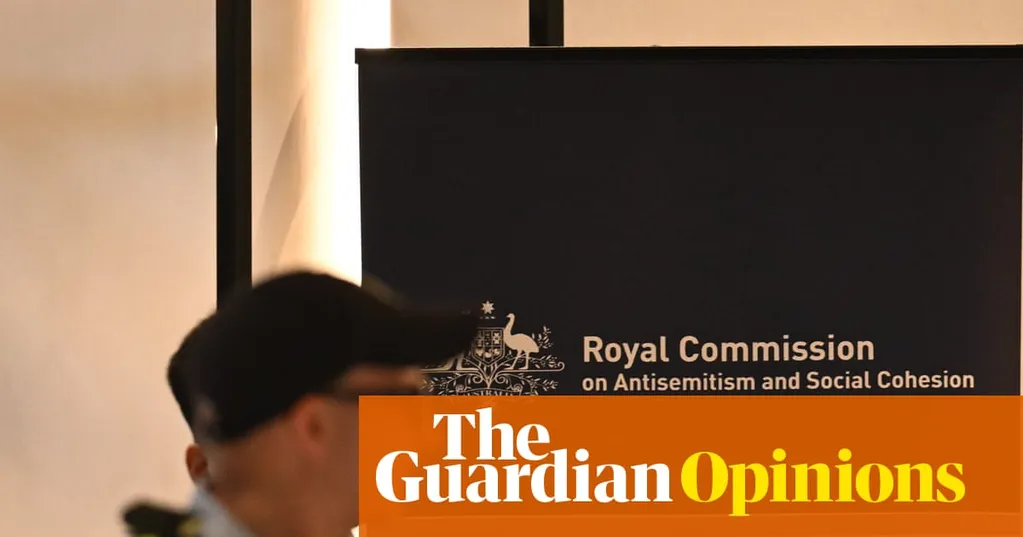
The royal commission is asking Australia to confront antisemitism and promote social cohesion. Those two ideas belong together. Antisemitism is not only a Jewish problem. It is a test of whether our commitments to equality survive contact with a hatred that is old, adaptable and, sometimes, politically convenient.
I did not make a submission to the royal commission because I feared the consequences of speaking honestly. But silence has consequences too.
Anti-racist politics in our nation must be able to oppose antisemitism without abandoning Palestinians. A serious human rights sector must be able to condemn the killing of Israeli civilians and Palestinian civilians without ranking grief by ideology, race or religion.
The way forward is not to demand that people choose which community's fear counts. It is to insist that all of it counts, and to find a way to move forward together in peace.