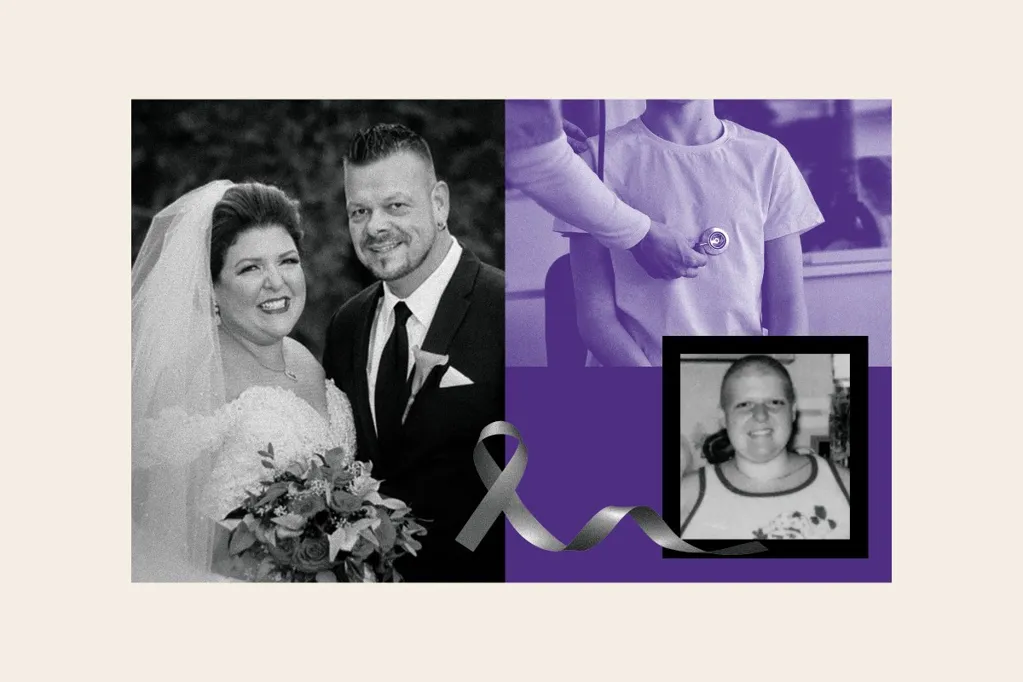
When I was 14 years old, I was a teenybopper. I loved boy bands -- NSYNC and Backstreet Boys were huge at the time. I played soccer. I had a great group of family and friends. I've always been full of life. I was the energetic extrovert, always bouncing around.
That summer before high school, in 2001, I went for a routine physical. The doctor pressed on my neck and felt a lump. He asked if I ever had night sweats, or any itching -- a bunch of questions I didn't understand the meaning of at the time. As soon as I left his office to go next door to the lab for bloodwork, he pulled my mom into the office and said, "Something's definitely wrong."
The next two weeks were filled with appointments, biopsies and scans. At the end of July, I was diagnosed with stage 3b Hodgkin lymphoma, the same cancer my mom had before I was born. I went through eight cycles of chemotherapy followed by six weeks of radiation to different areas of my chest and abdomen during my freshman year of high school. It was definitely isolating. We didn't have social media then. When the Sept. 11 attacks happened, it became even more stressful since we were traveling into New York City for treatment from our home on Staten Island.
In May 2002, I got a clean bill of health. I was ready to enjoy my summer and start sophomore year fresh. But by November, I was falling asleep in class. I knew something was wrong. I was constantly cold. I felt short of breath in the hallways. We went back to the doctor to figure out what was going on; they did a bone marrow biopsy and determined I had myelodysplastic syndrome (then considered a preleukemic condition, but now considered a cancer in its own right) as a result of the chemotherapy I'd received for the Hodgkin lymphoma. Now things felt real for me. I was very angry. I was upset that I was going to be isolated from the world again. I'll never forget when the doctors sat us down and said that my only hope for survival was a stem cell transplant. Then they said, "Your best chance of a transplant match is a sibling," but I didn't have a sibling. We didn't know how long the wait for a donor would be, or if we would ever find a match.
For about seven months, I got blood and platelet transfusions three times a week. Doctors were watching my blood counts, making sure my condition didn't turn into leukemia while we waited. Then we found a match. It was perfect timing because that's exactly when my tests showed that my condition had started to turn into leukemia. I had cancer -- again.
I do not remember much from that time during transplant. I did approximately 10 days of intense inpatient chemotherapy prior to receiving my donor's stem cells. It was very intense, and I slept through most of it. And then doctors transplanted the stem cells on Aug. 21, 2003, which I now celebrate as my second birthday. I was very weak during the recovery process, but after a year, I was back on my feet.
All I knew about my donor was that he was a 24-year-old male. I didn't know anything about his history or where he was from. A year after treatment, we were allowed to write to each other, but there were limitations. The hospital would read them, and if there was anything identifiable, they wouldn't send them. In the beginning, I would write, "Dear friend, how are you?" But it was really important for me to have that connection because this guy had saved my life! I felt like I owed it to him to say thank you, and to show him what I was doing with my life. He is the reason that I'm here. The hospital would cover up the card manufacturer names. I remember holding his cards up to the sun anyway, trying to figure out where he was from. Over time, we were allowed to find out more information about each other, and we began speaking over the phone when I was in my first year of college.
His name is Frank, and we've had a growing bond ever since. He lives in Germany. We've now met in person four times, and we speak every day. I consider him my brother now. He was a groomsman in my wedding. We've gotten matching tattoos. We've been there for each other through hard times. When my mother died in 2023 from long-term complications from her own cancer treatment, our bond continued to grow.
A few months after my mother's passing, I was diagnosed with thyroid cancer. Thankfully, I caught it early-stage, and doctors were able to remove half my thyroid for treatment and avoid more radiation. I'm now a nurse at Memorial Sloan Kettering Cancer Center (MSK), the same place where I was treated. I've been here my entire career. I participate in MSK's Cycle for Survival event -- this year is the 20 anniversary -- to help raise funds for rare cancer research, like Hodgkin lymphoma. I love being part of this national fundraising event because all the money raised goes directly to cancer research at MSK, which is incredible. My experience when I was a teenager really propelled me into nursing. I loved the nurses who took care of me and I wanted to give back in my own way. And I knew I needed to work in oncology; there was no other path I was going to take.