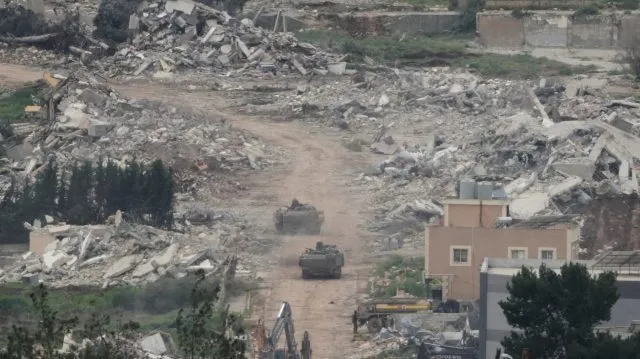
A temporary ceasefire agreement between Israel and Lebanon went into effect at midnight local time on Friday after weeks of fighting.
Iran announced on Tuesday morning that the Hormuz Strait was "completely open" amid the ceasefire, though it wasn't immediately clear what that means for a U.S. blockade on the corridor.
The deal came under pressure from Iran to include Lebanon in a two-week halt in fighting between Tehran and the U.S. Since the 14-day ceasefire with Iran was announced last week, Israel has escalated its strikes on Lebanon, where it is battling the Iran-affiliated Hezbollah.
Here are the six core tenets of the agreement, according to the State Department:
- A 10-day ceasefire and potential extension
The 10-day halt in fighting began at 5 p.m. EDT on Thursday afternoon -- or midnight in Lebanon and Israel. The agreement stated that this is only the "initial" length for the ceasefire agreement, leaving the door open for further negotiation. - The countries expressed an interest in "good-faith negotiations" leading to "permanent security and peace" between the two nations, according to the State Department.
- In a Truth Social post on Friday, President Trump said he is inviting Israeli Prime Minister Benjamin Netanyahu and Lebanese President Joseph Aoun to the White House "for the first meaningful talks between Israel and Lebanon since 1983," but didn't say when.
- "Both sides want to see PEACE, and I believe that will happen, quickly!" he wrote.
3: Preserving Israel's right to self defense
The deal reserves Israel's right to "take all necessary measures in self-defense."
Sen. Lindsey Graham (R-S.C.), a strong defender of Israel and a known war hawk, expressed concerns on Thursday that the deal would compromise the country's right to defend itself against attacks from Hezbollah in a Thursday post on X.
"While I appreciate every effort to bring peace through diplomacy in the Middle East, particularly in Lebanon, we have to be realistic about the situation on the ground," the hawkish GOP senator wrote. "The last thing we need to do in the name of peace is throw Hezbollah a lifeline by restricting Israel's ability to attack this terrorist organization."
The countries agreed that Israel's self defense would "not be impeded by the cessation of hostilities."
"Besides this, it will not carry out any offensive military operations against Lebanese targets, including civilian, military, and other state targets, in the territory of Lebanon by land, air, and sea," the nations wrote in the agreement.
In the past six weeks, Israeli attacks on Lebanon have killed over 2,100 people in the country, including 172 children, The Associated Press reported.
4: Lebanese action against Hezbollah
The agreement also requires that Lebanon's government "take meaningful steps" against Hezbollah and other militant groups in the country "from carrying out any attacks, operations, or hostile activities" against Israel.
Hezbollah refrained from directly referencing the ceasefire deal in a Friday statement, but the militia said "the hands of these fighters will remain on the trigger," according to The New York Times. Still, Hezbollah appears to be adhering to the ceasefire so far.
5: Affirming Lebanese sovereignty
The agreement also recognizes Lebanon's "exclusive responsibility" for its sovereignty and national defense. It states that "all parties" signing on to the agreement, including Israel, acknowledge the country's independence and right to self-determination.
Aoun urged members of the Israeli Defense Force (IDF) to leave southern Lebanon in an X post on Friday.
"The Lebanese Army will play a fundamental role after the withdrawal of Israeli forces, with regard to deployment up to the international southern border, ending armed manifestations, and reassuring the southerners after their return to their villages and towns that there will be no armed forces other than the army and the legitimate security forces," Aoun wrote.
6: Appointing U.S. negotiators
The two countries requested that the U.S. assist with the ongoing direct negotiations. The temporary agreement expresses a desired goal of reaching a "comprehensive agreement that ensures lasting security, stability, and peace between the two countries."
"These commitments are designed to create the conditions necessary for good-faith negotiations toward enduring peace and security," the U.S. State Department wrote in a Thursday press release. "The United States further intends to lead international efforts to support Lebanon as a component of its broader efforts to advance stability and prosperity in the region."