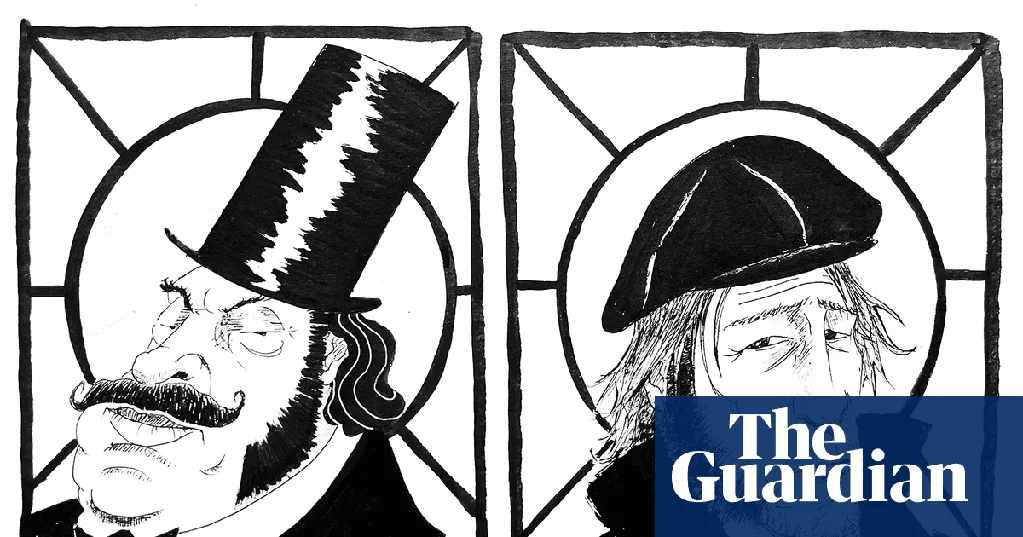
The rich man goes out yachting,
Where sanctity can't pursue him;
The poor goes afloat
In a fourpenny boat,
Where the bishop groans to view him.
The editor of the 1906 edition of Thomas Love Peacock's Poems, Brimley Johnson, gave a brisk account of the essential qualities in Peacock's work: "He laughs at the theories of other people without expounding any for himself. His keenest contempt is reserved for affectation, however inspired: his poetry is never didactic, seldom even containing the picture of an ideal. Peacock does not deal in maxims, fervid appeals, or tender retrospect." A friend of the younger poet, Percy Bysshe Shelley, Peacock clearly was unpersuaded by the Romantic point of view: his editor isn't mistaken. However, in satires such as Rich or Poor, the social criticism points to a broader idealism in Peacock's view of the human comedy.
Peacock (1785-1866) was a prolific poet and writer of the popular novels he termed "comic romances". Rich or Poor reflects social habits he'd have observed in both the Regency and Victorian eras and its primary focus is the power of the Anglican establishment to prosecute the "undeserving" for failure to observe Sunday restrictions. This was a subject that attracted the Punch magazine cartoonists of the day. Peacock has a finer eye for the visual details of ordinary life, and chooses a stanza-form which not only frames but variously brightens his vignettes.
As the theme is always the contrast of rich and poor, so the metre in each stanza is a dialogue of three- and two-beat lines. The two-beat lines often have a hurried, dactylic skip in their toes, as in the third stanza: "The poor who would roast / To the baker's must post". Generally, if not consistently, the rich man's activities proceed with a more sober accentual tread. The rhyme-scheme is also interesting - ABCCB. That unrhymed A line is unique in the rhyme-scheme of each stanza and, as such, acquires symbolic force. After establishing the topic ("The poor man's sins are glaring"), it's used to declare the benefits owned or accessible only by the rich man. It's easy for a reader not to notice the absence of the rhyme, just as it's easy for the Sabbath guard dogs to miss observing the rich man's rule-breaking.
At the core of the poem is the distinction between the ability to buy the privacy in which to flout the Sunday Observance laws, and the necessity of displaying your unavoidable "sins" publicly. Even Victorian windows aid concealment: the "painted windows" in stanza five allude to the use of variously patterned glass, including stained glass. If the concerts of the rich can be overheard, at least they can't be seen.
The travel options illustrated in the concluding verses are interesting. The railway network and the "third-class train" are now available. But the rich man can travel first-class, or afford an expensive horse-drawn private "carriage". The poor man in the "fourpenny boat" is exposed to the weather as well as un-curtained daylight. He may be off on a jaunt, but not necessarily: the boat-trip might be his cheapest option for a necessary, perhaps kindly motivated errand, if he lives near a commercially active river such the Thames. The bishop who "groans to view him" may be dismayed by the sight of a man who in fact is fulfilling some laudable Christian obligation.
Unexpectedly, the rich man's "yachting" pleasures bring him clearly into the contemporary range of high-status leisure, and set me wondering what the equivalent satirical target might be today. A list of tax evasion schemes accessible only to the rich was my first idea. Unfortunately, I'm too poor to be acquainted with them, so someone else will have to write it.