COLUMBIA -- If the congressional redistricting map the Statehouse is looking at were in place today, much of Mount Pleasant could be represented by a congressperson from Murrells Inlet instead of Nancy Mace.
The Charleston peninsula would also be part of that new 7th Congressional district that stretches to the north under the leadership of Republican U.S. Rep. Russell Fry. So would North Charleston, Folly Beach, Sullivan's Island and Isle of Palms.
The Lowcountry area isn't the only one to see drastic change with the re-map the S.C. Statehouse is considering under the political blitz by President Donald Trump to give Republicans an advantage in the 2026 midterms.
Richland County, home to the state capital of Columbia, would have three congressional districts merge there, instead of the current one held by incumbent Democrat Jim Clyburn.
Clemson and Columbia would be drawn into the same district.
Up near Charlotte, York and Lancaster counties, which are culturally and economically connected, would split into separate districts under the proposed plan.
Not everyone is on board.
Mount Pleasant Mayor Will Haynie called the redistricting efforts "blatant partisan manipulation" in a post shared to two of his Facebook accounts May 8.
The proposed changes would put Mount Pleasant in a district with Myrtle Beach, a coastal community with "vastly different" economies and needs, he wrote.
He referenced Mount Pleasant's efforts to slow down rapid growth, the area's proximity to Joint Base Charleston, and the strong presence of the manufacturing and shipping industry in the area.
"While we acknowledge the challenges in Myrtle Beach, Murrells Inlet and Georgetown, their issues and priorities are different from ours in distinct ways," Haynie wrote.
The following is a breakdown of some of the changes lawmakers are looking at.
Delaying the primaries for Congress
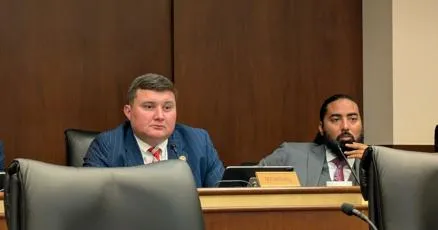
Ahead of the possible map re-draw, the S.C. House Judiciary Committee voted May 8 to advance a bill delaying the state's congressional primaries from June 9 to August.
That means all the contests from the governor's race on down to local legislative and county seats will go forward as normal, while the congressional district primaries would move to Aug. 11.
The plan would still need to be approved by the full House as well as the Senate, which has not yet agreed on extending the session to discuss redistricting plans into the summer. They would have to decide by May 14, when the 2026 Statehouse session ends.
Under the bill being considered, the new certification deadline for candidates would be June 19, and the more than 5,000 absentee ballots that have already been distributed for the upcoming primaries under existing lines would be discarded.
Changes to the calendar could prove chaotic, if not expensive.
Mallory Dittmer, a Democratic candidate for Congress, told members of the committee she was still unsure whether money her campaign has raised for one district can be utilized to run in another race under different lines.
Other incumbents might be forced to begin voter outreach to people who might never have heard of them, adding to confusion.
Voters would have to come out twice
Conway Belangia, executive director of the state Election Commission, said the office would face an aggressive timeline if lawmakers move forward with an Aug. 11 congressional primary.
Under federal law, election officials must mail military and overseas ballots at least 45 days before the election -- meaning the state would likely need finalized congressional maps in place no later than July 4 to stay on schedule.
Reopening candidate filing could also dramatically reshape the political field, with the potential to increase the number of candidates who run for Congress, Belangia acknowledged.
It also would be expensive, costing the state an additional $2.2 million to $2.5 million on top of additional, unaccounted-for costs on local elections offices. A possible runoff after the fact could also cost the state an additional $1 million.
One potential hurdle if the primary is moved to August: Charleston County's first day of classes for the 2026-27 school year is Aug. 11, when 50,000 students return. School buildings are usually used as polling places.
Crafting 7 new congressional seats
State Rep. Jay Jordan, R-Florence, said the process for drawing new districts would follow the same principles in the drawing of the current maps. Those include stipulations the maps would:
- Comply with state and federal law
- Contain similar populations in each district
- Achieve the state's political goals
- Protect incumbents as much as possible
- Have district lines that were as compact as possible, without splitting up so-called "communities of interest" with similar economic and governmental factors, including partisan voting behavior.
The proposed map, Jordan said, would likely accomplish the state's political goal of drawing Democratic U.S. Rep. Jim Clyburn out of Congress and create a 7-0 Republican advantage.
According to preliminary maps, Republicans would hold double-digit electoral advantages in all but one proposed district. Clyburn's new 6th District, based on composite election data, would favor the GOP by three points.
What about Clyburn?
Senate Majority Leader Shane Massey, R-Edgefield, told reporters an all-Republican delegation could prove risky, particularly given South Carolina's success under blue administrations.
"It is important, I think, that there's somebody from South Carolina who can make a call, and that somebody at the White House will answer it,"Massey previously told reporters.
Many had examples.
Ruben Gallego, a U.S. Senator from Arizona, attributed Clyburn with helping to keep the Marine training base at Parris Island open when it faced threat of closure, while South Carolina native Jaime Harrison, former chair of the Democratic National Committee, credited Clyburn with helping secure funding to deepen the Port of Charleston during the Obama administration.
It may not be a lingering issue. Clyburn is in his mid-80s and has already faced questions about how much longer he will continue to serve. While he announced his intention to run for an 18th term in Congress in March, some speculate whether he will remain in that seat after the next presidential election in 2028.
"This fight is bigger than one district,"Clyburn said in a statement."It's about whether our democracy belongs to the people, or to politicians who change the rules when they don't like the results."
Politicians react
Fry, the congressman who represents the current 7th District, said he would likely run again under the proposed maps.
"Let me make something crystal clear: I'm not going anywhere,"he wrote on social media.
Others said that whatever happens with redistricting, they have faith the D.C. delegation will remain active and responsive.
Charleston Mayor William Cogswell, a former state lawmaker, said the city will continue working with legislators regardless of how district lines might ultimately be redrawn.
"Charleston has always worked with whoever represents us in Washington,and that will continue,"he said in a written statement.
Cogswell said the city's priorities, which include flooding resilience,infrastructure and economic growth,are "too important to be sidelined by boundary lines."
State Rep.Spencer Wetmore,D-Folly Beach,wrote via text that if the proposed House map passed,the "majority of Charleston will never again have a representative in Congress because it will likely be someone from Myrtle Beach if they draw Folly Beach,James Island and West Ashley in with Mount Pleasant and Horry County."
Rep.JA Moore,D-Charleston,says he's hopeful that Democrats will actually be motivated from the potential of redrawing maps,and was encouraged by the energy that they could create.
"If this doesn't motivate Democrats to come out,I don't know what will,"he said.
On May 8,U.S.Sen.Lindsey Graham told reporters at a campaign event in Lexington County that he understands Republicans wanting to pick up a seat,and if state lawmakers and the governor want to redraw,let them try.But they need to be careful what they wish for, he added.
"It's sort of late in the game.Is it too late?I don't know.I think the Trump people believe that the new map can lead to a pick up and it won't jeopardize seats,"he said,adding he's sure there will be court challenges if the new map went through.
U.S.Rep.Joe Wilson,R-Lexington,on the other hand,says he's heard from multiple supporters that redistricting should be a priority—which he backs because of three things:to support president,re-elect Mike Johnson as House Speaker&stop any Trump impeachment attempts.
"If we don't keep a majority, our country is going to be in perpetual,endless impeachment,"says Wilson.
Next steps
While the S.C. House has agreed to add the redistricting debate to its end of session agreement to come back and discuss,the state Senate has not.
With three business days left in the session,that is something they will have to move to quickly.
Anna Sharpe contributed to this report.