Each week we bring you insights into one of Asia's most dynamic economies. If you haven't yet, please sign up here.
This week, Low De Wei analyzes Singapore's real estate scene which has seen a flurry of action. Olivia Poh looks at what Grab has in its toolkit as it faces a regulatory hurdle and Gabrielle Ng swigs cocktails at a former police station.
Prop Mart
It's the best of times, it's the worst of times for Singapore's real estate players.
The once-sleepy office scene is seeing a resurgence and drove commercial real estate deals to a record quarter in the first three months of the year. Several office owners are once again looking to sell their billion-dollar towers that have failed to sell for years. Singapore's residential market is still humming and prompted yet another round of curbs this week to target buyers of an asset class that some flippers have favored -- executive condominiums, a form of quasi-public housing.
What's changed? The easy answer: Singapore's safe haven Bloomberg Terminal status favored by the world's richest and reinforced by the war in Iran.
The more complicated answer can be found in an aphorism: It's the economy, stupid. Investors who have been trying to get out of the office market for years are finally relenting on pricing. Local lending rates have declined for years and are now lower than Japan. In other words, the stalemate between sellers and interested investors may be cracking.
Still, a bigger issue confounds the industry: Risk. I attended an industry panel this week where a prescient question was raised: What's holding back Asian real estate from its next boom? The top answer -- capital, followed by US President Donald Trump and geopolitical uncertainties. Many traditional investors including pension funds and endowments are holding back. Those willing to take the plunge fret about how markets may be easily upended by the next Truth Social post.
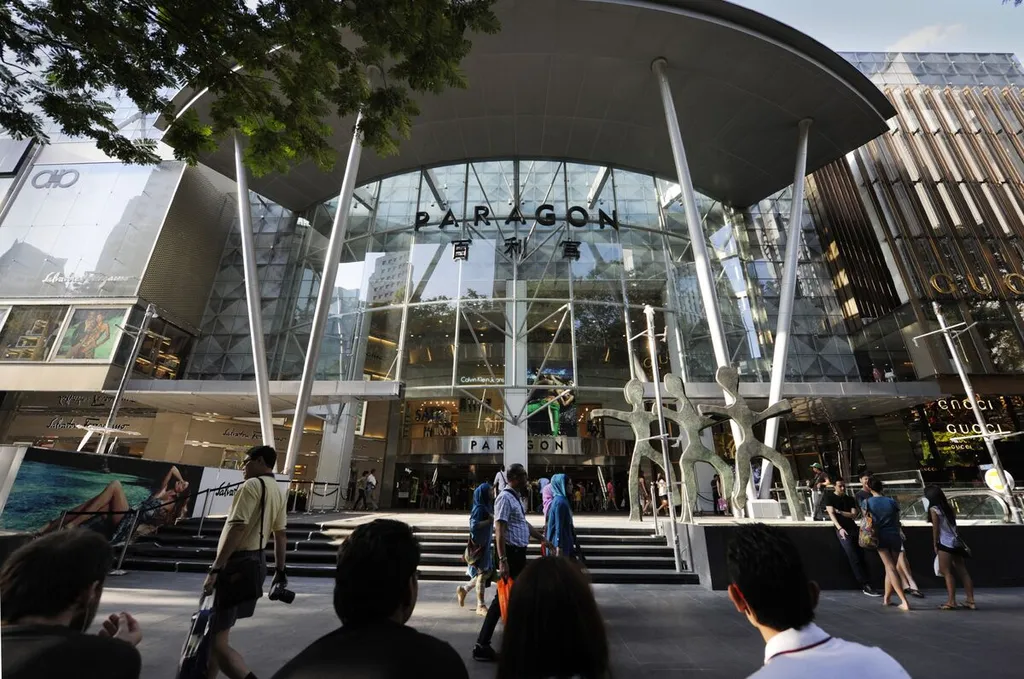
Take the S$2.48 billion ($2 billion) sale by Singapore's largest REIT of a prime office tower to a Malaysian developer. That deal helped fund the S$3.9 billion purchase of the luxury Paragon mall. Even then, more cash needed to be raised through taking on debt and selling shares.
Then there's the mega office complex Marina One owned by Temasek and Malaysian sovereign wealth fund Khazanah. It's an idiosyncratic project, similar to Singapore's real estate market. Its luxury residences are often sold at losses, a jarring contrast to the broader market's exuberance, as local buyers have yet to fully embrace city-center living.
It's a different story for Marina One’s centerpiece office and retail space, which has an eyewatering S$5.7 billion price tag. It’s attracted interest from the big guns like Temasek-backed CapitaLand and Hongkong Land, which has a nascent private fund. That big, hefty number could well scuttle a deal, property watchers tell me. A possible workaround: joining hands and forming a consortium.
Everything has a price. As Charles Dickens said: "It was the age of wisdom, it was the age of foolishness." -- Low De Wei
Award Winner
Bloomberg News has won the 2026 Pulitzer Prize for Illustrated Reporting and Commentary for "trAPPed," a graphic novel depicting the trials of a woman in India held under "digital arrest" as part of a widespread and ruinous scam.
Weekend Catch-Up
A selection of the best of Bloomberg storytelling, from podcasts and video to explainers and feature stories.
- Singapore can be "sharper" in fighting illicit flows: watchdog
- Asia's beaten-up currencies gain traction after defensive moves
- The heat is on Thailand to not just muddle through: Daniel Moss
- Trump-Xi meeting approaches even as tensions mount
- Anthropic unveils AI agents for financial services tasks
- Jane Street's relentless rise
- Crude matters more than ever for bonds: Macro Man
- As jet fuel soars, airlines race to adapt
- Will the AI rally help Asian companies close the gap to US tech titans?
Big Take Asia
China Halts Meta's $2 Billion AI Deal
Grab Cap
Grab has been on a bit of a tear lately. Between posting better-than-expected first quarter earnings, teasing autonomous vehicles, rolling out cross-border ridesBloomberg Terminal from Singapore to Malaysia and snapping up Foodpanda in Taiwan, the tech platform has been steadily flexing its operational muscle. But look past the shiny new product rollouts, and there's a massive regulatory hurdle looming in one of its biggest markets.
Indonesia is moving to cap ride-hailing commissionsBloomberg Terminal at 8% -- a drastic cut from the roughly 20% platforms typically charge. It's a populist move that threatens to seriously crimp revenue and squeeze margins.
When I caught up with Grab CFO Peter Oey, he downplayed the immediate threat. Based on Indonesian President Prabowo Subianto's recent speech, Oey expects the cap will only apply to local motorbike riders, a segment that makes up less than 6% of the business volume for Grab's mobility operations.
Still, the company is in a wait-and-see mode until the actual presidential decree is published. Either way, Grab will have to retool its playbook in Southeast Asia's largest economy, Oey admits. He tells me the company has other levers it can pull to offset and cushion the hit.
"Definitely, this is not a small change," Oey says. "But it does mean that for Indonesia, the fare structure and the business model for two-wheelers probably needs to be recalibrated."
Options include tightening the screws on market efficiency, tweaking aspects like routing or having drivers complete more trips per hour. Its slate of new products, such as AI-powered concierge tools or fare-splitting options, could also go some way in helping to entice consumers in a challenging economy.
WhatsApp chats are abuzz about what this regulatory shock could mean for the long-awaited Grab-GoTo mega-merger. While no one can say for certain yet, an 8% ceiling fundamentally changes the math. With a strict cap on how much they can earn per ride, both platforms will have drastically less room to fund rider discounts and driver incentives. They would need to aggressively hunt for economies of scale to make the unit economics work. This regulatory squeeze might be exactly what pushes the two fierce rivals closer.
On the other hand, if the Indonesian government is willing to cap platform earnings so aggressively, perhaps the ultimate prize of dominating the market is far less lucrative. Grab has a tough call to make.
The Review: Kult Yard
There's a certain novelty to sipping a cocktail in a police station. Add a live band and wall-to-wall graffiti, and you have Kult Yard. The Chinatown bar is nested atop Pearl's Hill in an old police barracks, now revamped to house an open courtyard flanked by lush plants and vibrant murals.
Customers chat to the bartender through the hollowed window pane of what looks like a former booth, where one might have filed a report to the officer on duty. Lavi Taco, which shares the quaint space, whips up Mexican food including quesabirria tacos.
The vibe: Cool. People kick back here for hours on end. A rotating lineup of music-makers including vinyl DJs and electric guitarists as well as weekly trivia nights keep most evenings lively. The friendly staff are raring with candid recommendations of their most and least-loved cocktails. Owner Zac Mirza breezes around tables to partake in the occasional shot. Kult Yard has craft beers, spirits, and cocktails -- or kultails -- laced with local-inspired flavors like gula melaka.
Can you conduct a meeting here? Not a formal one. The boss might not appreciate hiking up a hill to get to dinner. Though that shared experience might well be the secret to team bonding and is a change from the office's boxed-in cubicles and air-conditioned food court.
What about a romantic dinner? It’s a fun spot to take your date off the beaten path. The long tables may lend themselves better to a larger group of friends, but there’s not necessarily any harm in an incidental triple date with your seatmates — it’s a sociable bunch here. If your idea of a night out includes your canine companions, they’re welcome here, too.
What we’d order again. The Kult Julep and Kult Kooler were much-needed refreshers on a muggy outdoor evening. Crisp lime juice and a generous heap of kaffir leaves provided a unique kick. Free ginger-infused shots served on a wooden skateboard went down smoothly. If you’re feeling more adventurous than us, try the Bloody Belachan—a spicy twist on the Bloody Mary. Non-alcoholic versions are available for teetotalers or those observing a dry month. If you’re famished, get the taco platter featuring crispy fried fish, chipotle chicken and signature quesabirria from Lavi Taco.
Need to know. Kult Yard is open at 195 Pearl’s Hill Terrace from 5 p.m. till midnight, except Mondays. Expect to spend about S$40-S$60 per person for food and a drink each, depending on how you split their shareable platters. Reservations are recommended if you want a table to yourself on weekend evenings.
Have a place you'd like us to review or feedback to share? Get in touch at sgedition@bloomberg.net.
Thanks for reading our newsletter! Subscribe here if you haven't already. Happy Mother's Day!
- Coming soon: Get the AI Today newsletter -- chronicling the disruptions and threats of AI on businesses, workers, governments and economies with analysis from Bloomberg's global newsroom
- Markets Daily for what's moving in stocks, bonds, FX and commodities, and Markets Daily India for key news and movers ahead of the trading day
- Next China for dispatches from within the world's second-largest economy on where China stands now -- and where it's going next
- Hong Kong Edition to follow the money and people shaking up the Asian finance hub
- India Edition for an insider's guide to the emerging economic powerhouse