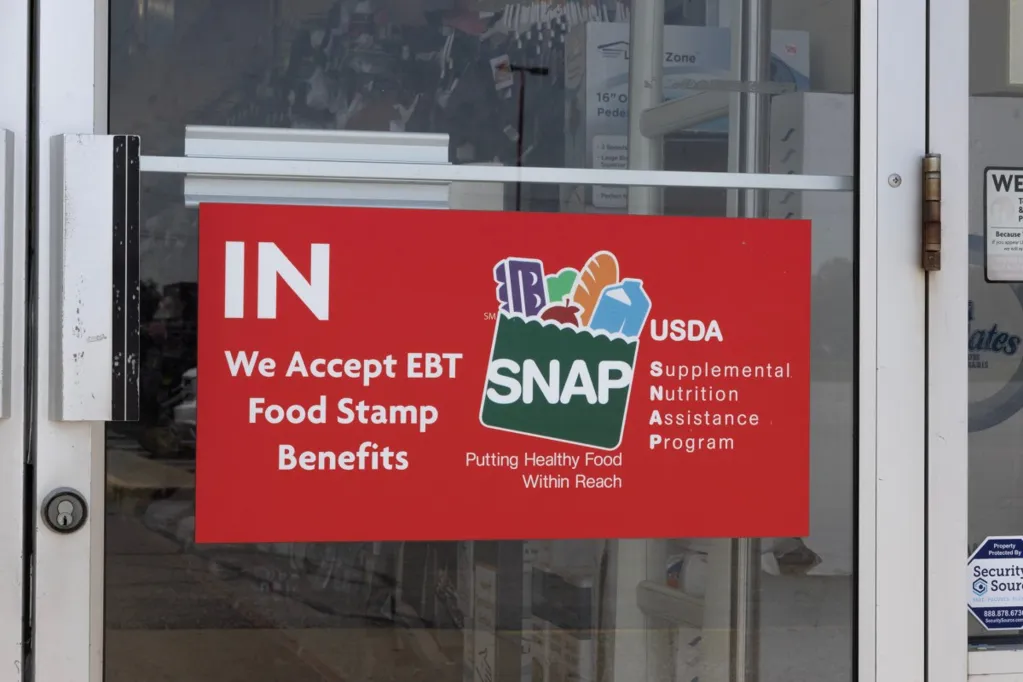
States have begun implementing expanded work requirements for Supplemental Nutrition Assistance Program (SNAP) recipients after the One Big Beautiful Bill Act (OBBBA) became law.
SNAP, the largest food assistance program in the country, serves more than 40 million low- and no-income Americans.
The new law expands which adults are subject to SNAP's three-month time limit unless they work at least 20 hours a week, participate in training, or qualify for an exemption, increasing the risk of losing benefits for groups newly covered by the requirement.
President Donald Trump signed the One Big Beautiful Bill Act into law on July 4, 2025. The law increases the age range of Able Bodied Adults Without Dependents (ABAWDs) subject to the three-month limit to 18 through 64 (previously 59), meaning people up to and including age 64 are covered unless they meet another exception.
It narrows the caregiver exception by limiting it to adults responsible for a child under 14 (down from under 18), bringing parents and household members of children ages 14 to 17 under ABAWD time limits.
The law ends temporary exceptions created in 2023 for homeless people, veterans and certain former foster youth up to age 24, making these groups again subject to the time limit. It also adds new exceptions for people who meet specific federal definitions of "Indian," "Urban Indian" or "California Indian."
States will also face tighter waiver rules. The law repeals the ability to waive time limits due to "insufficient number of jobs" and generally limits waivers to areas with unemployment above 10 percent while allowing Alaska and Hawaii to qualify at unemployment rates at or above 1.5 times the national rate.
Under long-standing policy, ABAWDs who neither meet work or training hours nor qualify for an exemption may receive SNAP for only three months in a three-year period, and states can request area waivers where permitted.
State implementation timelines vary because the law took effect upon enactment, while operational readiness and prior waivers affect pacing.
The USDA directed states to immediately screen applicants and recipients for the modified exception criteria beginning July 4, 2025, and to update notices so adults ages 55 to 64 are informed they are now subject to the ABAWD time limit.
States are beginning to roll out the new SNAP work requirements, though the pace and timing vary widely.
Several states began enforcing the new rules in late 2025, just months after the bill was signed. Those include Alaska, Colorado, Georgia, Hawaii, Nebraska, South Carolina, Texas and West Virginia.
Other states began this year. In Ohio and Illinois, the requirements took effect early this month. California has confirmed it will implement the latest rules starting in June.
House Speaker Mike Johnson defended the new requirements last May, ahead of the bill's passage, framing them as a fiscal and moral issue.
"If you are able to work and you refuse to do so, you are defrauding the system," Johnson said. "You're cheating the system. And no one in the country believes that that's right. So there's a moral component to what we're doing. And when you make young men work, it's good for them, it's good for their dignity, it's good for their self-worth, and it's good for the community that they live in."
Agriculture Secretary Brooke Rollins has also voiced support for the changes, saying the OBBBA "strengthens work requirements" and "tackles the fraud and waste that has run rampant" in the program.
Critics argue that the policy could put vulnerable recipients at risk. Analysts say the rules fail to account for wide differences in health, caregiving responsibilities and local job markets.
The Congressional Budget Office estimated in August that the changes could push 2.4 million people off all or part of their SNAP benefits.
Laura Samuel, an associate professor at the Johns Hopkins School of Nursing, told Newsweek that "many older adults face health limitations that restrict the work they can do."
"Another concern is that not all disabilities qualify for exemptions," Samuel said. "Formal disability benefits are required, but determinations can take years. People with real health limitations risk losing food assistance while they wait. These rules don't reflect people's realities and may push families deeper into food insecurity."
States will continue phasing in the modified ABAWD rules.