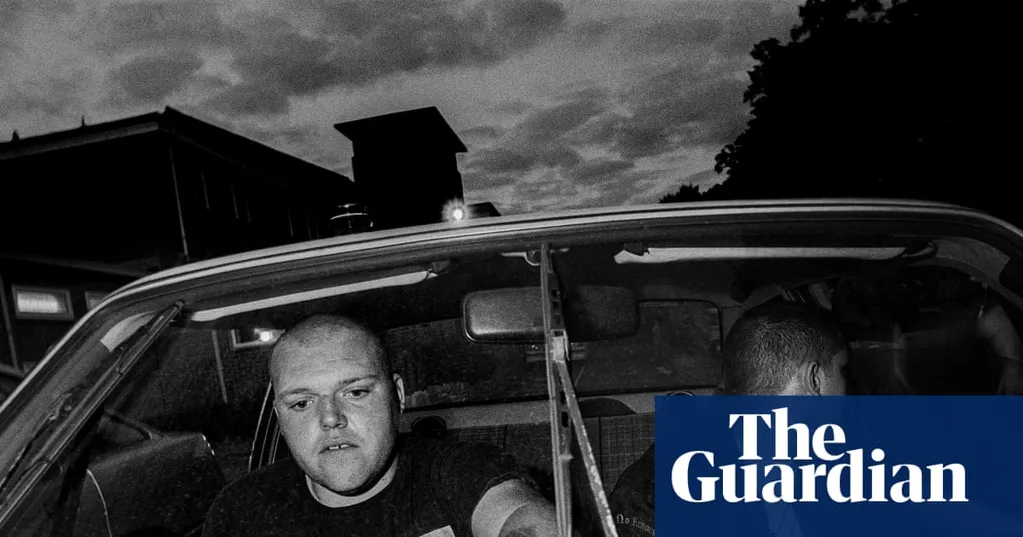
In 1990, I was working in photojournalism but doing music photography on the side to make money. At the time there was a rise in neo-Nazi music, with bands such as Skrewdriver and the Blood and Honour movement. I was initially going to do a magazine piece on it but it grew into a much bigger project and I ended up spending two years following these people around the country. It led to a book and a documentary.
It was a difficult project and there were moral and ethical challenges as well as dangerous ones, but that was part of the attraction. The people were suspicious of me but I was honest about what I wanted to do. They knew I didn't agree with their politics but that I didn't have an agenda.
I worked with a Jewish publisher and editor on my resulting book, Public Enemies, but I got a lot of stick for from people who were like, how dare you do that? But I think the whole point of being an artist is to explore and challenge things that are uncomfortable. The camera gives you this amazing privilege to be in other people's lives. The skinheads were so symbolic of a particular political viewpoint but I wanted to go beyond that and to get as close as possible.
My driving belief is that we need to be able to communicate, to touch humanity, to try to connect to each other in some way, but I'm also not trying to forgive or underplay the extremities.
Initially, what I saw was deeply shocking. When you're in those environments, it's so venomous and hateful. I was in situations that were full-on riots and there was always a fight going off. I just tried to keep my head down. I got an occasional clip but I didn't get too harmed.
In this photo, we're in a very posh part of Milton Keynes and behind us is a school. A group of skinheads had rented a school hall, claiming it was for a 21st birthday party but it was actually for a gig. So a neo-Nazi skinhead band and all their followers show up to the absolute horror of the people who are renting out the hall. Someone called the police, who surrounded the building, but they had to let the gig go on because they didn’t want these guys spilling out on to the street - that would have been more hassle.
Inside, it was mayhem, there was loads of fighting - either between different factions or just for fun. These guys in the picture wanted to leave the chaos of the room and go and count up the money they had taken on the door so they said to me: “Right, Leo, we’re using your car to count up.” I said: “Fine, as long as I can take a photograph.” The gig was still going on at this point but afterwards all the attendees got a police escort to the nearest train station to get them the hell out of that neighbourhood.
After two years covering the neo-Nazi scene, I knew it was time to stop. I was popping up on people’s radar and the police were looking at me, I was being photographed, and I was being followed by some leftwing group because of the association. My timing was probably right because I was pushing my luck too far and things kind of exploded afterwards. That whole world became an even more paranoid and volatile place because of the Combat 18 movement - a very dangerous group. Some people I had spent time with ended up in Combat 18 and doing life sentences. Others went off in all sorts of directions - some denounced it, some didn’t. It was an incredibly dangerous thing to do but I stand by the work. When I look back, I think “Jesus Leo, what were you doing?”
Born: Dublin, 1963
High point: The camera gives you access to hidden worlds in all their messy glory. The ambiguity and the unexpected, the highs and lows. It's a way of thinking and being. A unique privilege for which I'm grateful.
Top tip: Keep pushing. When you've gone too far, you're in the right place.