A series of three shark attacks in just over 24 hours near Sydney's beaches has left two people in critical condition and sent shock waves through a region where such occurrences are rare, authorities said.
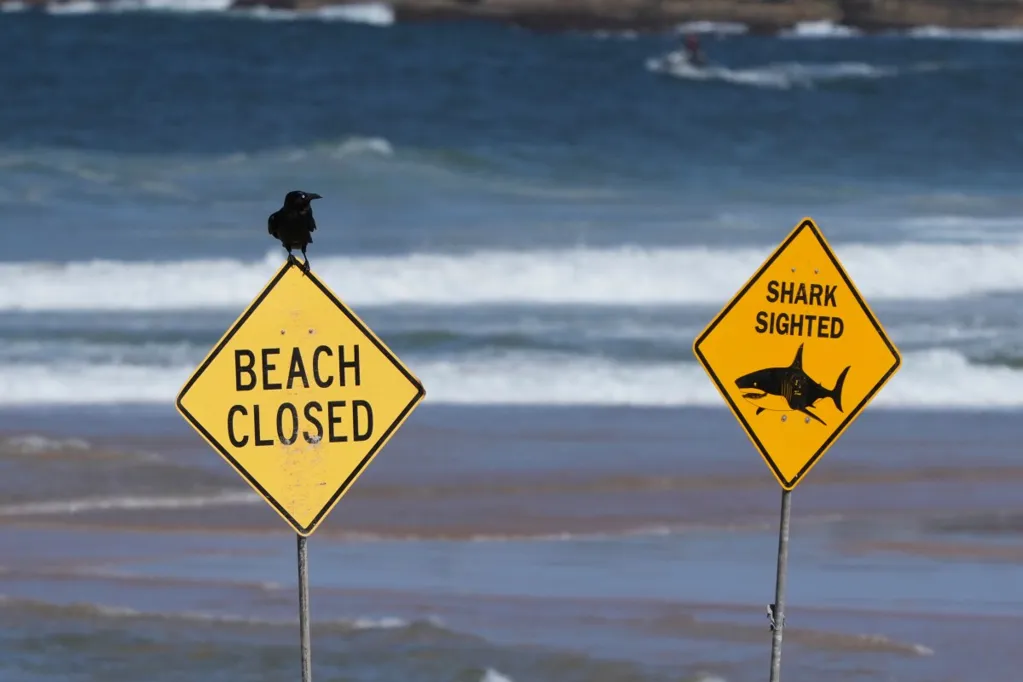
The attacks have prompted authorities to close Northern Beaches and issue stern safety warnings to swimmers and surfers.
Experts and officials are investigating whether environmental factors, such as heavy rainfall and murky water, have played a role in bringing aggressive bull sharks closer to shore, Superintendent Joseph McNulty, commander of the New South Wales Police Marine Area Command, said during a press conference.
Australia averages 20 shark bites each year, typically numbering only two or three fatalities, according to the Taronga Conservation Society.
However, clusters near a metropolitan center are unusual and raise public safety concerns as summer tourism and recreation reach their peak.
The first attack occurred on Sunday afternoon, when a 12-year-old boy was bitten on both legs while swimming with friends outside a netted area in Vaucluse, Sydney Harbour, McNulty said. The group had been leaping from a rock ledge near Shark Beach at Nielsen Park.
The boy was dragged to safety by friends, lost consciousness, and was attended to by New South Wales Police and paramedics who performed CPR and applied tourniquets before transporting him to Sydney Children's Hospital, according to McNulty. The child remains in intensive care after surgery.
Authorities suspect a bull shark was responsible based on preliminary bite analysis and environmental conditions at the site.
On Monday morning, just hours after the first incident, an 11-year-old boy surfing at Dee Why Beach in northern Sydney had his board bitten multiple times by a shark, believed to be a bull shark due to a 15-centimeter bite mark, according to a press release from the Northern Beaches Council.
The shark took a chunk out of the surfboard, but the boy escaped unharmed and was assisted from the water by bystanders.
Lifeguards closed the beach, posted shark warning signs, and used a drone to survey the area, finding no further shark activity as of midday.
The Northern Beaches Council stated the beach would remain closed for at least 24 hours while monitoring continued. The attack occurred while large swells had already prompted precautionary beach closures in the area.
On Monday evening, a man in his 20s was bitten and left in critical condition after a shark attack at Manly's North Steyne Beach, a press release from the New South Wales Police said.
Emergency services responded after the man was pulled from the water by beachgoers who provided first aid before paramedics arrived. The victim was transported to Royal North Shore Hospital.
Witnesses described the chaotic scene as life-saving measures were performed on the sand. All Northern Beaches remained closed for further safety assessment by local authorities.
Joseph McNulty, commander of the New South Wales Police Marine Area Command, told reporters on Monday about the 12-year-old boy: "The actions of his mates who have gone into the water to pull him out have been nothing but brave. Those actions of those young men are brave under the circumstances, and very confronting injuries for those boys to see, but I suppose that's mateship."
NSW Ambulance official Giles Buchanan told reporters about the same boy: "It was touch-and-go the entire time, and still he's in a very dangerous position."
Authorities stated that all ocean beaches on Sydney's Northern Beaches would remain closed while investigations continue and as precautions are reassessed.
The Department of Primary Industries is working to confirm the shark species involved in each attack, and beach safety protocols are being reviewed in light of heightened shark activity following recent heavy rainfall, according to reports.
Police and lifesaving organizations have called for continued vigilance and urged the public to avoid swimming in murky or brackish water, especially after storms.